Sun

  • NASA

    Starstruck: NASA Research Shows How Sun’s Ancient History Shaped Earth

    At the center of our solar system, the Sun influences every planet that orbits it. In two recent NASA-funded studies, scientists uncovered how ancient events in the Sun’s history may have helped create Earth’s unique climate and driven previously unexplained climatic shifts.   In new research, scientists at NASA’s SHIELD (Solar Wind with Hydrogen Ion charge Exchange and Large-Scale Dynamics) center — one of NASA’s DRIVE (Diversify, Realize, Integrate, Venture, Educate)…

    Read More »
  • NASA

    NASA’s COFFIES Uses AI to Predict Storm-Causing Active Regions on Sun 

    As humanity looks to the Moon and stars for future exploration, predicting space weather — conditions in space primarily driven by the Sun — is more important than ever.  Now, a team of astrophysicists and data scientists with NASA’s COFFIES (Consequence Of Fields and Flows in the Interior and Exterior of the Sun) has developed a novel machine-learning model capable of predicting…

    Read More »
  • NASA

    Astronomy Picture of the Day

    Contemplating the Sun Explanation: Have you contemplated your home star recently? Featured here, a Sun partially eclipsed on the top left by the Moon is also seen eclipsed by earthlings contemplating the eclipse below. This spectacular menagerie of silhouettes was taken in 2012 from the Glen Canyon National Recreation Area near Page, Arizona, USA, where park rangers and astronomers expounded on the unusual event to interested gatherers. Also, faintly visible on the Sun’s disk, just to…

    Read More »
  • NASA

    Astronomy Picture of the Day

    New Sharpest Image of the Sun Uncovers Instability Explanation: What does the new sharpest image of our Sun show? Instability. To be clear, a certain kind of interactive process called the Kelvin-Helmholtz instability (KHI). This instability can create waves and swirls when two streams flow past each other — in this case variable streams of solar magnetic plasma. Long hypothesized to occur on the Sun’s surface, KHI…

    Read More »
  • NASA

    Astronomy Picture of the Day

    Red Sun through Wildfire Smoke Explanation: This could be the view from an exoplanet orbiting around a red dwarf star, but it is our own Sun. This image of was taken on July 22, 2026, in the Okanagan region in the Canadian province of British Columbia. Wildfire smoke from the Pacific Northwest acted as a solar filter, allowing the photographer to take this photo of the Sun directly. Several sunspots are also visible in this eerie image;…

    Read More »
  • NASA

    Harnessing the Sun to Extract Oxygen on the Moon

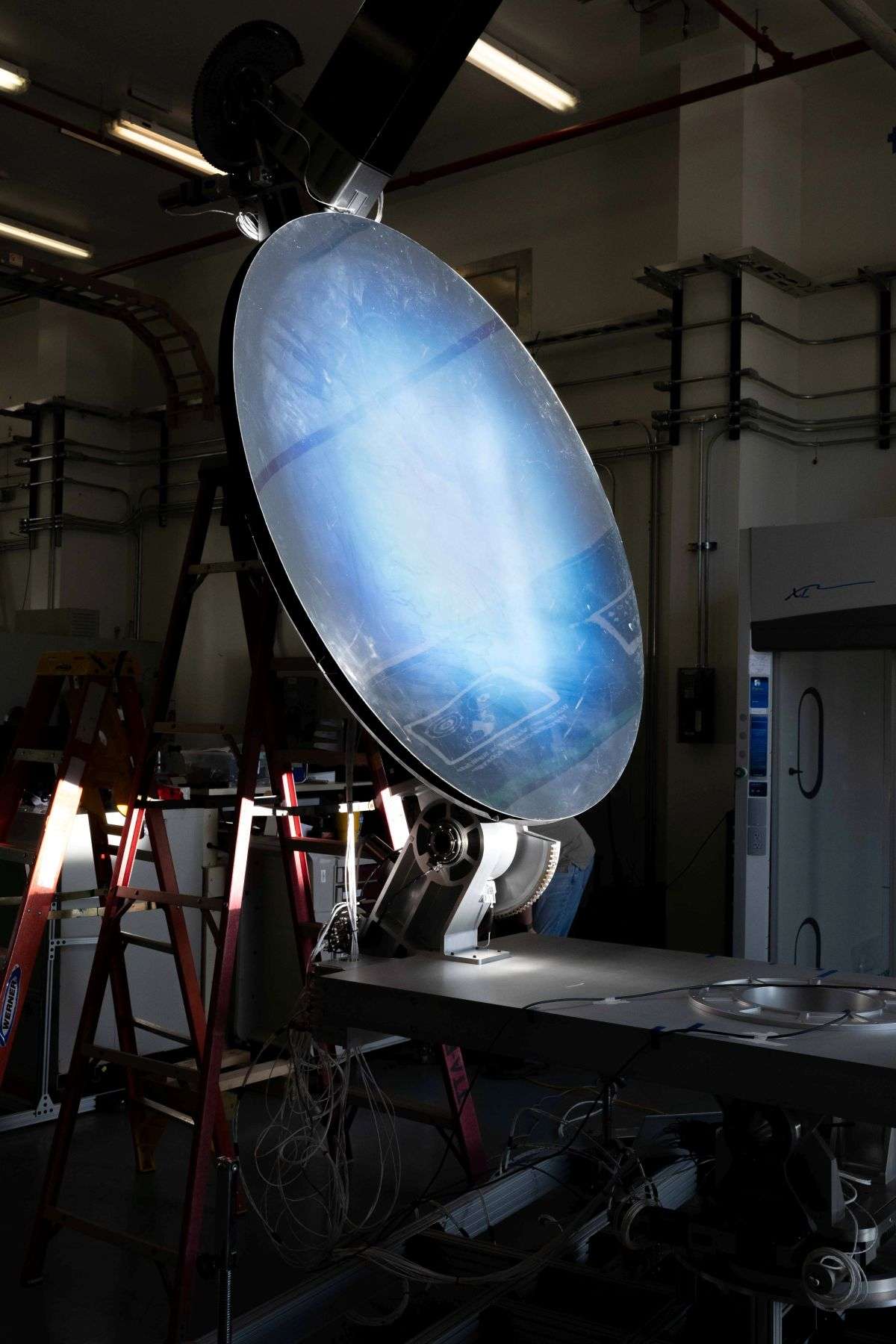
    Light shines onto a solar concentrator being tested in this Aug. 7, 2025, photo. The concentrator is part of the Carbothermal Reduction Demonstration (CaRD) project, which aims to produce oxygen from simulated lunar regolith for use at the Moon’s south pole. For this test, the team integrated the solar concentrator, mirrors, and software and confirmed the production of carbon monoxide. If…

    Read More »
  • NASA

    Strong Solar Flare

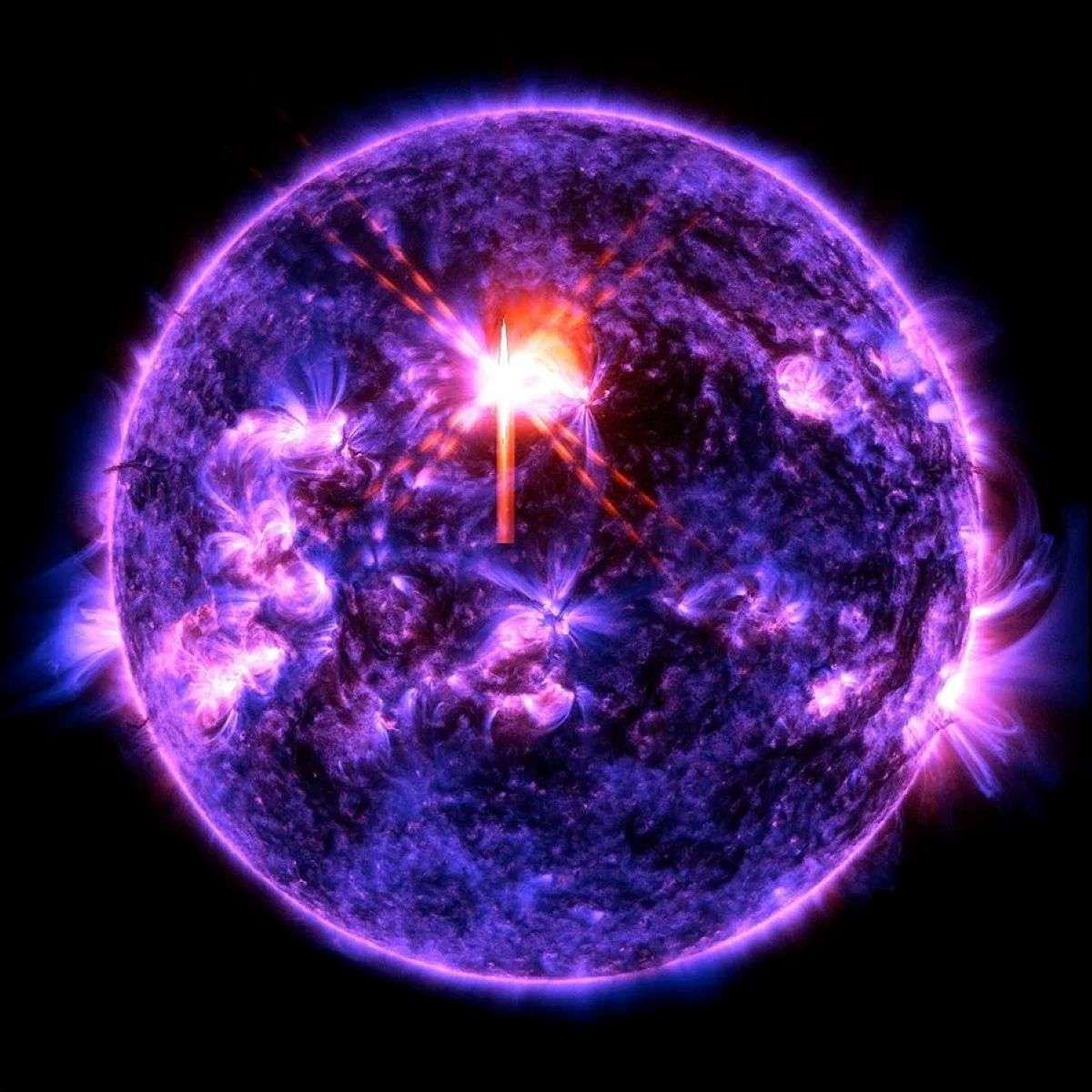
    This Feb. 4, 2026, image from NASA’s Solar Dynamics Observatory (SDO) captures a strong solar flare erupting from the star. Solar flares are powerful bursts of energy that can, along with other types of solar eruptions, can impact radio communications, electric power grids, navigation signals, and pose risks to spacecraft and astronauts. The flare pictured was classified as an X4.2 flare. X-class…

    Read More »
  • NASA

    Helio Highlights: October 2025

    The Sun and Our Lives On a clear night, you might see thousands of stars in the sky. Most of these stars are dozens or hundreds of light years away from us. A light year is the distance a beam of light travels in a year: about 5.88 trillion miles (9.46 trillion kilometers). This means that for those stars we see at…

    Read More »
  • NASA

    NASA, NOAA Launch Three Spacecraft to Map Sun’s Influence Across Space

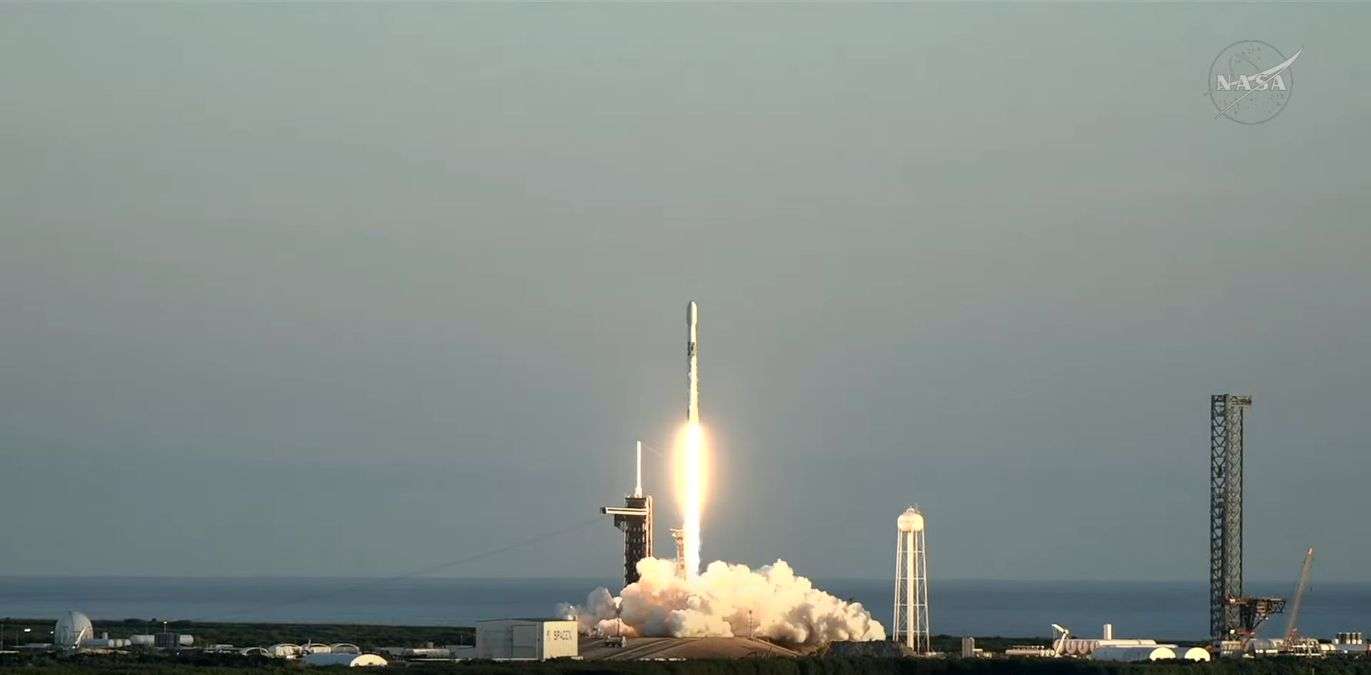
    Lee este comunicado de prensa en español aquí. NASA and the National Oceanic and Atmospheric Administration (NOAA) launched three new missions Wednesday to investigate the Sun’s influence across the solar system. At 7:30 a.m. EDT, a SpaceX Falcon 9 rocket lifted off from Launch Complex 39A at NASA’s Kennedy Space Center in Florida carrying the agency’s IMAP (Interstellar Mapping and Acceleration…

    Read More »
  • NASA

    NASA Analysis Shows Sun’s Activity Ramping Up

    It looked like the Sun was heading toward a historic lull in activity. That trend flipped in 2008, according to new research. The Sun has become increasingly active since 2008, a new NASA study shows. Solar activity is known to fluctuate in cycles of 11 years, but there are longer-term variations that can last decades. Case in point: Since the…

    Read More »
Back to top button