
Supercomputer
-
NASA

NASA Researchers Probe Tangled Magnetospheres of Merging Neutron Stars
New simulations performed on a NASA supercomputer are providing scientists with the most comprehensive look yet into the maelstrom of interacting magnetic structures around city-sized neutron stars in the moments before they crash. The team identified potential signals emitted during the stars’ final moments that may be detectable by future observatories. “Just before neutron stars crash, the highly magnetized,…
Read More » -
NASA
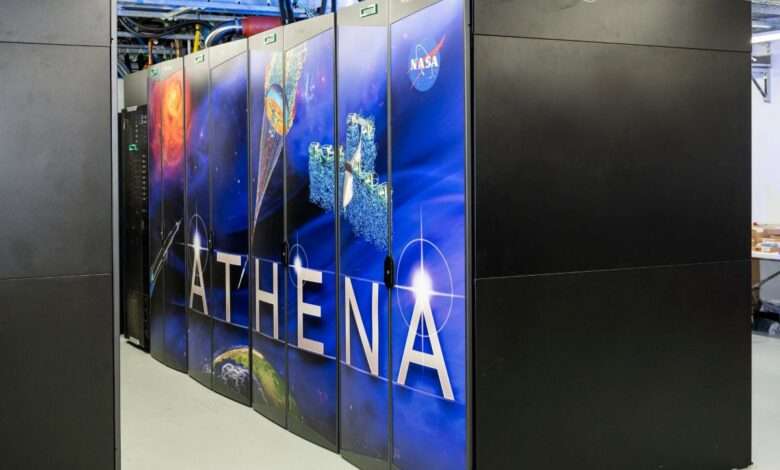
NASA Launches Its Most Powerful, Efficient Supercomputer
NASA is announcing the availability of its newest supercomputer, Athena, an advanced system designed to support a new generation of missions and research projects. The newest member of the agency’s High-End Computing Capability project expands the resources available to help scientists and engineers tackle some of the most complex challenges in space, aeronautics, and science. Housed in the agency’s Modular…
Read More » -
NASA

From Supercomputers to Wind Tunnels: NASA’s Road to Artemis II
By Jill Dunbar Of the many roads leading to successful Artemis missions, one is paved with high-tech computing chips called superchips. Along the way, a partnership between NASA wind tunnel engineers, data visualization scientists, and software developers verified a quick, cost-effective solution to improve NASA’s SLS (Space Launch System) rocket for the upcoming Artemis II mission. This will be the…
Read More » -
NASA

NASA Supercomputers Take on Life Near Greenland’s Most Active Glacier
As Greenland’s ice retreats, it’s fueling tiny ocean organisms. To test why, scientists turned to a computer model out of JPL and MIT that’s been called a laboratory in itself. Runoff from Greenland’s ice sheet is kicking nutrients up from the ocean depths and boosting phytoplankton growth, a new NASA-supported study has found. Reporting in Nature Communications: Earth & Environment, the scientists…
Read More » -
Press Releases
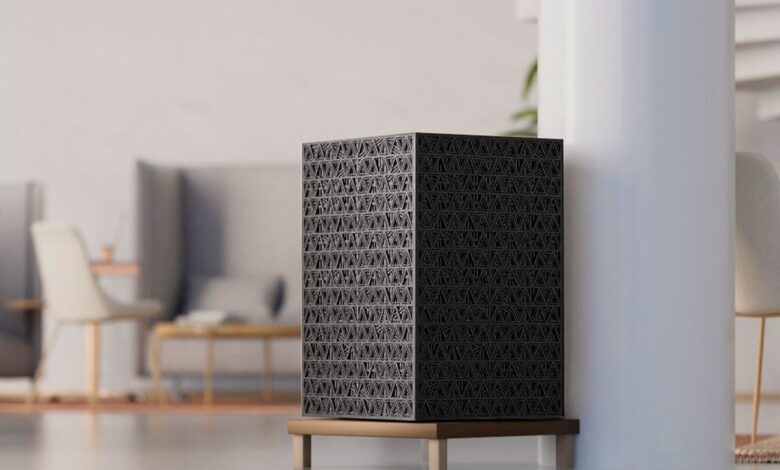
Unleashing AI Potential: The Power of Your Own Local Supercomputer
In the rapidly evolving landscape of artificial intelligence (AI) and deep learning, access to robust computing power is paramount. While cloud-based GPU solutions offer undeniable flexibility, a growing number of AI professionals, researchers, and startups are discovering the profound benefits of investing in their own local GPU servers. This shift isn’t just about preference; it’s about unlocking a powerful, private, and…
Read More » -
Press Releases

Cadence Unveils Millennium M2000 Supercomputer with NVIDIA Blackwell Systems to Transform AI-Driven Silicon, Systems and Drug Design
At its annual flagship user event, CadenceLIVE Silicon Valley 2025, Cadence (Nasdaq: CDNS) today announced a major expansion of its Cadence® Millennium™ Enterprise Platform with the introduction of the new Millennium M2000 Supercomputer featuring NVIDIA Blackwell systems, which delivers AI-accelerated simulation at unprecedented speed and scale across engineering and drug design workloads. Purpose-built for the most advanced AI models of today and tomorrow, the Millennium…
Read More » -
Press Releases

ASUS Introduces Ascent GX10 AI Supercomputer Powered by NVIDIA GB10 Grace Blackwell Superchip
ASUS today announces its groundbreaking AI supercomputer, ASUS Ascent GX10, powered by the state-of-the-art NVIDIA® GB10 Grace Blackwell Superchip. This revolutionary device places the formidable capabilities of a petaflop-scale AI supercomputer directly onto the desks of developers, AI researchers and data scientists around the globe. The forthcoming ASUS Ascent GX10 delivers up to 1,000 TOPS of AI performance to power large…
Read More » -
NASA
Ready, Set, Action! Our Sun is the Star in Dazzling Simulation
NASA supercomputers are shedding light on what causes some of the Sun’s most complex behaviors. Using data from the suite of active Sun-watching spacecraft currently observing the star at the heart of our solar system, researchers can explore solar dynamics like never before. The animation shows the strength of the turbulent motions of the Sun’s inner layers as materials twist into its…
Read More » -
NASA
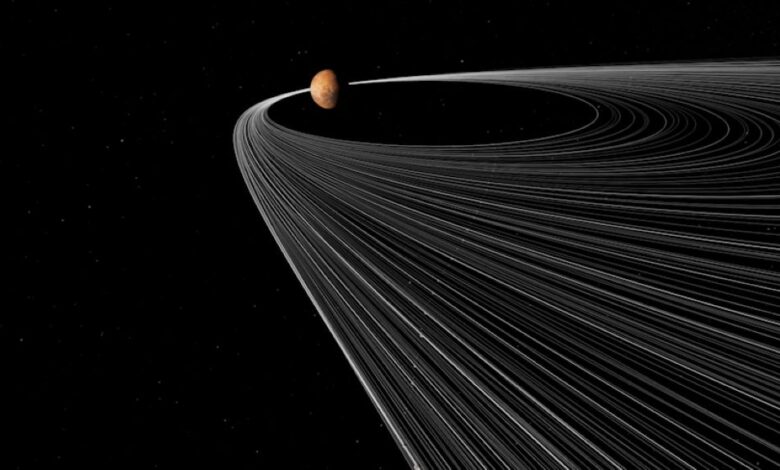
Making Mars’ Moons: Supercomputers Offer ‘Disruptive’ New Explanation
A NASA study using a series of supercomputer simulations reveals a potential new solution to a longstanding Martian mystery: How did Mars get its moons? The first step, the findings say, may have involved the destruction of an asteroid. The research team, led by Jacob Kegerreis, a postdoctoral research scientist at NASA’s Ames Research Center in California’s Silicon Valley, found that an…
Read More » -
NASA
Six Ways Supercomputing Advances Our Understanding of the Universe
At NASA, high-end computing is essential for many agency missions. This technology helps us advance our understanding of the universe – from our planet to the farthest reaches of the cosmos. Supercomputers enable projects across diverse research, such as making discoveries about the Sun’s activity that affects technologies in space and life on Earth, building artificial intelligence-based models for innovative…
Read More »