
Supernova
-
NASA
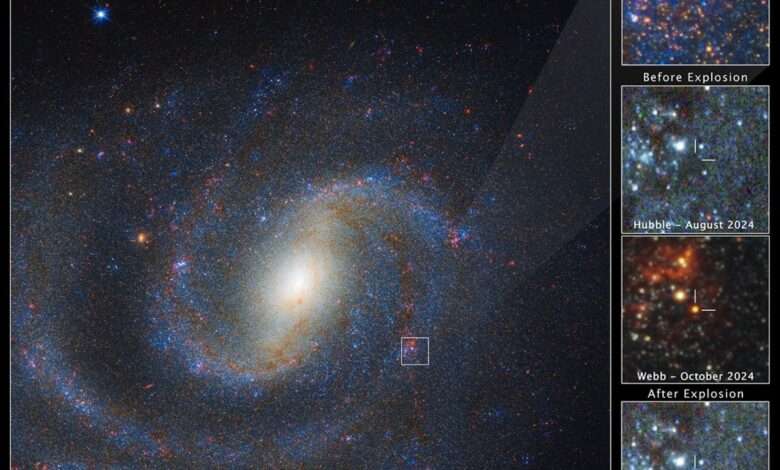
NASA’s Webb Telescope Locates Former Star That Exploded as Supernova
Forty million years ago, a star in a nearby galaxy exploded, spewing material across space and generating a brilliant beacon of light. That light traveled across the cosmos, reaching Earth June 29, 2025, where it was detected by the All-Sky Automated Survey for Supernovae. Astronomers immediately turned their resources to this new supernova, designated 2025pht, to learn more about it.…
Read More » -
NASA
Supernova Remnant Video From NASA’s Chandra Is Decades in Making
Play Video A new video shows changes in Kepler’s Supernova Remnant using data from NASA’s Chandra X-ray Observatory captured over more than two and a half decades with observations taken in 2000, 2004, 2006, 2014, and 2025. In this video, which is the longest-spanning one ever released by Chandra, X-rays (blue) from the telescope have been combined with an optical…
Read More » -
NASA
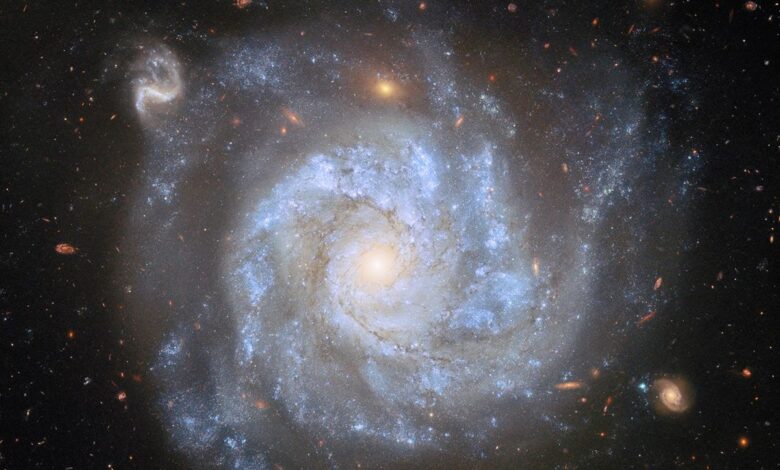
Hubble Surveys Supernova-Rich Spiral
Rich with detail, the spiral galaxy NGC 1309 shines in this NASA/ESA Hubble Space Telescope image. NGC 1309 is about 100 million light-years away in the constellation Eridanus. This stunning Hubble image encompasses NGC 1309’s bluish stars, dark brown gas clouds, and pearly-white core, as well as hundreds of distant background galaxies. Nearly every smudge, streak, and blob of light in this…
Read More » -
Press Releases

Wallbox Partners with Francis Energy to Accelerate U.S. Fast EV Charging Network
Wallbox N.V. (NYSE: WBX), a global leader in electric vehicle (EV) charging and energy management solutions, and Francis Energy, a key player in the development of EV charging infrastructure in the U.S., today announced a partnership to deploy fast charging solutions across the country. As part of the collaboration, Wallbox will offer its newly CTEP-certified Supernova fast chargers, designed to…
Read More » -
NASA

Hubble Goes Supernova Hunting
Download this image A supernova and its host galaxy are the subject of this NASA/ESA Hubble Space Telescope image. The galaxy in question is LEDA 132905 in the constellation Sculptor. Even at more than 400 million light-years away, LEDA 132905’s spiral structure is faintly visible, as are patches of bright blue stars. The bright pinkish-white dot in the center of the image,…
Read More » -
NASA
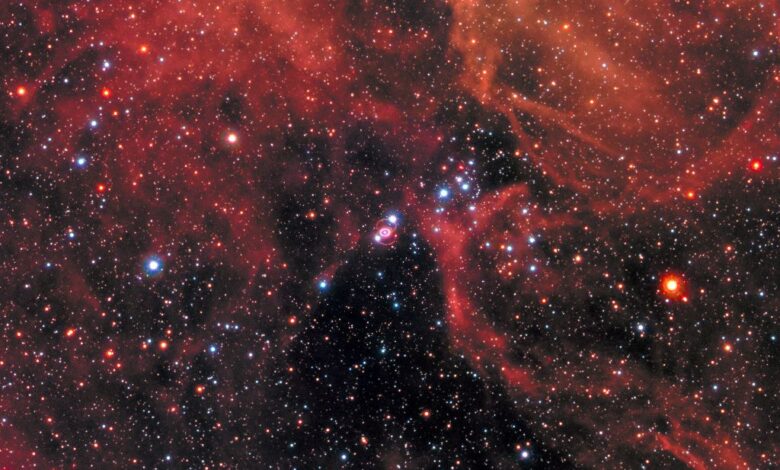
A Dazzling Supernova
This image, released on Feb. 24, 2017, shows Supernova 1987a (center) surrounded by dramatic red clouds of gas and dust within the Large Magellanic Cloud. This supernova, first discovered on Feb. 23, 1987, blazed with the power of 100 million Suns. Since that first sighting, SN 1987A has continued to fascinate astronomers with its spectacular light show. Located in the nearby Large…
Read More » -
NASA
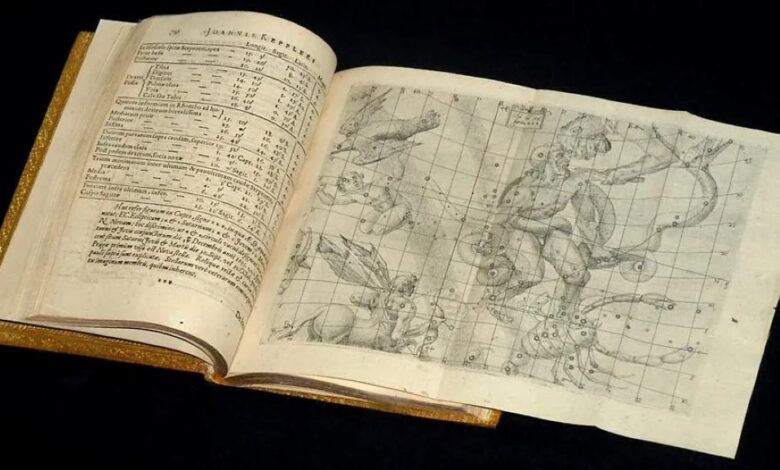
420 Years Ago: Astronomer Johannes Kepler Observes a Supernova
In October 1604, a new star appeared in the sky, puzzling astronomers of the day. First observed on Oct. 9, German astronomer Johannes Kepler (1571-1630) began his observations on Oct. 17 and tracked the new star for over a year. During that time, it brightened to magnitude -2.5, outshining Jupiter, and for several weeks remained visible in the daytime. Publication…
Read More » -
NASA
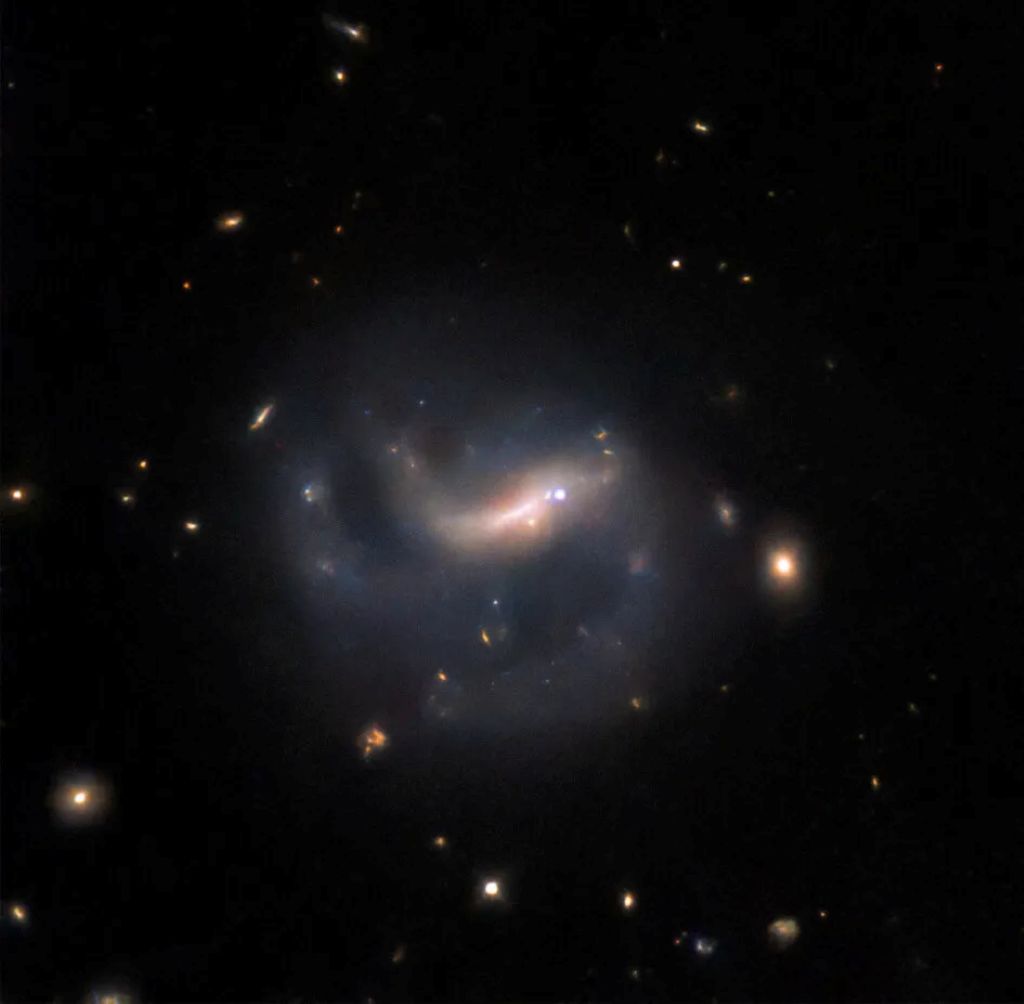
Hubble Spotlights a Supernova
This NASA/ESA Hubble Space Telescope image features the galaxy LEDA 857074, located in the constellation Eridanus. LEDA 857074 is a barred spiral galaxy, with partially broken spiral arms. The image also captured a supernova, named SN 2022ADQZ, shining brightly on the right side of the galaxy’s bar. Several evolutionary paths can lead to a supernova explosion. One is the death of a…
Read More » -
NASA
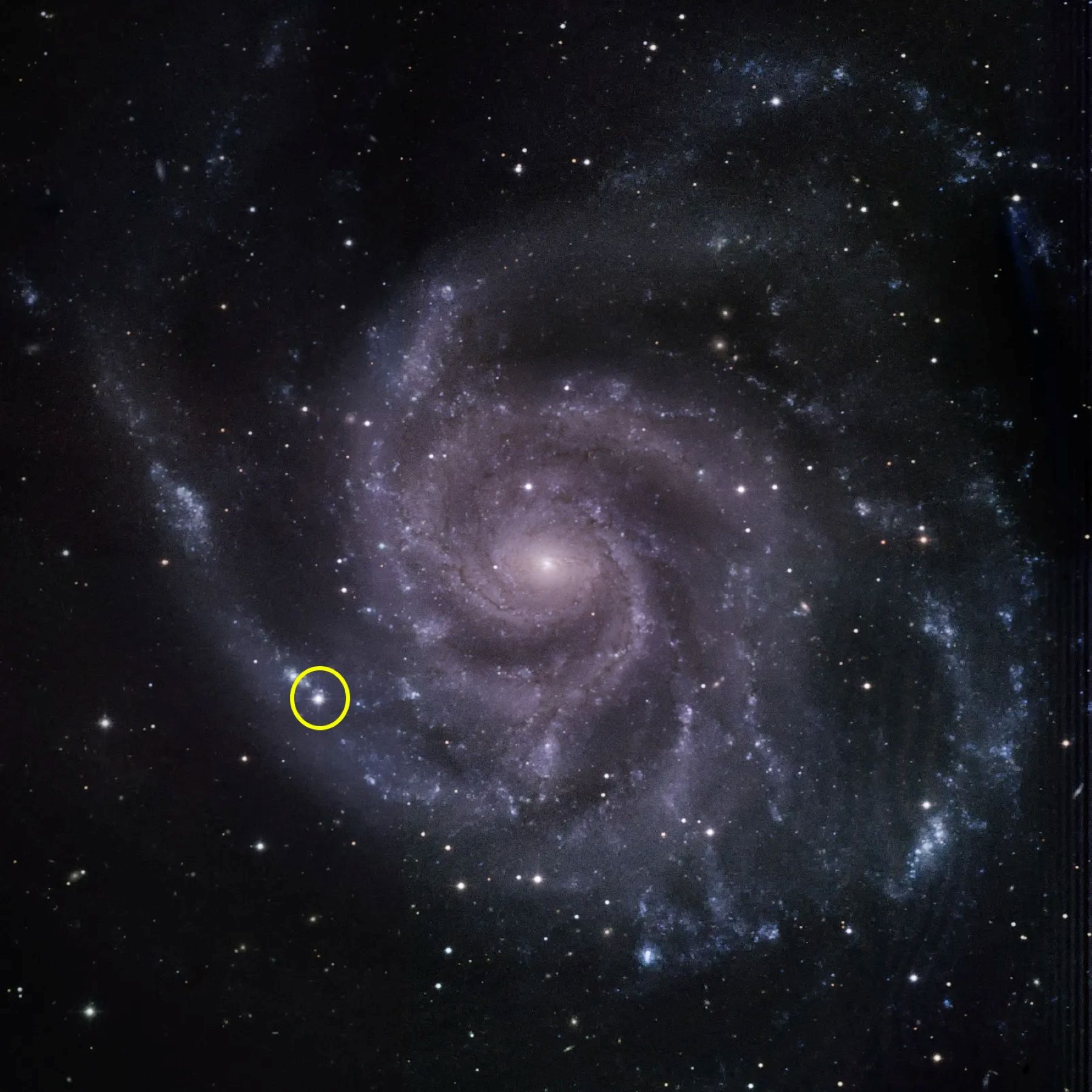
NASA’s Fermi Mission Sees No Gamma Rays from Nearby Supernova
A nearby supernova in 2023 offered astrophysicists an excellent opportunity to test ideas about how these types of explosions boost particles, called cosmic rays, to near light-speed. But surprisingly, NASA’s Fermi Gamma-ray Space Telescope detected none of the high-energy gamma-ray light those particles should produce. On May 18, 2023, a supernova erupted in the nearby Pinwheel galaxy (Messier 101), located about 22 million light-years away in…
Read More » -
NASA
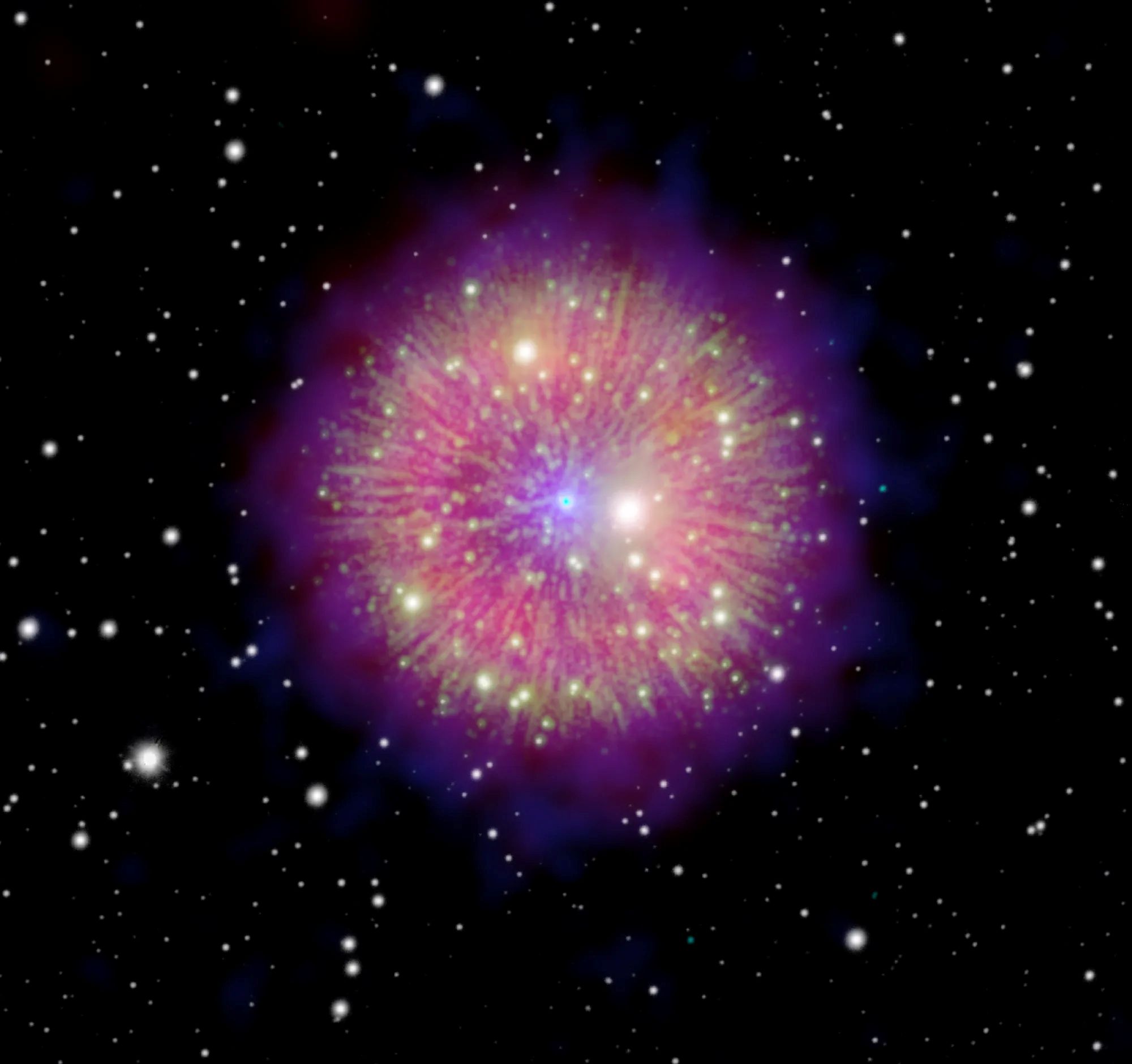
Stunning Echo of 800-year-old Explosion
In the year 1181 a rare supernova explosion appeared in the night sky, staying visible for 185 consecutive days. Historical records show that the supernova looked like a temporary ‘star’ in the constellation Cassiopeia shining as bright as Saturn. Ever since, scientists have tried to find the supernova’s remnant. At first it was thought that this could be the nebula around the pulsar — the dense…
Read More »