
Tarantula Nebula
-
NASA
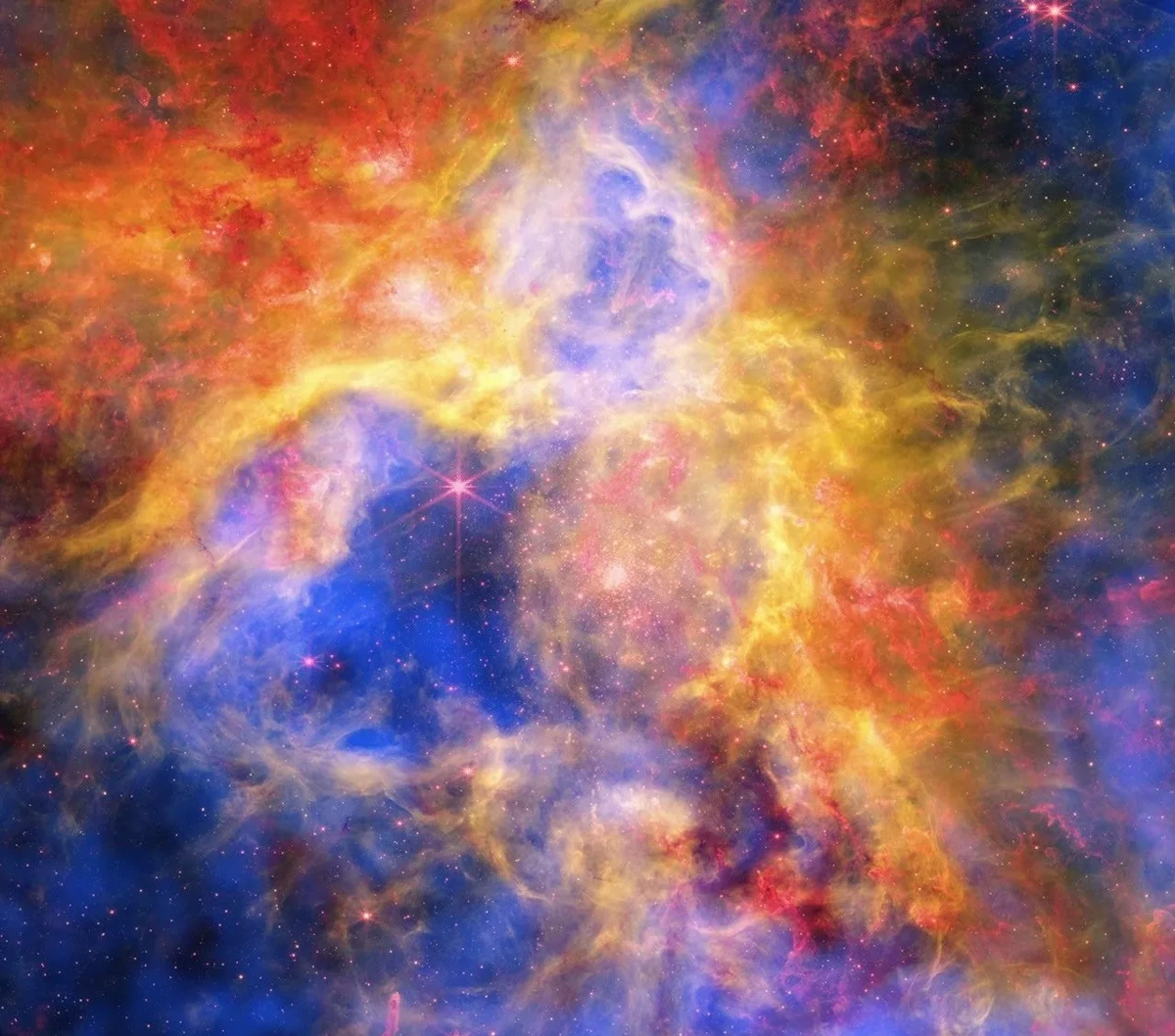
Colorful Collage of Tarantula Nebula
Data from NASA’s Chandra X-ray Observatory, NASA’s James Webb Space Telescope, and NASA’s Hubble Space Telescope combine to reveal a vibrant view of 30 Doradus, or the Tarantula Nebula, in this Aug. 11, 2026, image. Located in the Large Magellanic Cloud, a small neighbor galaxy to the Milky Way about 160,000 light-years from Earth, the Tarantula has thousands of young…
Read More » -
NASA

NASA Telescopes Create Colorful ‘Craft’ From Nearby Nebula
Like a collage made of layered sheets of colored cellophane, a vibrant new image layers observations of a famous star-forming nebula from NASA space telescopes. The resulting cosmic “craft” reveals new details about the star formation region known as 30 Doradus, or the Tarantula Nebula. Located in the Large Magellanic Cloud, a small neighbor galaxy to the Milky Way about…
Read More » -
NASA
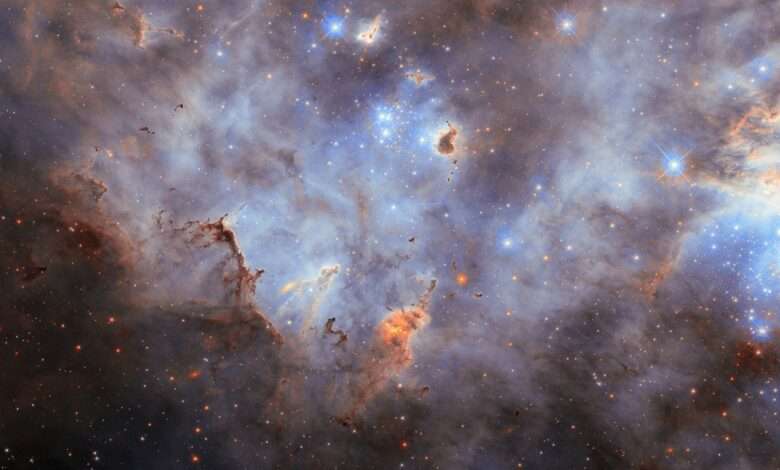
Hubble Surveys Cloudy Cluster
This new NASA/ESA Hubble Space Telescope image features a cloudy starscape from an impressive star cluster. This scene is in the Large Magellanic Cloud, a dwarf galaxy situated about 160,000 light-years away in the constellations Dorado and Mensa. With a mass equal to 10–20% of the mass of the Milky Way, the Large Magellanic Cloud is the largest of the dozens of…
Read More » -
NASA
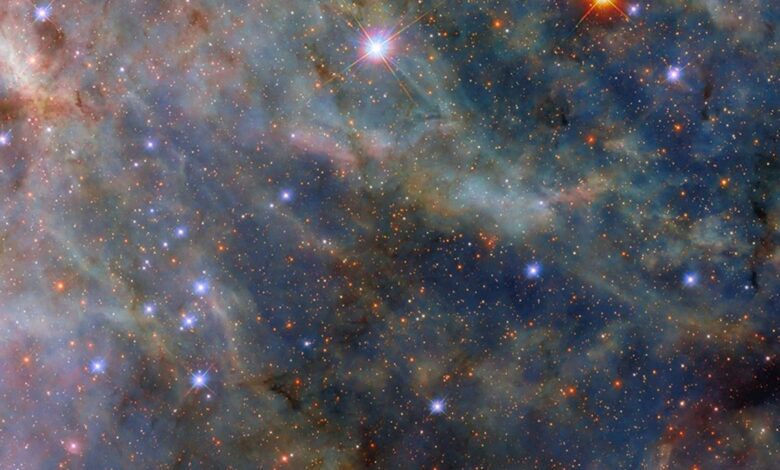
Hubble Captures a Tarantula
This NASA/ESA Hubble Space Telescope image captures incredible details in the dusty clouds of a star-forming factory called the Tarantula Nebula. Most of the nebulae Hubble images are in our galaxy, but this nebula is in the Large Magellanic Cloud, a dwarf galaxy located about 160,000 light-years away in the constellations Dorado and Mensa. The Large Magellanic Cloud is the largest of…
Read More » -
NASA
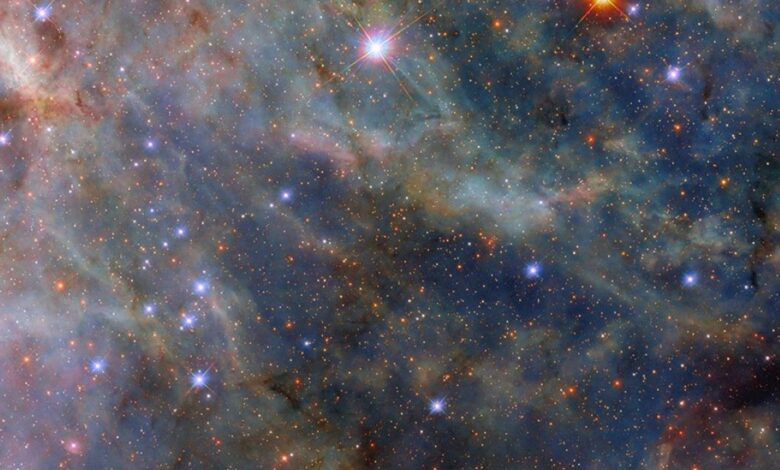
Hubble Captures a Tarantula
This NASA/ESA Hubble Space Telescope image captures incredible details in the dusty clouds of a star-forming factory called the Tarantula Nebula. Most of the nebulae Hubble images are in our galaxy, but this nebula is in the Large Magellanic Cloud, a dwarf galaxy located about 160,000 light-years away in the constellations Dorado and Mensa. The Large Magellanic Cloud is the largest of…
Read More » -
NASA

Hubble Captures a Cosmic Cloudscape
The universe is a dusty place, as this NASA/ESA Hubble Space Telescope image featuring swirling clouds of gas and dust near the Tarantula Nebula reveals. Located in the Large Magellanic Cloud about 160,000 light-years away in the constellations Dorado and Mensa, the Tarantula Nebula is the most productive star-forming region in the nearby universe, home to the most massive stars known. The…
Read More » -
NASA
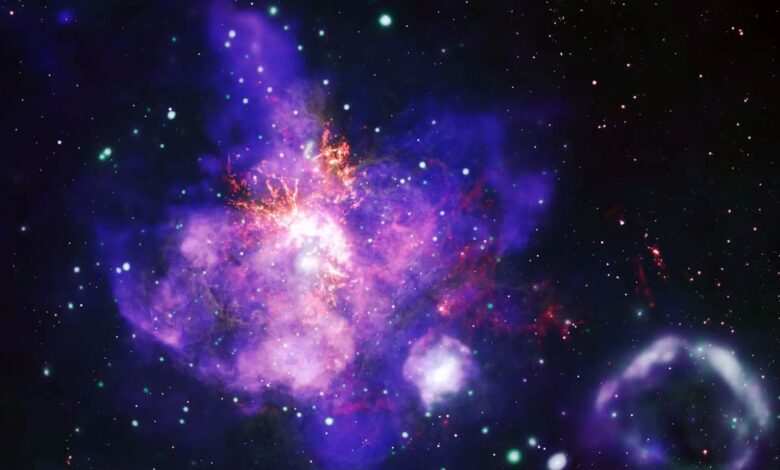
A Stellar Bouquet
This image, released on Feb. 12, 2025, is the deepest X-ray image ever made of the spectacular star forming region called 30 Doradus. By combining X-ray data from NASA’s Chandra X-ray Observatory (blue and green) with optical data from NASA’s Hubble Space Telescope (yellow) and radio data from the Atacama Large Millimeter/submillimeter Array (orange), this stellar arrangement comes alive. Otherwise known as the Tarantula Nebula, 30…
Read More » -
NASA
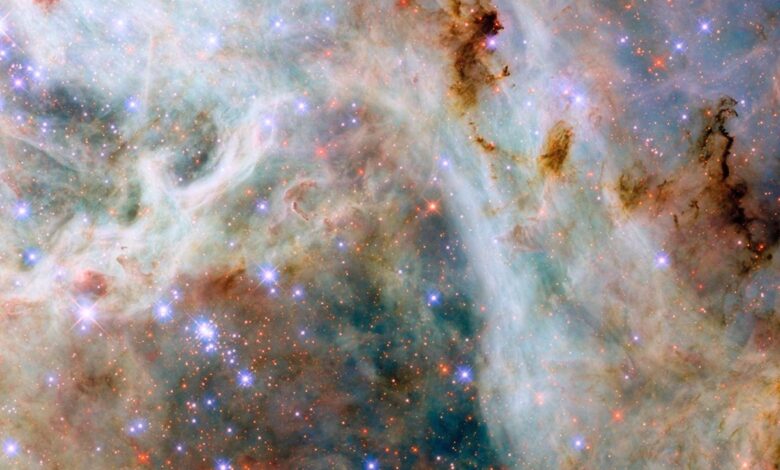
Hubble Captures a Cosmic Cloudscape
Download this image The universe is a dusty place, as this NASA/ESA Hubble Space Telescope image featuring swirling clouds of gas and dust near the Tarantula Nebula reveals. Located in the Large Magellanic Cloud about 160,000 light-years away in the constellations Dorado and Mensa, the Tarantula Nebula is the most productive star-forming region in the nearby universe, home to the most massive…
Read More »