
Volcano
-
NASA
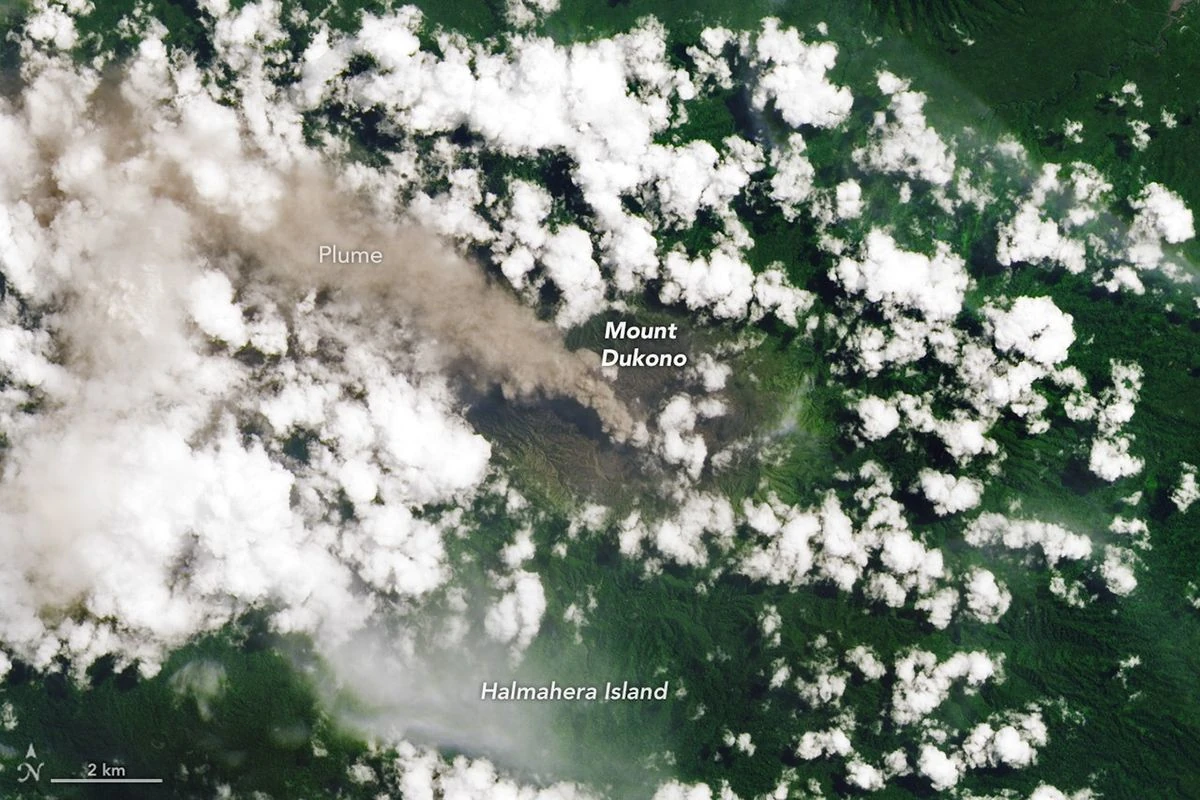
Ever Restless Mount Dukono Erupts
In May 2026, the Global Volcanism Program reported nine actively erupting volcanoes in Indonesia—more than any other country at the time. Such activity is typical for the Southeast Asian archipelago, where eruptions have occurred at 55 volcanoes since the 1960s—the highest total for any country. Japan ranks second with eruptions at 40 volcanoes over that time period, followed by the United States…
Read More » -
NASA
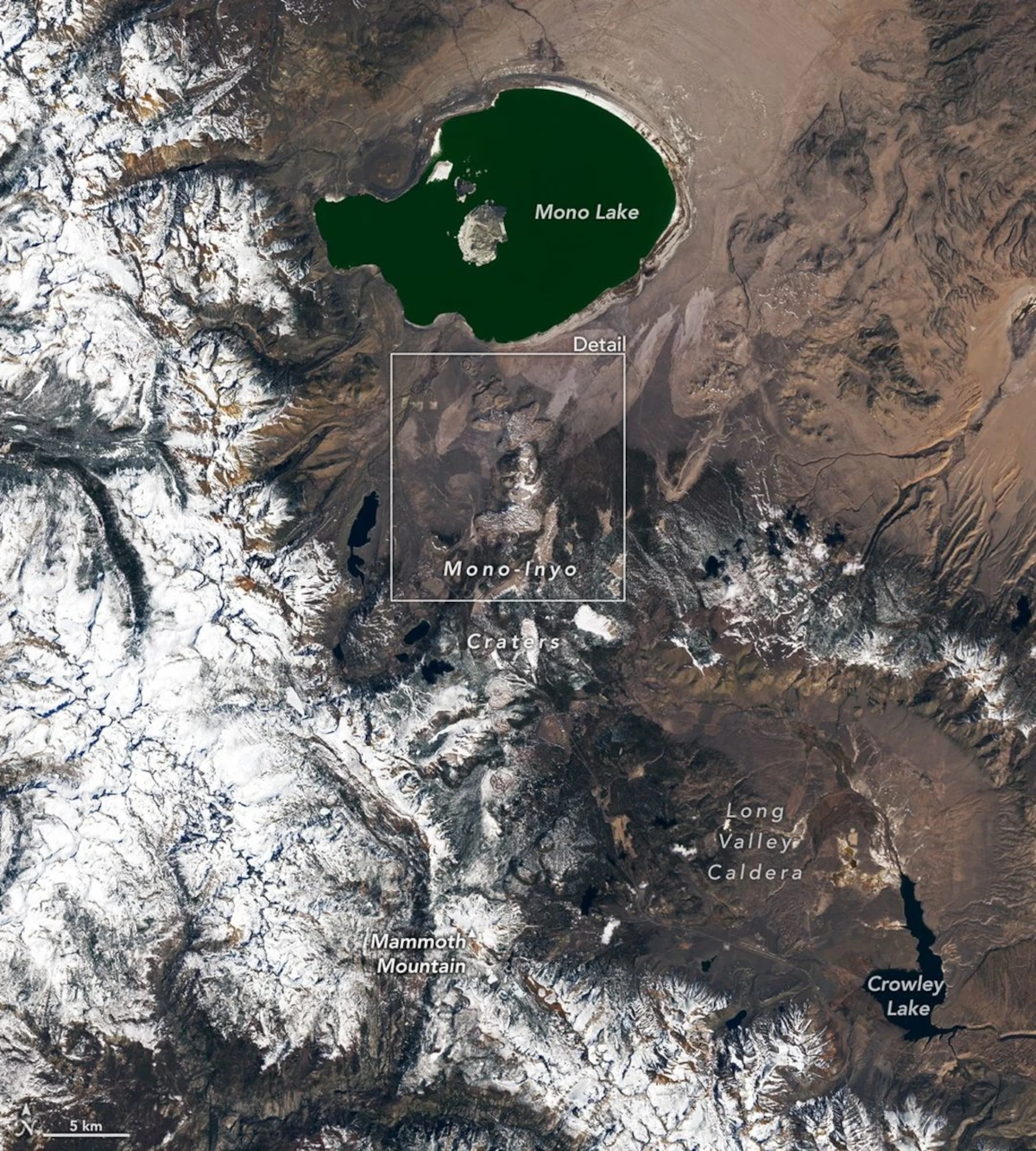
A Volcanic Medley Near Mammoth Lakes
Take a tour through volcanic history on the edge of the Sierra Nevada near Mammoth Lakes, California. Between the tall granite peaks to the west and the Basin and Range province to the east, overlapping volcanic complexes imprint the landscape with a collection of craters, cones, and calderas. The area, still restless today, draws interest from geologists studying Earth’s processes and from planetary scientists…
Read More » -
NASA
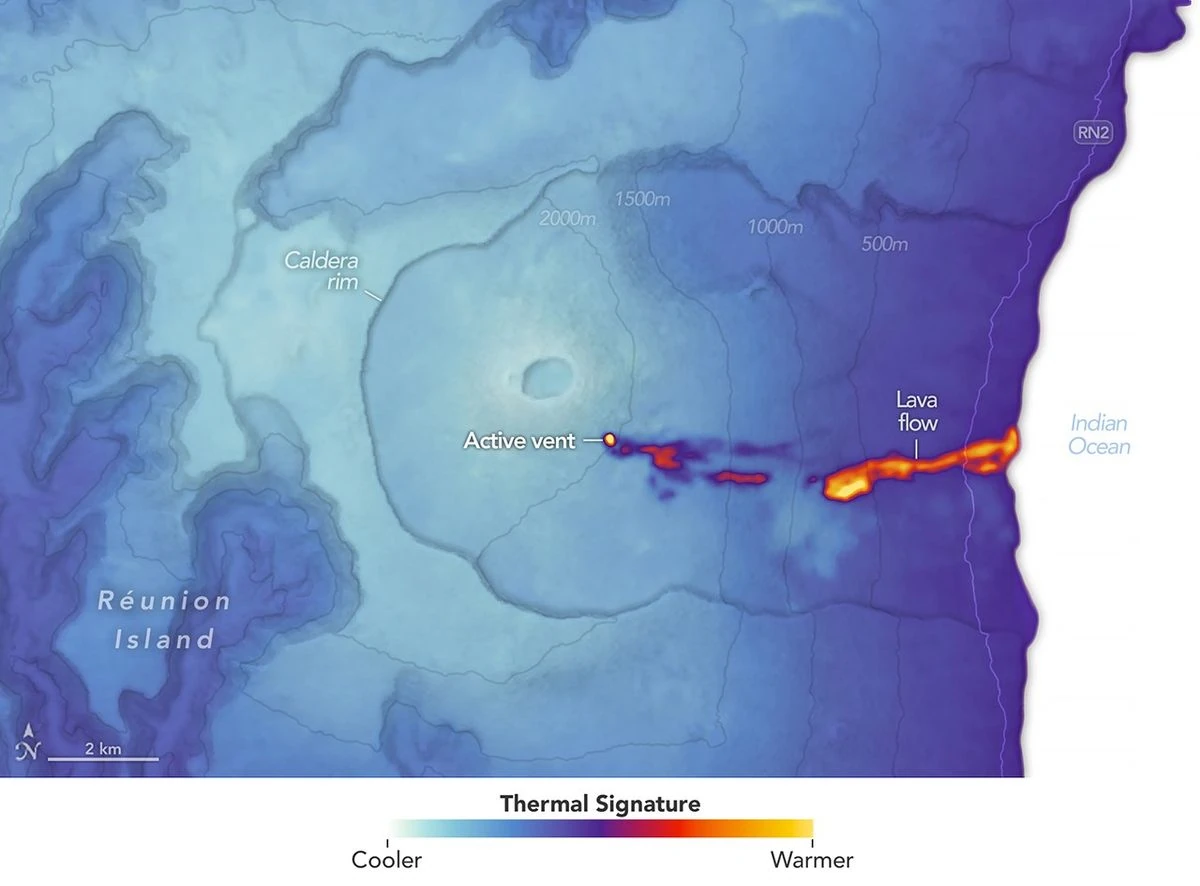
Réunion Island Lava Reaches the Sea
Located 700 kilometers (440 miles) east of Madagascar, Réunion Island is the product of a long-lived mantle hotspot on the floor of the Indian Ocean. The island first emerged above the ocean’s surface about 2 million years ago. It remains active today, with frequent eruptions from Piton de la Fournaise, a shield volcano on the island’s eastern side. Since the 17th century, the…
Read More » -
NASA
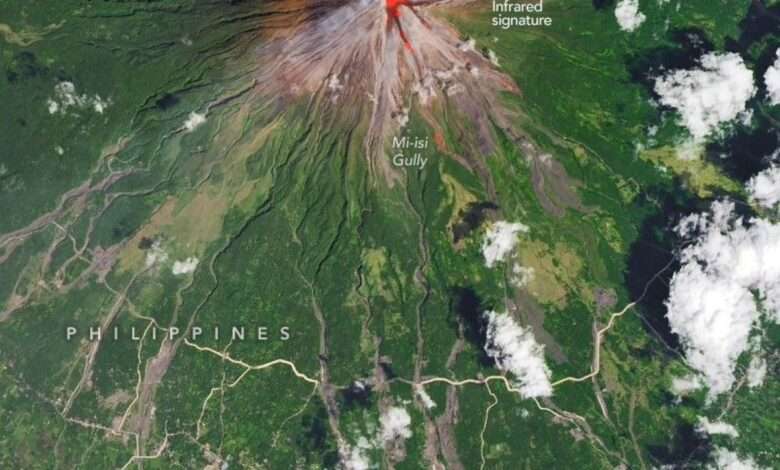
Eruption at Mayon
At any given moment, about 20 volcanoes on Earth are actively erupting. Often among them is Mayon—the most active volcano in the Philippines. The nearly symmetrical stratovolcano, on Luzon Island near the Albay and Lagonoy gulfs, rises more than 2,400 meters (8,000 feet) above sea level. Historical records indicate Mayon has erupted 65 times in the past 5,000 years, with the latest episode beginning in January…
Read More » -
Press Releases
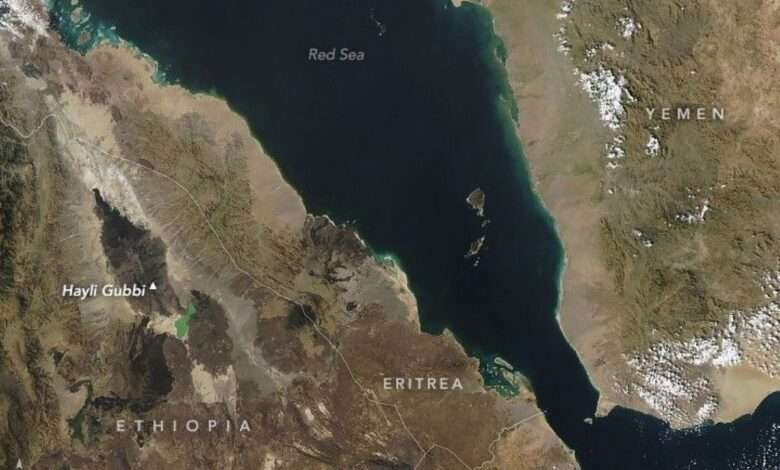
Hayli Gubbi’s Explosive First Impression
On November 23, 2025, the Hayli Gubbi volcano in northern Ethiopia erupted in dramatic fashion. The shield volcano in the Danakil (or Afar) Depression began spewing ash and volcanic gases at around 11:30 a.m. local time (8:30 Universal Time) that day, marking its first documented explosive eruption. The plume reached into the upper troposphere and drifted northeast, eventually crossing over northern India and…
Read More » -
NASA
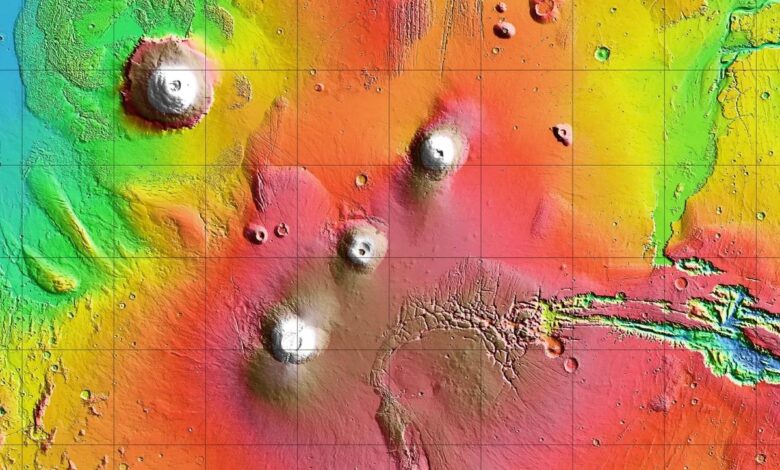
NASA Mars Orbiter Captures Volcano Peeking Above Morning Cloud Tops
Arsia Mons, an ancient Martian volcano, was captured before dawn on May 2, 2025, by NASA’s 2001 Mars Odyssey orbiter while the spacecraft was studying the Red Planet’s atmosphere, which appears here as a greenish haze. NASA/JPL-Caltech/ASU The 2001 Odyssey spacecraft captured a first-of-its-kind look at Arsia Mons, which dwarfs Earth’s tallest volcanoes. A new panorama from NASA’s 2001 Mars Odyssey…
Read More » -
NASA
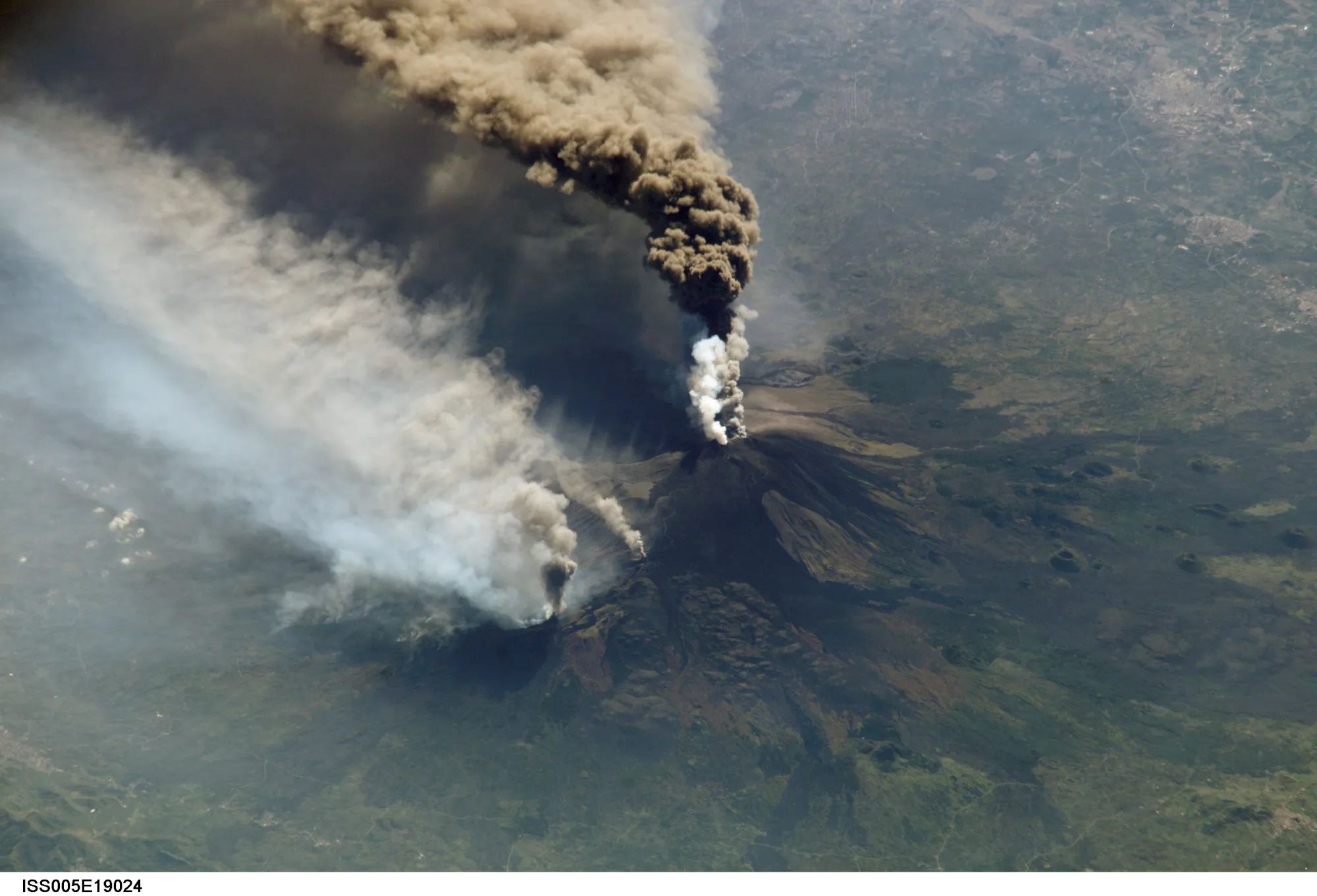
Can Volcanic Super Eruptions Lead to Major Cooling? Study Suggests No
New research suggests that sunlight-blocking particles from an extreme eruption would not cool surface temperatures on Earth as severely as previously estimated. Some 74,000 years ago, the Toba volcano in Indonesia exploded with a force 1,000 times more powerful than the 1980 eruption of Mount St. Helens. The mystery is what happened after that – namely, to what degree that…
Read More » -
NASA

For Your Processing Pleasure: The Sharpest Pictures of Jupiter’s Volcanic Moon Io in a Generation
NASA’s Juno spacecraft just made the closest flybys of Jupiter’s moon Io that any spacecraft has carried out in more than 20 years. An instrument on this spacecraft called “JunoCam” returned spectacular, high-resolution images—and raw data are now available for you to process, enhance, and investigate. On Dec. 30th, 2023, Juno came within about 930 miles (1,500 kilometers) of the surface of the solar…
Read More »