
Voyager 2
-
NASA

20-Year Hubble Study of Uranus Yields New Atmospheric Insights
The ice-giant planet Uranus, which travels around the Sun tipped on its side, is a weird and mysterious world. Now, in an unprecedented study spanning two decades, researchers using NASA’s Hubble Space Telescope have uncovered new insights into the planet’s atmospheric composition and dynamics. This was possible only because of Hubble’s sharp resolution, spectral capabilities, and longevity. The team’s results will help…
Read More » -
NASA

NASA Turns Off 2 Voyager Science Instruments to Extend Mission
The farthest-flung human-made objects will be able to take their science-gathering even farther, thanks to these energy-conserving measures. Mission engineers at NASA’s Jet Propulsion Laboratory in Southern California turned off the cosmic ray subsystem experiment aboard Voyager 1 on Feb. 25 and will shut off Voyager 2’s low-energy charged particle instrument on March 24. Three science instruments will continue to…
Read More » -
NASA
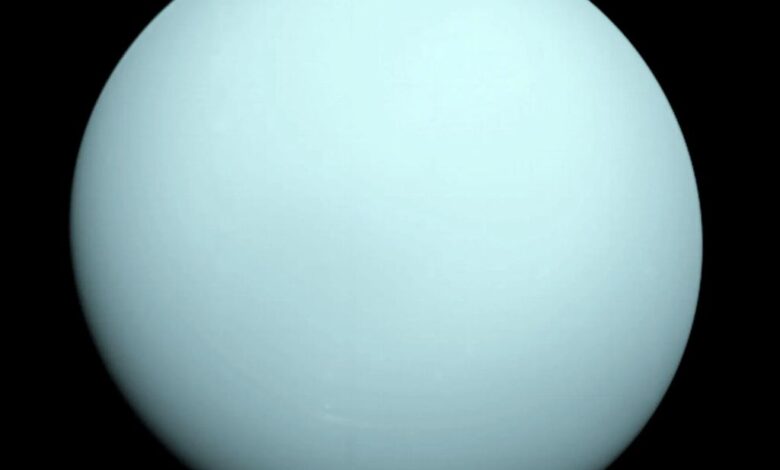
Mining Old Data From NASA’s Voyager 2 Solves Several Uranus Mysteries
NASA’s Voyager 2 flyby of Uranus decades ago shaped scientists’ understanding of the planet but also introduced unexplained oddities. A recent data dive has offered answers. When NASA’s Voyager 2 spacecraft flew by Uranus in 1986, it provided scientists’ first — and, so far, only — close glimpse of this strange, sideways-rotating outer planet. Alongside the discovery of new moons…
Read More » -
NASA
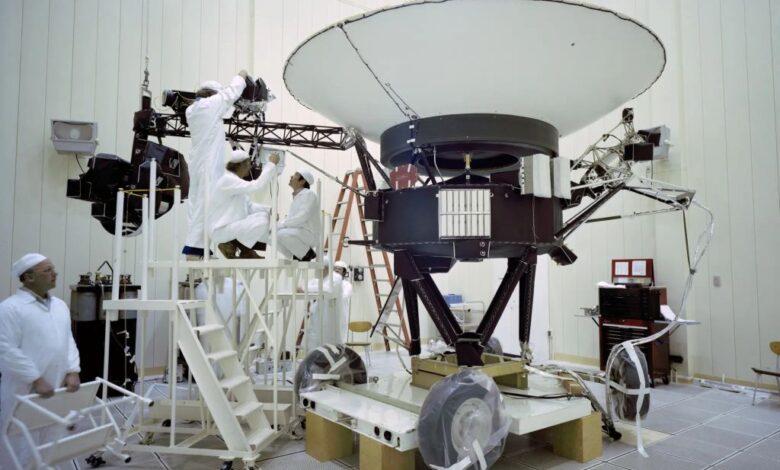
Still Kickin’ Since the ’70s: NASA’s Voyager Mission Keeps Exploring
NASA’s Voyager mission launched in the 1970s. Today, it’s making history as it conducts new science. But how are two spacecraft from the ’70s not just surviving, but thriving farther out in space than any other spacecraft has been before? A Little Mission Background Voyager is a NASA mission made up of two different spacecraft, Voyager 1 and 2, which…
Read More » -
NASA
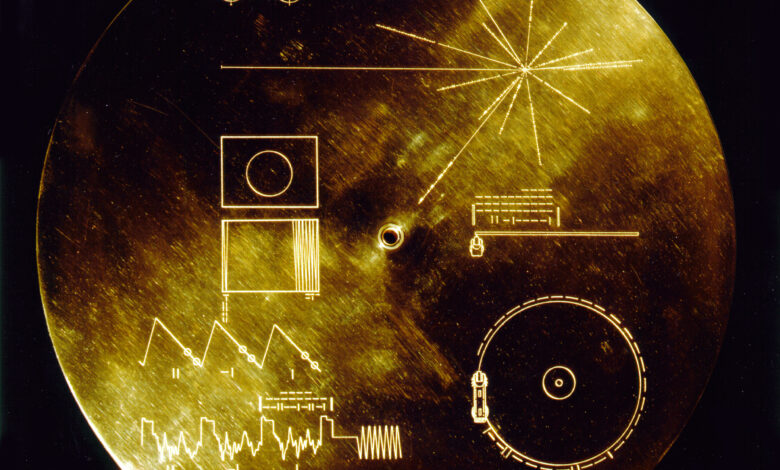
Instructions for Aliens
The golden records placed aboard Voyager 1 and 2 each have a cover with special etchings, seen here in this photo from Sept. 4, 1977. These drawings show how the record should be used to receive a message from Earth. For example, the drawing in the bottom right corner is of the phonograph record and the stylus carried with it;…
Read More » -
NASA
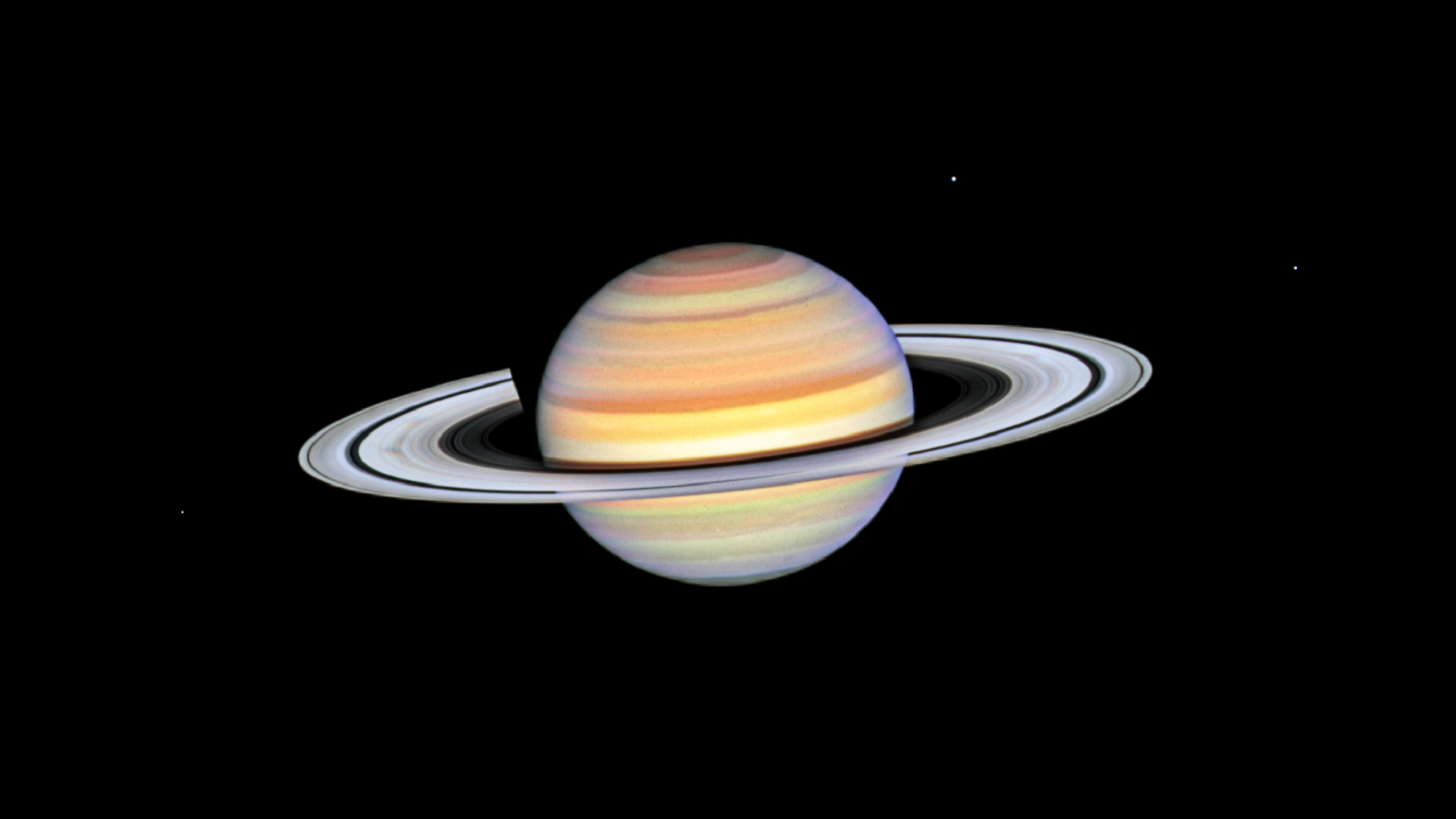
NASA’s Hubble Watches ‘Spoke Season’ on Saturn
This photo of Saturn was taken by NASA’s Hubble Space Telescope on October 22, 2023, when the ringed planet was approximately 850 million miles from Earth. Hubble’s ultra-sharp vision reveals a phenomenon called ring spokes. Saturn’s spokes are transient features that rotate along with the rings. Their ghostly appearance only persists for two or three rotations around Saturn. During active periods, freshly-formed…
Read More » -
NASA
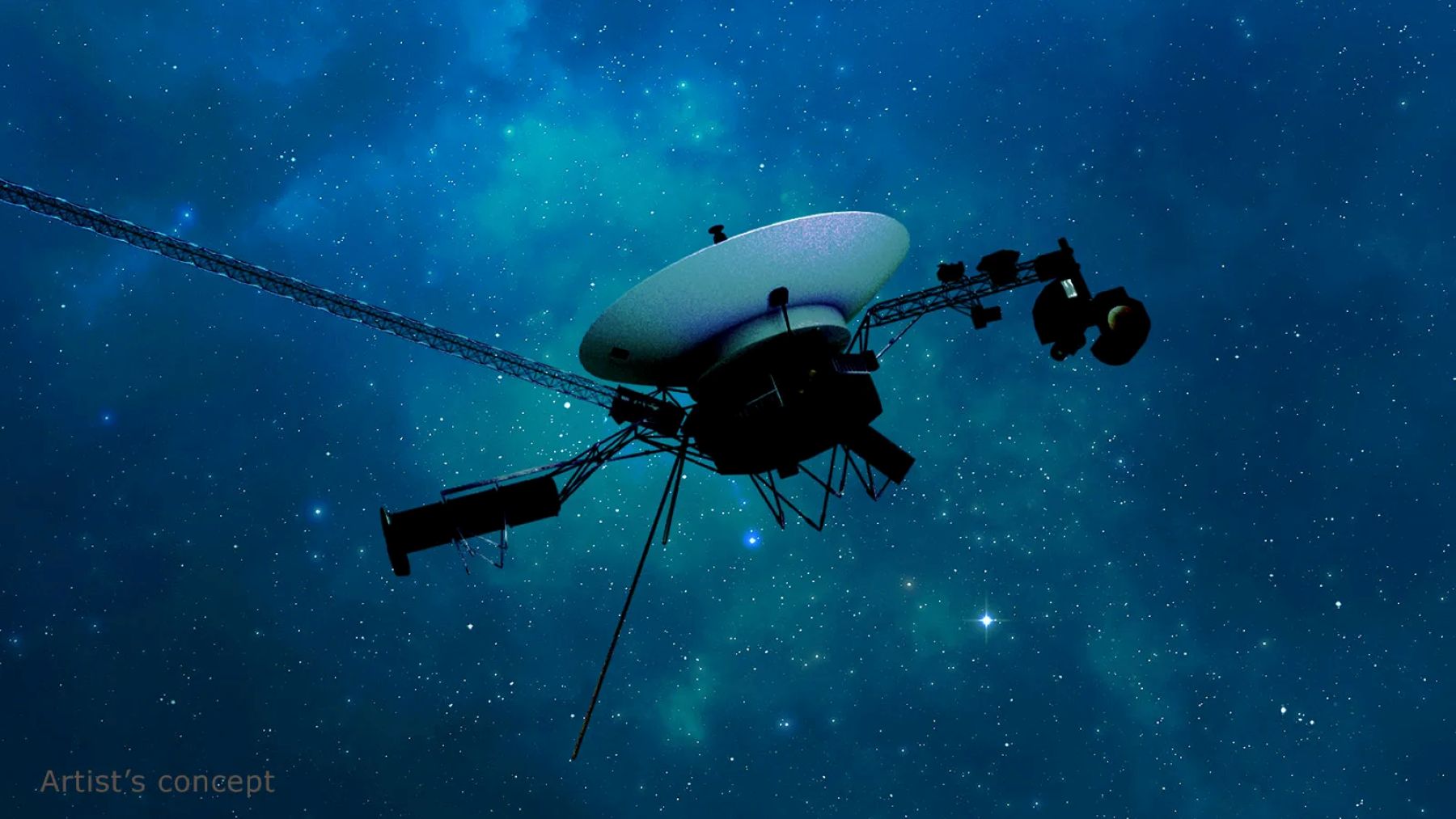
NASA’s Voyager Team Focuses on Software Patch, Thrusters
The efforts should help extend the lifetimes of the agency’s interstellar explorers. Engineers for NASA’s Voyager mission are taking steps to help make sure both spacecraft, launched in 1977, continue to explore interstellar space for years to come. One effort addresses fuel residue that seems to be accumulating inside narrow tubes in some of the thrusters on the spacecraft. The thrusters are…
Read More » -
NASA
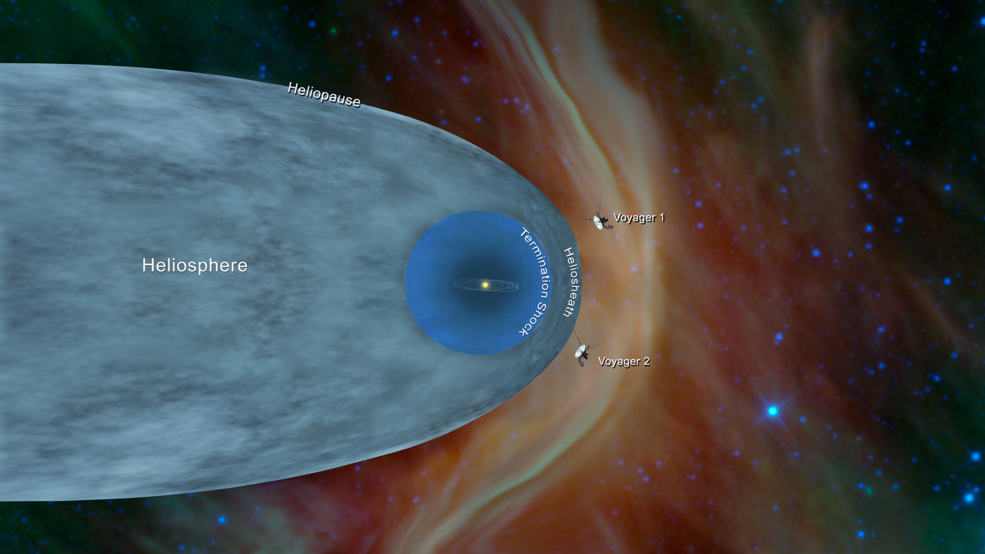
NASA’s Voyager 2 Probe Enters Interstellar Space
For the second time in history, a human-made object has reached the space between the stars. NASA’s Voyager 2 probe now has exited the heliosphere – the protective bubble of particles and magnetic fields created by the Sun. Members of NASA’s Voyager team will discuss the findings at a news conference at 11 a.m. EST (8 a.m. PST) today at the meeting…
Read More »