
Webb
-
NASA
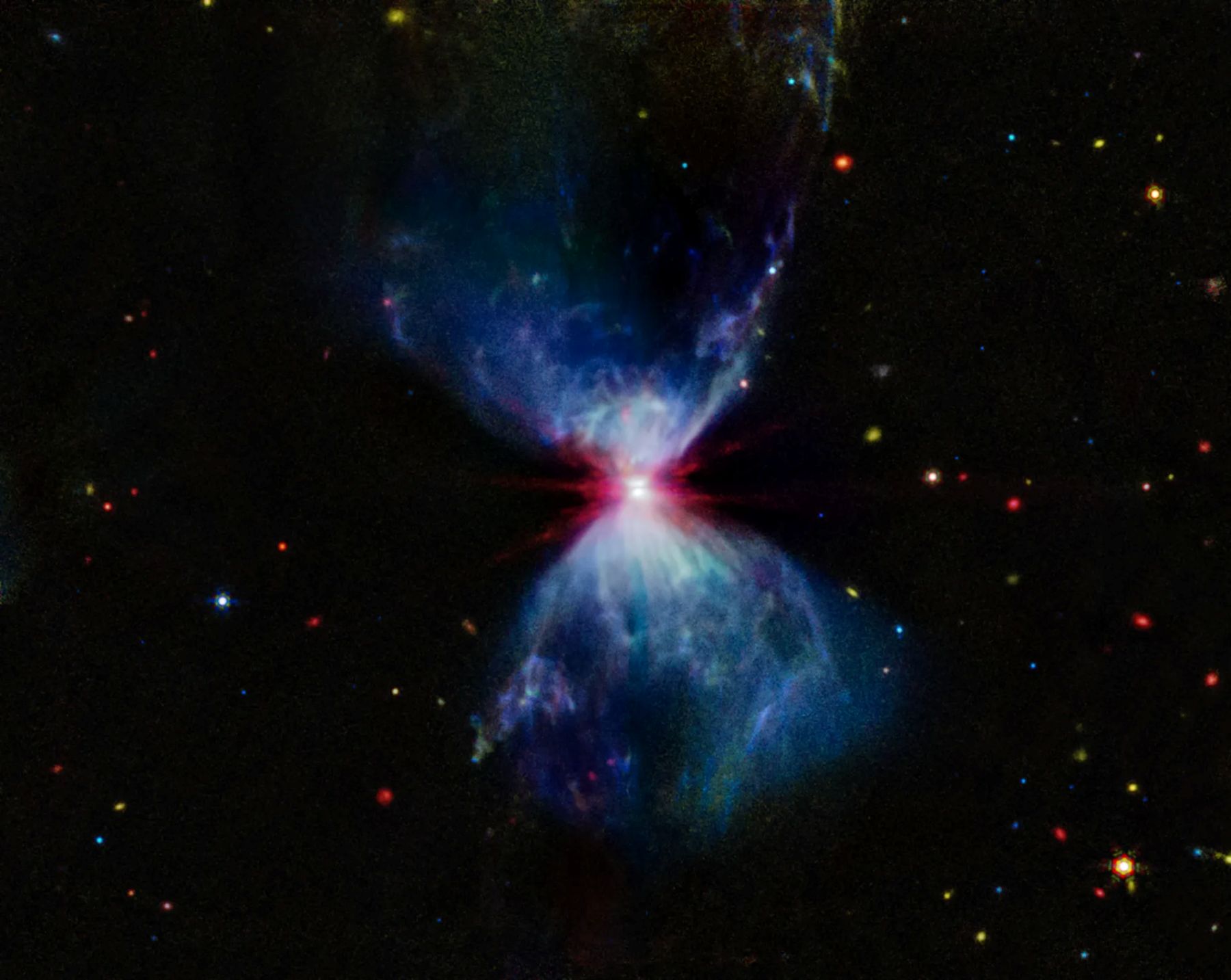
NASA’s Webb Captures Celestial Fireworks Around Forming Star
Both NIRCam and MIRI show the effects of outflows, which are emitted in opposite directions along the protostar’s rotation axis as the object consumes gas and dust from the surrounding cloud. These outflows take the form of bow shocks to the surrounding molecular cloud, which appear as filamentary structures throughout. They are also responsible for carving the bright hourglass structure…
Read More » -
NASA
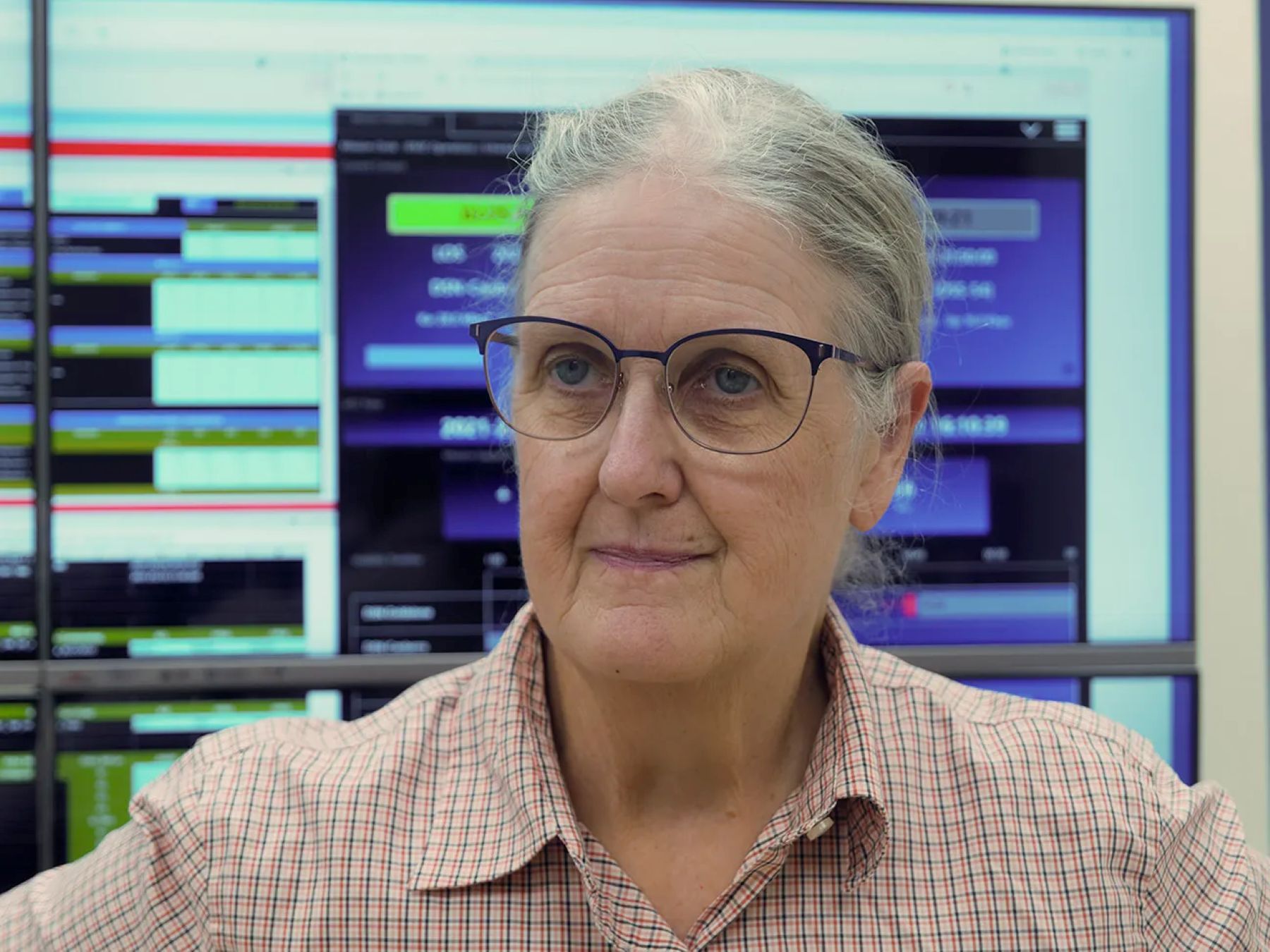
NASA Webb, Hubble Scientist Marcia Rieke Awarded Gruber Cosmology Prize
Marcia Rieke, a scientist who worked on NASA’s James Webb Space Telescope and Hubble Space Telescope, has received the Gruber Foundation’s 2024 Cosmology Prize. Rieke will receive the award and gold laureate pin at a ceremony August 8, 2024, at the General Assembly of the International Astronomical Union in Cape Town, South Africa. Marcia Rieke is Regents’ Professor of Astronomy at the University of…
Read More » -
NASA

First of Its Kind Detection Made in Striking New Webb Image
Alignment of bipolar jets confirms star formation theories For the first time, a phenomenon astronomers have long hoped to directly image has been captured by NASA’s James Webb Space Telescope’s Near-Infrared Camera (NIRCam). In this stunning image of the Serpens Nebula, the discovery lies in the northern area (seen at the upper left) of this young, nearby star-forming region. Astronomers…
Read More » -
NASA
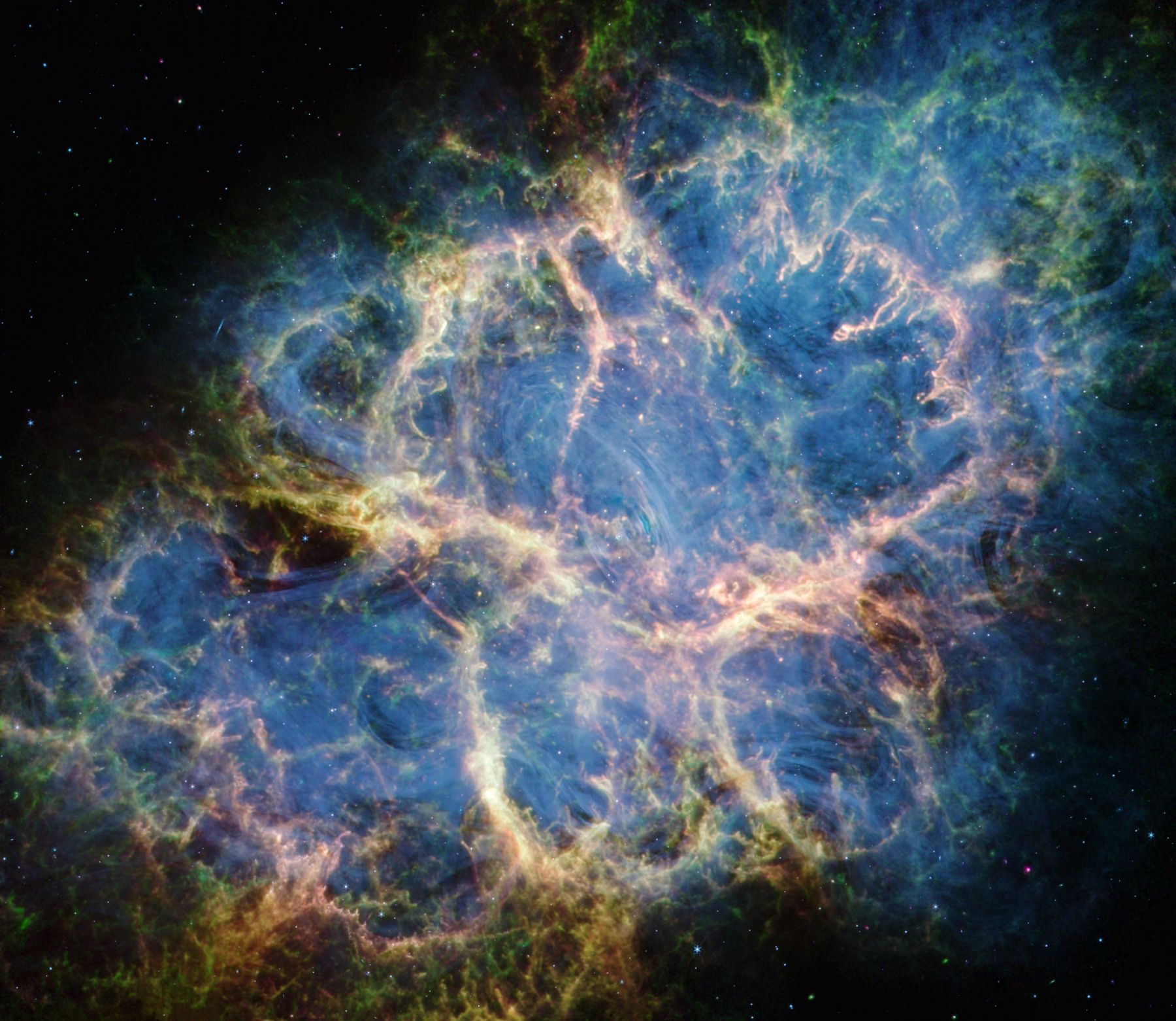
Investigating the Origins of the Crab Nebula With NASA’s Webb
New data revises our view of this unusual supernova explosion. A team of scientists used NASA’s James Webb Space Telescope to parse the composition of the Crab Nebula, a supernova remnant located 6,500 light-years away in the constellation Taurus. With the telescope’s MIRI (Mid-Infrared Instrument) and NIRCam (Near-Infrared Camera), the team gathered data that is helping to clarify the Crab Nebula’s history. The…
Read More » -
NASA

NASA’s Webb Reveals Long-Studied Star Is Actually Twins
Managed by NASA’s Jet Propulsion Laboratory through launch, Webb’s Mid-Infrared Instrument also revealed jets of gas flowing into space from the twin stars. Scientists recently got a big surprise from NASA’s James Webb Space Telescope when they turned the observatory toward a group of young stars called WL 20. The region has been studied since the 1970s with at least five telescopes,…
Read More » -
NASA
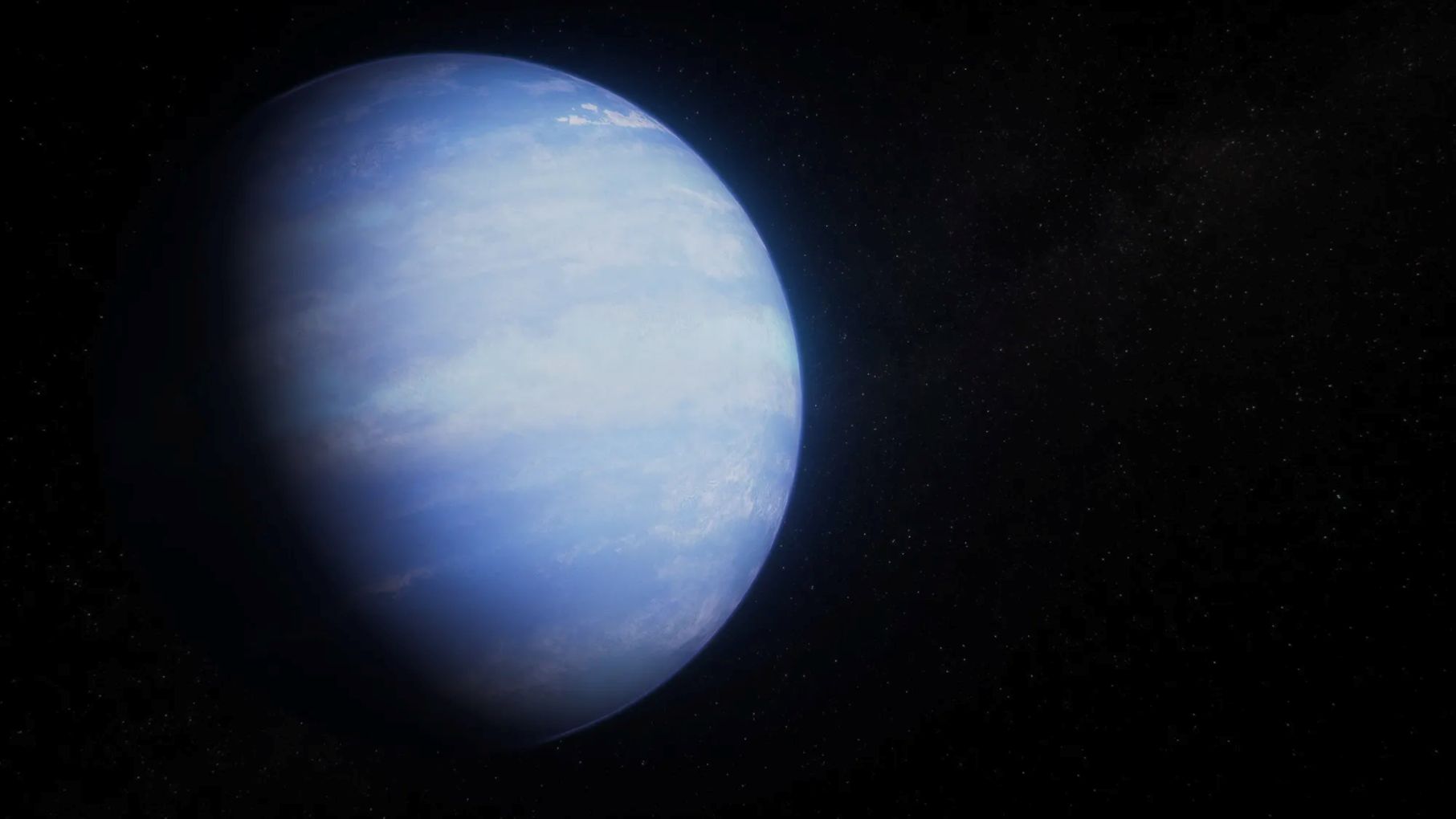
Webb Cracks Case of Inflated Exoplanet
Why is the warm gas-giant exoplanet WASP-107 b so puffy? Two independent teams of researchers have an answer. Data collected using NASA’s James Webb Space Telescope, combined with prior observations from NASA’s Hubble Space Telescope, show surprisingly little methane (CH4) in the planet’s atmosphere, indicating that the interior of WASP-107 b must be significantly hotter and the core much more…
Read More » -
NASA
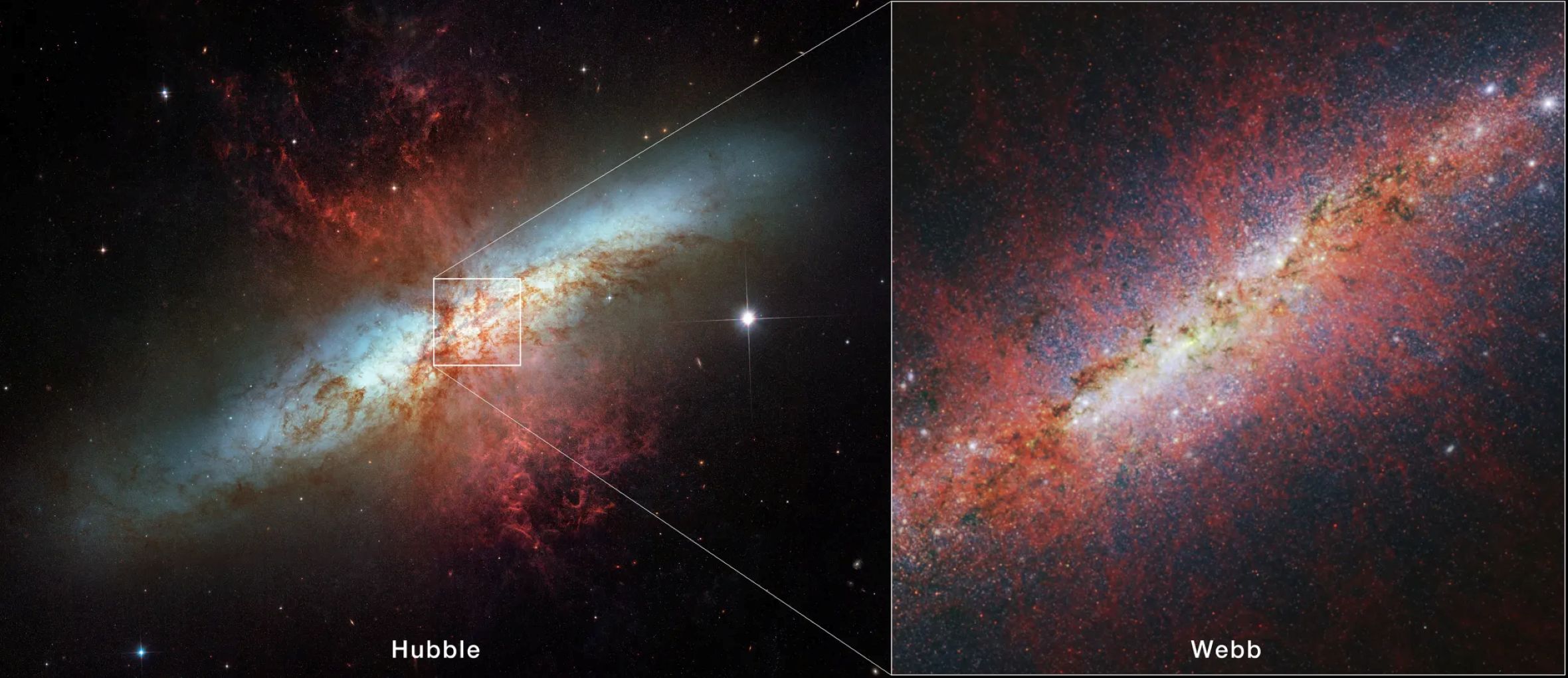
NASA’s Webb Probes an Extreme Starburst Galaxy
Amid a site teeming with new and young stars lies an intricate substructure. A team of astronomers has used NASA’s James Webb Space Telescope to survey the starburst galaxy Messier 82 (M82). Located 12 million light-years away in the constellation Ursa Major, this galaxy is relatively compact in size but hosts a frenzy of star formation activity. For comparison, M82 is sprouting new stars…
Read More » -
NASA

Cheers! NASA’s Webb Finds Ethanol, Other Icy Ingredients for Worlds
What do margaritas, vinegar, and ant stings have in common? They contain chemical ingredients that NASA’s James Webb Space Telescope has identified surrounding two young protostars known as IRAS 2A and IRAS 23385. Although planets are not yet forming around those stars, these and other molecules detected there by Webb represent key ingredients for making potentially habitable worlds. An international…
Read More » -
NASA

NASA’s Webb, Hubble Telescopes Affirm Universe’s Expansion Rate, Puzzle Persists
When you are trying to solve one of the biggest conundrums in cosmology, you should triple check your homework. The puzzle, called the “Hubble Tension,” is that the current rate of the expansion of the universe is faster than what astronomers expect it to be, based on the universe’s initial conditions and our present understanding of the universe’s evolution. Scientists…
Read More » -
NASA

Peering Into the Tendrils of NGC 604 with NASA’s Webb
The formation of stars and the chaotic environments they inhabit is one of the most well-studied, but also mystery-shrouded, areas of cosmic investigation. The intricacies of these processes are now being unveiled like never before by NASA’s James Webb Space Telescope. Two new images from Webb’s NIRCam (Near-Infrared Camera) and MIRI (Mid-Infrared Instrument) showcase star-forming region NGC 604, located in…
Read More »