X-Ray

  • NASA

    NASA’s Chandra Unveils Mysterious X-Ray Objects

    Using NASA’s Chandra X-ray Observatory, scientists have discovered a new class of objects behaving unlike any they have seen before. Astronomers suggest these newly spotted objects in other galaxies may help solve not one, but two long-standing questions in astrophysics. These mysterious objects give off unusually low-energy X-rays but intense levels of ultraviolet radiation. This discovery is featured in a…

    Read More »
  • NASA

    NASA’s Chandra and IXPE Study Pulsar in Lighthouse Nebula

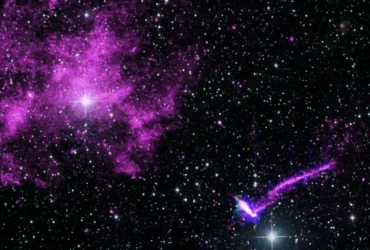
    This composite image, released on July 9, 2026, shows the region around a pulsar – a neutron star with a strong magnetic field that spins incredibly fast – within the Lighthouse nebula. The image contains X-ray data from NASA’s Chandra X-ray Observatory in purple, X-rays from NASA’s IXPE (Imaging X-ray Polarimetry Explorer) in blue, and radio emission captured by the Australia Compact Telescope Array in green.…

    Read More »
  • NASA

    Unlocking the Mystery of X-ray Dots

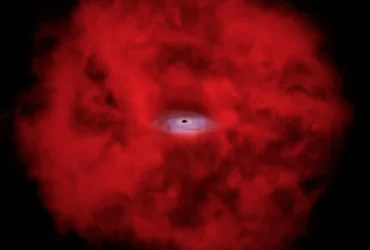
    A new “X-ray dot” found by NASA’s Chandra X-ray Observatory – which could look like this artist’s illustration released on April 28, 2026 – could explain what the hundreds or potentially thousands of these objects are. Shortly after NASA’s James Webb Space Telescope started its science observations, reports of a new class of mysterious objects emerged. Astronomers found small, red…

    Read More »
  • NASA

    X-ray and Radio go ‘Hand in Hand’ in New Image

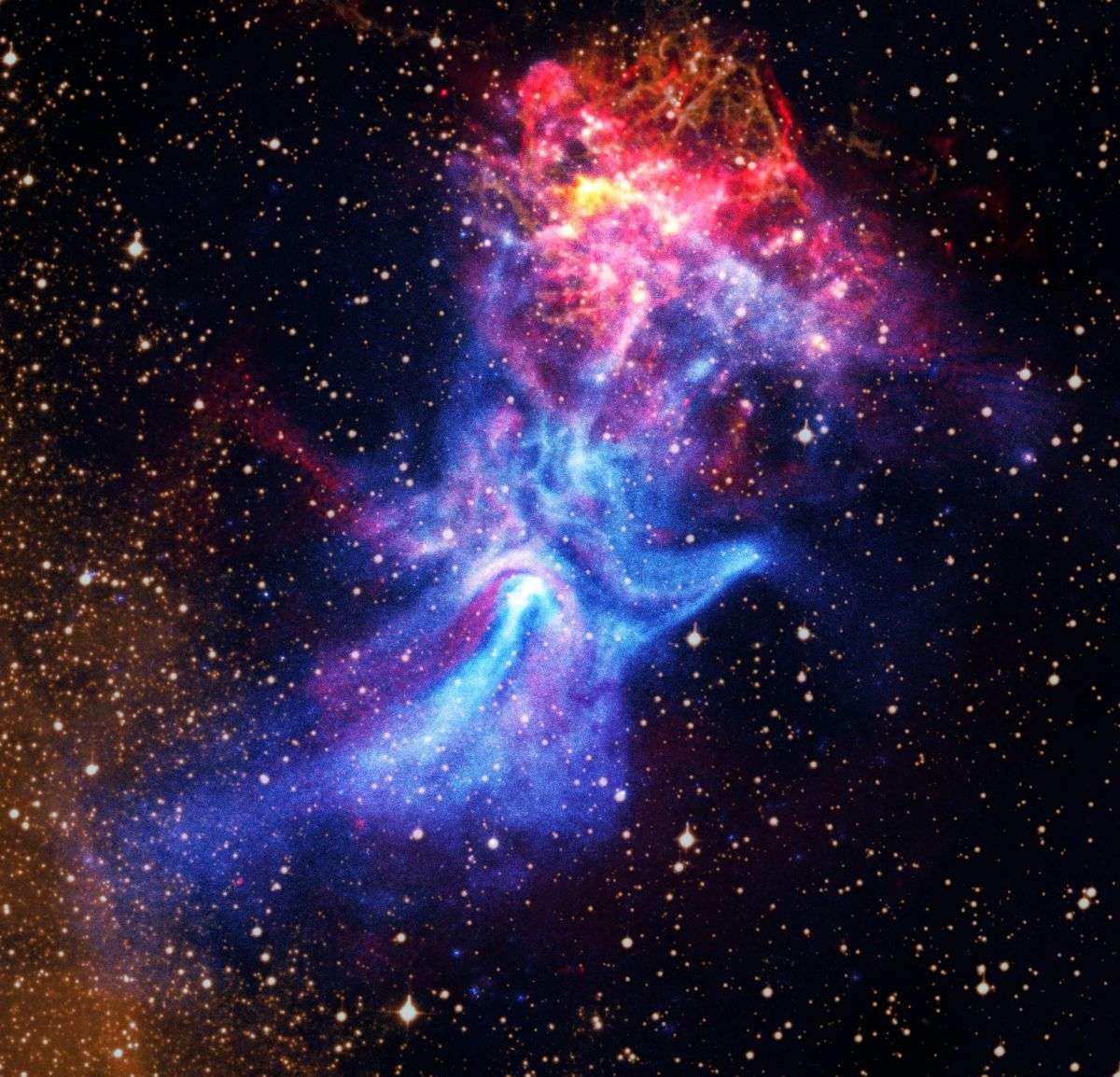
    In 2009, NASA’s Chandra X-ray Observatory released a captivating image: a pulsar and its surrounding nebula that is shaped like a hand. Since then, astronomers have used Chandra and other telescopes to continue to observe this object. Now, new radio data from the Australia Telescope Compact Array (ATCA), has been combined with Chandra’s X-ray data to provide a fresh view…

    Read More »
  • NASA

    Eccentric ‘Star’ Defies Easy Explanation, NASA’s Chandra Finds

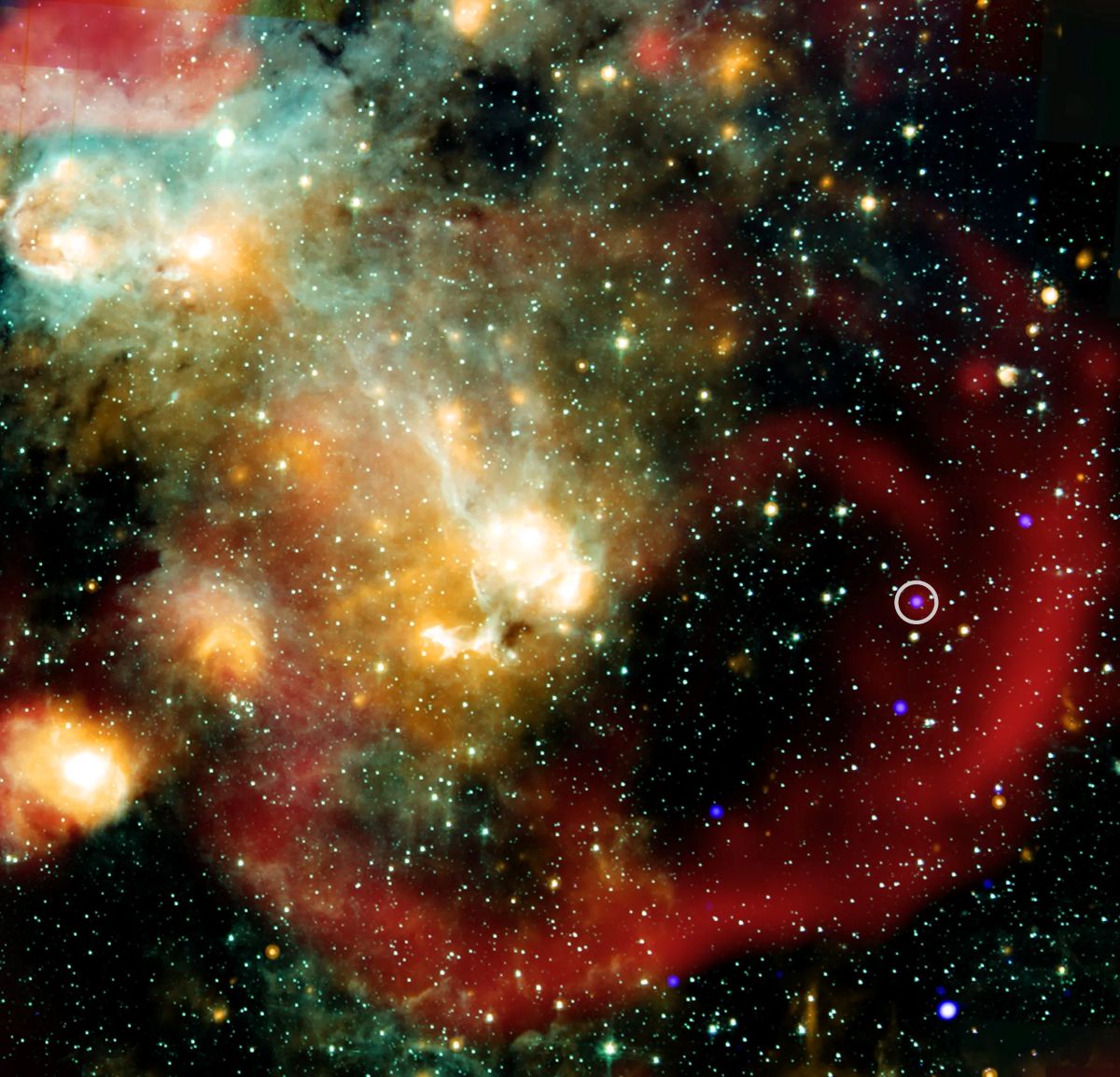
    Scientists have discovered a star behaving like no other seen before, giving fresh clues about the origin of a new class of mysterious objects. As described in our press release, a team of astronomers combined data from NASA’s Chandra X-ray Observatory and the SKA [Square Kilometer Array] Pathfinder (ASKAP) radio telescope on Wajarri Country in Australia to study the antics of the discovered object, known as ASKAP…

    Read More »
  • NASA

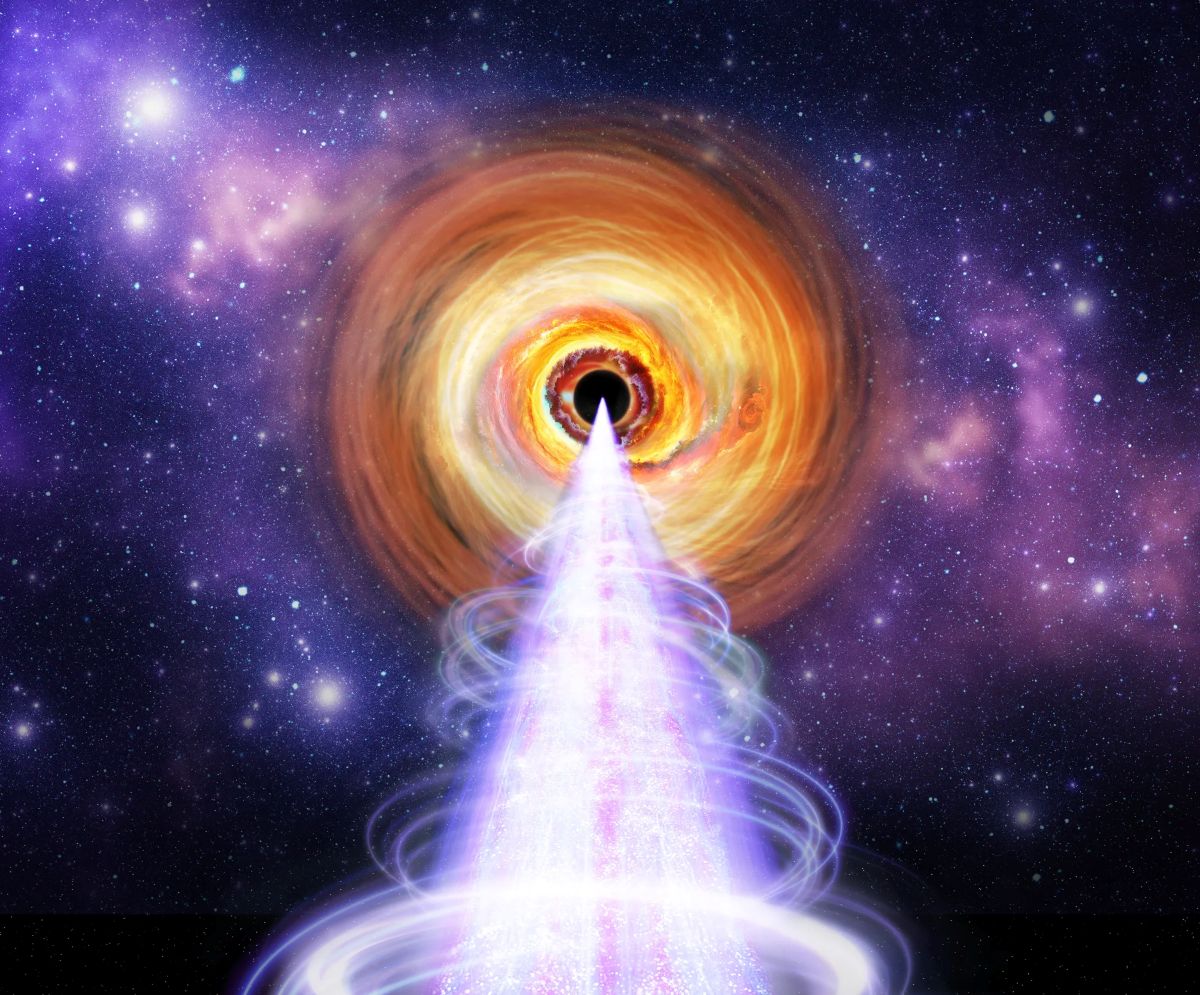
    NASA’s IXPE Reveals X-ray-Generating Particles in Black Hole Jets

    The blazar BL Lacertae, a supermassive black hole surrounded by a bright disk and jets oriented toward Earth, provided scientists with a unique opportunity to answer a longstanding question: How are X-rays generated in extreme environments like this? NASA’s IXPE (Imaging X-ray Polarimetry Explorer) collaborated with radio and optical telescopes to find answers. The results (preprint available here), to be…

    Read More »
  • NASA

    NASA’s NICER Maps Debris From Recurring Cosmic Crashes

    Lee esta nota de prensa en español aquí. For the first time, astronomers have probed the physical environment of repeating X-ray outbursts near monster black holes thanks to data from NASA’s NICER (Neutron star Interior Composition Explorer) and other missions. Scientists have only recently encountered this class of X-ray flares, called QPEs, or quasi-periodic eruptions. A system astronomers have nicknamed Ansky…

    Read More »
  • NASA

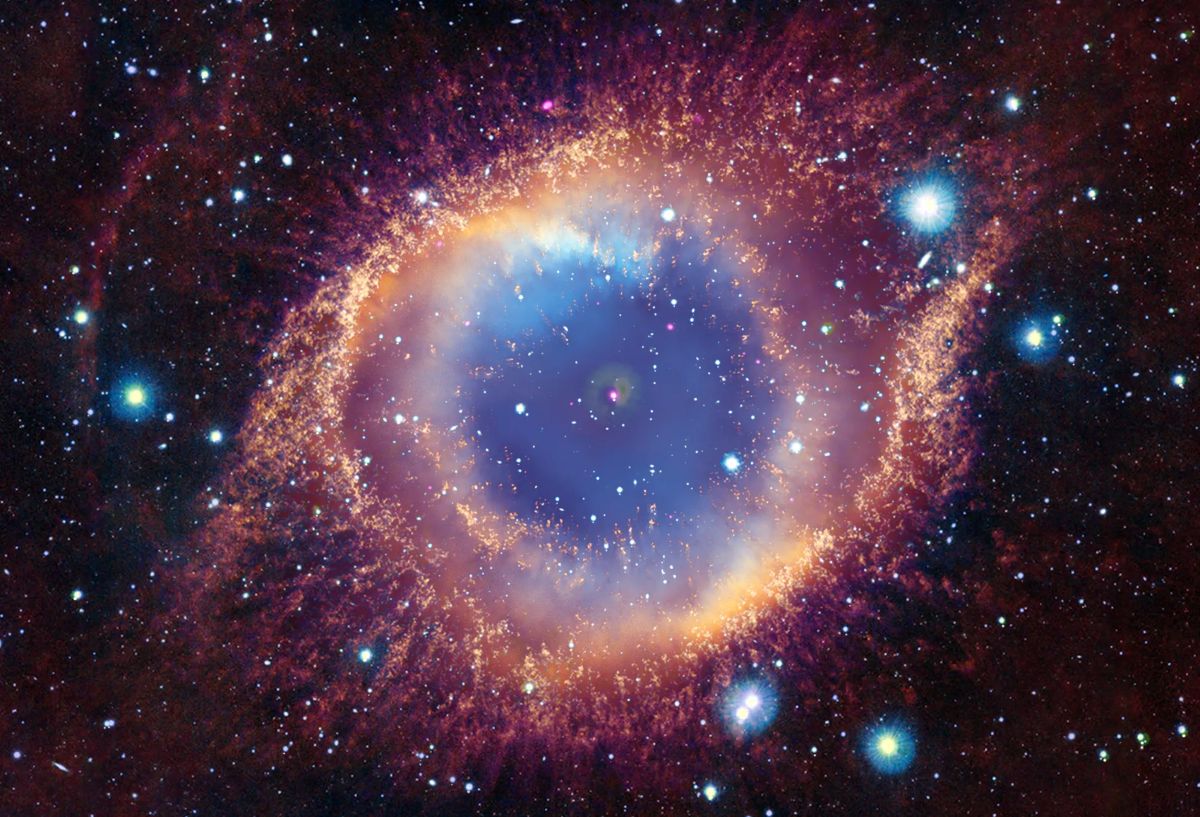
    X-ray Signal Points to Destroyed Planet, Chandra Finds

    A planet may have been destroyed by a white dwarf at the center of a planetary nebula — the first time this has been seen. As described in our latest press release, this would explain a mysterious X-ray signal that astronomers have detected from the Helix Nebula for over 40 years. The Helix is a planetary nebula, a late-stage star like our Sun that has shed its outer layers…

    Read More »
  • NASA

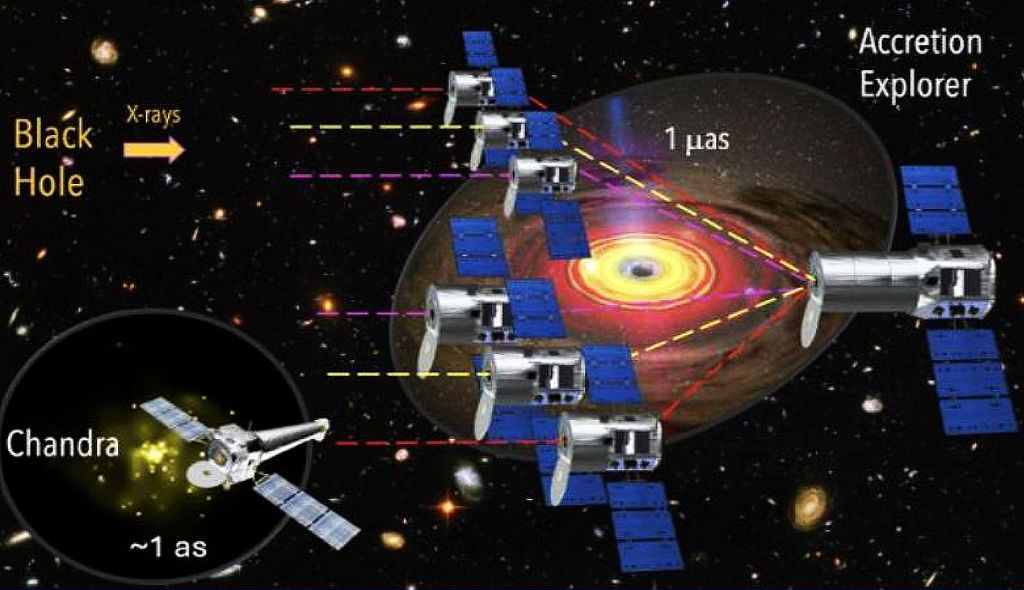
    Beholding Black Hole Power with the Accretion Explorer Interferometer

    Kimberly WeaverNASA Goddard Space Flight Center Some of the most enigmatic objects in the Universe are giant supermassive black holes (SMBH). Yet after 30 years of study, we don’t know precisely how these objects produce their power. This requires observations at X-ray wavelengths. The state-of-the-art for X-ray images is Chandra (~0.5-1 arcsecond resolution) but this is insufficient to image regions…

    Read More »
  • NASA

    Very Cold Detectors Reveal the Very Hot Universe and Kick Off a New Era in X-ray Astronomy

    X-rays are radiated by matter hotter than one million Kelvin, and high-resolution X-ray spectroscopy can tell us about the composition of the matter and how fast and in what direction it is moving. Quantum calorimeters are opening this new window on the Universe. First promised four decades ago, the quantum-calorimeter era of X-ray astronomy has finally dawned. Photo of the…

    Read More »
Back to top button