Amazon Introduces All-New Echo Buds—Smaller, Lighter, Even Better Sound—Just $119.99

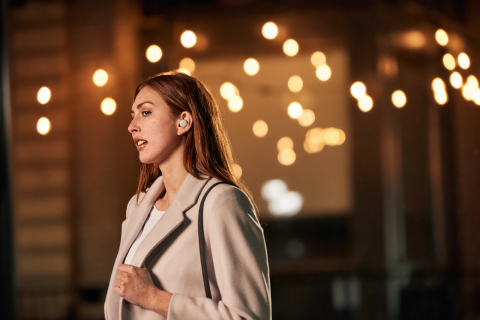
Amazon (NASDAQ: AMZN) today introduced the next-generation of Echo Buds, featuring an all-new design, premium audio architecture for crisp, balanced sound, custom-designed Active Noise Cancellation technology, wireless charging capabilities, improved microphones for better call quality, and hands-free access to Alexa. The all-new Echo Buds are available in Black or Glacier White starting at $119.99, and will be available for a limited time starting at $99.99. Customers who qualify will also receive six months of Amazon Music Unlimited and Audible Plus for free. Customers can pre-order the new Echo Buds today at amazon.com/echobuds.
This press release features multimedia. View the full release here: https://www.businesswire.com/news/home/20210414005487/en/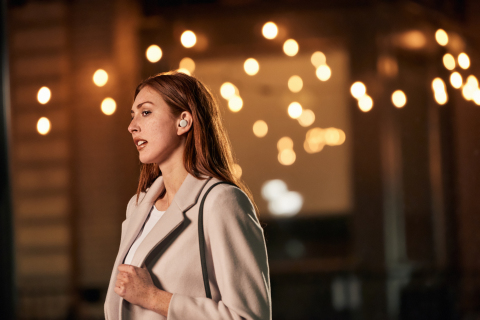
Echo Buds Glacier White (Photo: Business Wire)
“The all-new Echo Buds are better in so many ways—a smaller design, a more comfortable fit, Active Noise Cancellation technology, a new color and wireless charging option, and high-performance drivers for dynamic audio,” said Tom Taylor, Senior Vice President, Amazon Alexa. “It’s never been easier for customers to bring Alexa with them throughout their day—whether at home, walking the neighborhood, or commuting to work, all they have to do is ask to play music or podcasts, call to check in on a loved one, add an item to their to-do list, and so much more.”
Customizable Fit for All-Day Comfort
The all-new Echo Buds are 20% smaller, lightweight, IPX4-rated to withstand splashes, sweat, or light rain; and designed to be comfortable enough for all-day wear. A shortened nozzle improves comfort and new built-in vents reduce ear pressure during use, making Echo Buds feel natural in your ear—perfect for long periods of use during the day. With four ear tip sizes and two wing tip sizes, you can tailor the fit to what’s most comfortable for you and during set-up, the easy Ear Tip Fit Test will confirm if you have a proper seal—so they feel great and sound even better.
Dynamic Audio Experience featuring new Active Noise Cancellation
Built with a high-performance driver in each earbud, Echo Buds deliver crisp, balanced sound with extended dynamic range—so you get the most out of your music, regardless of genre. The premium speakers are optimized for increased fidelity in bass and treble, which reduces distortion during media playback, delivering vibrant melodies and clear spoken word.
Featuring Amazon’s new Active Noise Cancellation technology, the all-new Echo Buds cancel twice as much noise compared to the first generation, making them ideal for traveling or if you need peace and quiet at home. The technology uses the inner and outer microphones to intelligently estimate sound pressure in your eardrum—which directly correlates to how you hear sound around you—to generate the inverse of that signal and cancel out unwanted noise, helping you stay immersed in your audio.
To turn on Active Noise Cancellation, simply press and hold either earbud or just say, “Alexa, turn on noise cancellation.” When you want to hear what’s going on around you, enable Passthrough Mode with a press and hold on either earbud or by saying, “Alexa, turn on Passthrough.” With Passthrough Mode on, you can easily adjust the amount of ambient sound you hear through the device settings in the Alexa app.
Easy Access to All of Your Entertainment Options
Echo Buds are one of the easiest ways to access all of the content you know and love from Alexa, from anywhere. Just ask to listen to your favorite Audible audiobook, find your next favorite artist on Amazon Music, Apple Music, Spotify, and more. Plus, while you can already ask Alexa for podcast recommendations, you’ll soon be able to listen to podcasts you follow on Amazon Music by just saying, “Alexa, play my followed podcasts.” You can also ask Alexa to play music for a set amount of time. When you want to take a short walk to soak in the sun, simply say, “Alexa, play relaxing music for 15 minutes.” When the tunes stop, it’s your cue to head home.
Easily Manage Your Day
With Echo Buds, Alexa helps you get more done whether you are at home or on-the-go. Just ask to set a reminder to stretch for a few minutes every hour, check your calendar, find out when the nearest coffee shop opens, add laundry detergent to your shopping list, or catch up with a friend by simply saying, “Alexa, call Sara.” The onboard microphones in each earbud are optimized to capture lower frequencies compared to the prior generation, so not only is Alexa able to hear you better, but call quality is also improved. And if you misplace your Echo Buds before a conference call, simply say, “Alexa, find my buds” to another Alexa-enabled device—or press a button in your device settings via the Alexa app—and, if your Echo Buds are nearby, you’ll hear an audible chime.
Later this year, you’ll be able to use VIP Filter on the all-new Echo Buds. Introduced on Echo Frames, VIP Filter lets you select the phone notifications that you want to hear, and filters out the rest. When you receive a notification, just double tap either earbud to hear it in real-time; to dismiss a notification single tap either earbud. VIP Filter also supports calendars and group messaging, ensuring you never miss an important update.
Take Alexa on Your Commute
Alexa can help plan your commute with support for public transit in major cities across the U.S. such as New York, Seattle, San Francisco, Chicago, Boston, Jersey City, and Philadelphia. Simply ask for directions to the nearest train station or point of interest, or say “Alexa, what’s the status of the Q train?” to receive an update on a specific bus or train. Public transit support will expand to other major cities in the U.S. in the coming months.
Power Up for Work or Play
Echo Buds offer up to five hours of music playback on a single charge with Active Noise Cancellation and hands-free access to Alexa, and the compact case provides two additional charges for a total of up to 15 hours of music playback. If you’re in a hurry, a 15-minute quick charge will give you up to two hours of music playback. To check your battery status while wearing Echo Buds, simply say, “Alexa, what’s my battery life?” Or, open the case while your Echo Buds are inside and the new LED lights in front of each earbud will show the battery status. Echo Buds can be charged via USB-C or a Qi-certified wireless charging pad like the all-new Made for Amazon Anker PowerWave Pad for Echo Buds (sold separately).
Echo Buds connect to Alexa through the Alexa app on your mobile device and use your existing device data plan to access features such as music, calling, and more. They are built with multiple layers of privacy protections and controls, including the ability to mute the mics with the Alexa app or through the customizable onboard tap controls. You can also set the onboard tap controls to access your native voice services—Siri or Google Assistant.
Pricing and Availability
The all-new Echo Buds come in Black and Glacier White and have the Climate Pledge Friendly badge. Echo Buds are available for pre-order today and will begin shipping to customers in the U.S. in May. Echo Buds are $119.99 for the USB-C wired charging option, or $139.99 for wireless charging. For a limited time only, the USB-C wired charging option will be available for only $99.99 and the wireless charging option will be available for $119.99. Customers who qualify will also receive six months of Amazon Music Unlimited and Audible Plus for free. To qualify, customers must be free trial eligible for Amazon Music Unlimited and/or Audible.
Amazon is guided by four principles: customer obsession rather than competitor focus, passion for invention, commitment to operational excellence, and long-term thinking. Customer reviews, 1-Click shopping, personalized recommendations, Prime, Fulfillment by Amazon, AWS, Kindle Direct Publishing, Kindle, Fire tablets, Fire TV, Amazon Echo, and Alexa are some of the products and services pioneered by Amazon. For more information, visit www.amazon.com/about and follow @AmazonNews.