



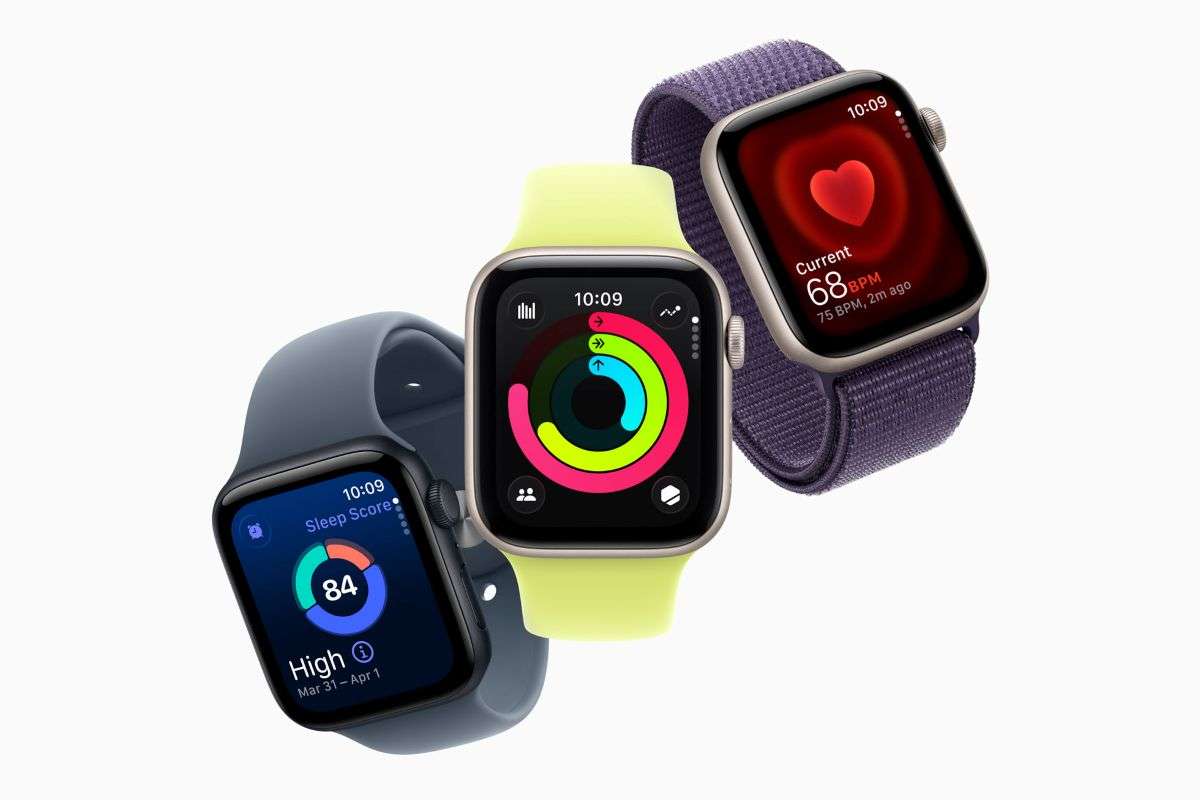
Apple today introduced the next generation of Apple Watch SE, offering remarkable health, fitness, connectivity, and safety features, and the powerful capabilities of the S10 chip, at an incredible value. Apple Watch SE 3 delivers a more advanced set of health features than the previous generation — including sleep score, retrospective ovulation estimates, sleep apnea notifications, and wrist temperature sensing for richer Vitals app data — plus a robust set of fitness features to provide daily motivation. The S10 chip powers an Always-On display, the double tap and wrist flick gestures, on-device Siri, and fast charging. Apple Watch SE 3 also offers 5G cellular capabilities and a cover glass that is more durable than ever. watchOS 26 introduces a fresh look with Liquid Glass, Workout Buddy powered by Apple Intelligence, new watch faces, and more.
Apple Watch SE 3 can be pre-ordered today, with availability beginning Friday, September 19.
“Apple Watch SE offers a great way for users to start their Apple Watch journey, delivering outstanding health, fitness, safety, and connectivity features at an incredible value,” said Stan Ng, Apple’s vice president of Apple Watch and Health Product Marketing. “With even more health features, an Always-On display, and fast charging, we’re excited to see the ways Apple Watch SE 3 supports more people around the world to live a healthier and more active life.”
Always-On Display, Fast Charging, and 5G Cellular
The display on Apple Watch is central to every interaction, from viewing a notification, to taking a quick glance at workout metrics. With the S10 chip, Apple Watch SE 3 now features an Always-On display, allowing users to conveniently view the time and glance at notifications without raising their wrist or tapping the display. The cover glass is 4x more resistant to cracks than the previous generation, featuring a custom, proprietary grade of Ion-X (ion-exchanged strengthened) glass, the toughest glass available in a smartwatch.
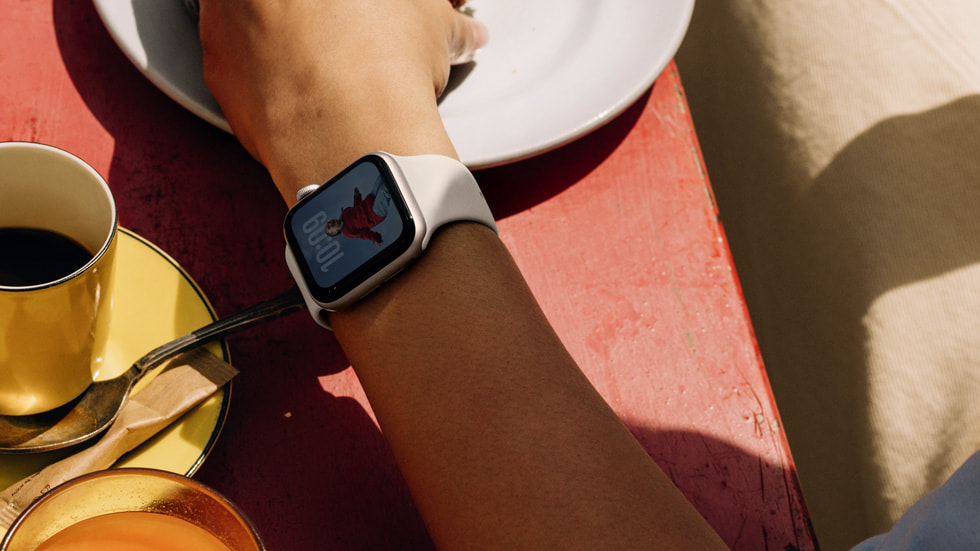
Even with the addition of the Always-On display, Apple Watch SE 3 offers all-day, 18-hour battery life, and also features fast charging for the first time. Apple Watch SE 3 now charges up to 2x faster than the previous generation; charging for 15 minutes can add up to eight hours of battery for daily use, and it can charge to about 80 percent in 45 minutes.
With a cellular plan, Apple Watch allows users to take calls, send messages, and even get help with emergency services when their iPhone isn’t with them.1 Apple Watch now offers 5G cellular capabilities that provide better performance with greater throughput, so music, podcasts, and apps download faster.2 The new 5G modem is more power efficient, using less battery for cellular.
Meaningful Health Insights
Building on its powerful suite of core health features, Apple Watch SE 3 introduces sleep score, which helps users understand the quality of their sleep and how to make it more restorative.3 Fast charging makes it even easier for users to wear Apple Watch overnight to track their sleep, and sleep score adds to sleep insights including sleep duration, sleep stages, and other Vitals app data.
Sleep quality is influenced by several factors, such as sleep duration, bedtime consistency, how often a person wakes up, and how much time is spent in each sleep stage. With sleep score, Apple Watch helps track each of these categories to offer users a transparent and easy-to-understand metric for their overall sleep quality. After each night, sleep score provides an overall score and classification in the Sleep app on Apple Watch, plus a clear breakdown of the most critical components so users know what to prioritize to improve their sleep.
The scoring approach and prioritization algorithm of sleep score is informed by the latest guidance published by the American Academy of Sleep Medicine, National Sleep Foundation, and World Sleep Society. Over 5 million nights of sleep data from the Apple Heart and Movement Study were used to develop and test the scoring algorithms.
About The Author


Got a Questions?
Find us on Socials or Contact us and we’ll get back to you as soon as possible.