
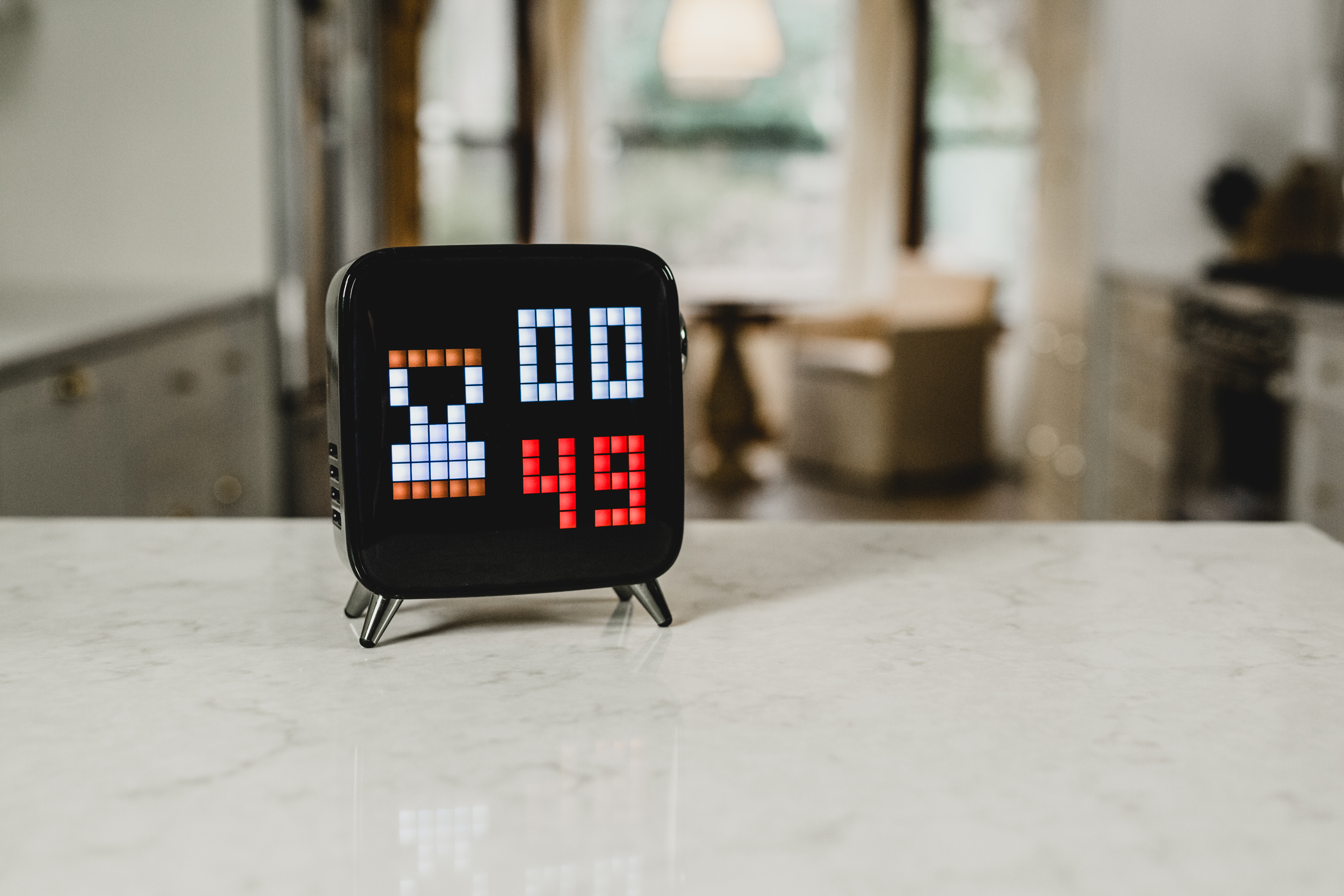




The Epomaker RT85 is the mechanical keyboard equivalent of a meticulously restored vintage sports car powered by a modern electric engine. It’s a gorgeous collision of nostalgia and cutting-edge tech, featuring a deliberately retro chassis, a cute little 1.47-inch TFT screen, and a functional joystick. All this for an aggressive starting price of just $85.99.
This keyboard targets the “gamer with creative spirits,” promising premium features like Gasket Mount, a five-layer dampening system for that deep “thocky” sound, and a monster 8000mAh battery. But when you bundle this much hardware at a budget price, you have to ask: is this a reliable, modern peripheral, or are we just buying into an aesthetic that masks deeper, historical firmware issues?
Usability Tier 1: The Retro-Future Hub (Screen & Joystick)
The RT85’s primary usability differentiator is its interactive display unit. The 75% layout (82 keys) is already a winner, providing the full function row and arrow cluster that productivity users demand, all while saving significant desk space.
Real-World Scenario 1: The Content Creator’s Lifeline
Imagine a Streamer or Video Editor. They are deep into a production flow and need to quickly adjust audio without tabbing out. The ABS joystick, positioned intuitively near the arrow keys, provides instant, driver-free volume control (up/down) and quick audio muting (press). This is tactile efficiency at its best. Meanwhile, the TFT screen cycles through system info, or better yet, displays a custom pixel-art animation or GIF, adding a unique personalized touch to their setup. This level of immediate, physical control drastically enhances the board’s daily utility.
Usability Tier 2: Acoustics and the Gasket Mount Goal
The architecture of the RT85 is pure enthusiast bait. It features a sophisticated gasket-mount structure and an unprecedented five-layer sound dampening stack (including Poron and IXPE). The goal is to achieve a soft, cushioned typing feel and the now-mandatory “thock” sound signature.
Testing the Thock: Multiple reports confirm that the RT85 successfully delivers a “Rich, deep and ‘Thocky'” sound, free from the hollow “ping” that plagues cheaper boards. The PC positioning plate with flex-cuts enhances the consistency of the soft typing feel.
The Great Switch Mismatch: A Haptic Disaster
The major usability issue comes from the included switches: the linear Epomaker Creamy Jade switches clock in at an exceptionally light 45±5 gf actuation force.
Real-World Scenario 2: The High-Volume Typist’s Frustration
You’re a Professional Copywriter working on a tight deadline, flying through a 5,000-word document. You rest your fingers on the home row for a moment of thought, only to look down and see you’ve unintentionally entered a row of ‘kkkkkkkkkkk’. The 45gf force is so light that the mere weight of a resting finger is often enough to trigger an input. For heavy typists, this isn’t productive—it’s a daily source of error and cleanup, rendering the stock keyboard configuration difficult for serious, high-precision work. The 5-pin hot-swappable PCB is therefore not a luxury, but a mandatory correction, forcing users to budget for new, heavier switches to achieve error-free usability.
Connectivity and the Web-based Gamble
The RT85’s wireless infrastructure is theoretically top-tier. It supports Triple-Mode Connectivity (wired USB-C, 2.4GHz, and Bluetooth 5.0) and maintains a high 1000Hz polling rate in its performance modes.
The power source is its biggest selling point: a colossal 8000mAh battery. This massive cell can power the keyboard for up to 320 hours with the screen off, effectively eliminating all battery anxiety for wireless users.
The Web-based Customization Risk
While previous Epomaker models promised the revered open-source QMK/VIA for hardware-independent, Web-based customization, the RT85 heavily relies on the proprietary Epomaker Driver 3.0 to manage its complex features (screen, joystick, macros).
Final Verdict and Actionable Recommendations
The Epomaker RT85 is a phenomenal aesthetic statement and a feature density champion. It has a beautiful sound profile and market-leading battery life.
However, it is a high-risk, high-reward proposition. The board’s structural and software integrity is highly vulnerable to inconsistencies. To be clear, you do not expect a $250 product and build when getting an $85 keyboard, and personally, I enjoyed my time with the keyboard despite its quirks.
If you are a Tinkerer/Modder who loves the aesthetic and is comfortable immediately purchasing heavier switches and troubleshooting potential software glitches, the RT85 is an unparalleled platform for the price.If you are a Professional who needs reliable, flawless Web-based customization and typing accuracy straight out of the box, you should wait until independent, long-term testing confirms that Epomaker has permanently resolved the critical firmware instability and component consistency issues that have plagued its previous branded models.
Get your here.


About The Author


Got a Questions?
Find us on Socials or Contact us and we’ll get back to you as soon as possible.