




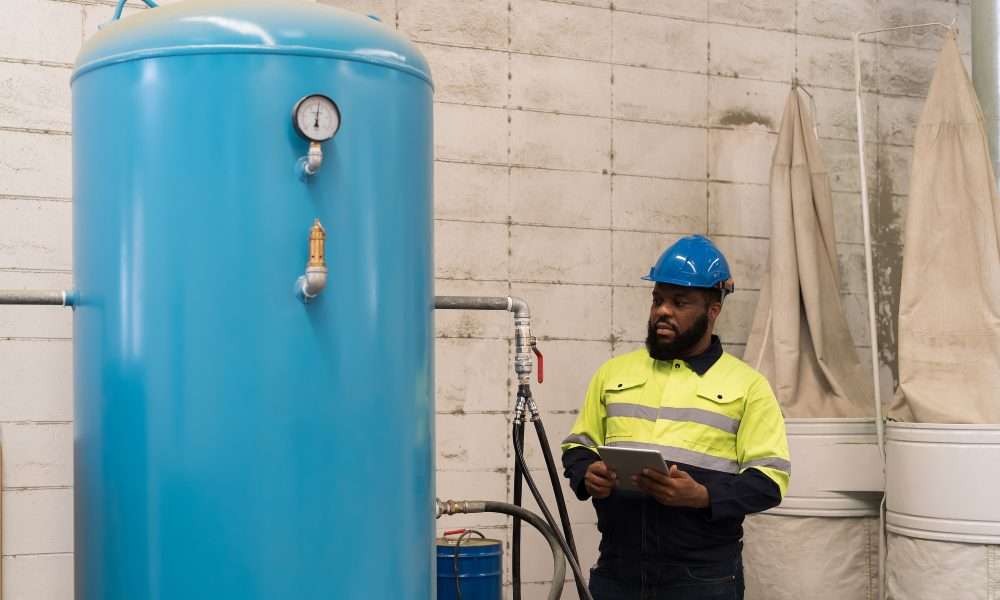
Air tanks have different orientations because design must match function and available space. Engineers select an orientation based on how the tank will store compressed air and how installers will position it within a system. Orientation also affects airflow behavior and maintenance access. In both industrial and small-scale applications, the tank’s position directly impacts performance and durability.
Space and Installation Considerations
Available space often determines how teams position a tank. Vertical tanks save floor space and allow facilities to maximize usable room. Horizontal tanks suit areas with lower ceilings or setups that benefit from a wider base. Installation requirements also shape orientation choices, especially when teams integrate tanks into existing systems with limited layout flexibility.
Performance and Airflow Efficiency
Orientation changes how air moves through the tank and how moisture collects. Vertical tanks use gravity to pull condensation downward, which helps operators remove water quickly through a drain valve. Horizontal tanks require more deliberate drainage solutions, but proper design and routine maintenance keep them working efficiently. The discussion around vertical vs. horizontal air tanks often focuses on how each option handles airflow and moisture under different conditions.
Stability and Structural Support
Tank stability plays a critical role in safe operation. Horizontal tanks spread weight along their length, which improves balance and reduces the chance of tipping. Vertical tanks rely on a smaller footprint, so manufacturers add reinforced bases to keep them secure. Choosing the correct orientation helps maintain stability and reduces long-term wear from movement or vibration.
Maintenance and Accessibility
Maintenance requirements also influence orientation decisions. Vertical tanks simplify drainage because water naturally settles at the lowest point. This setup allows technicians to remove moisture with minimal effort. Horizontal tanks demand more attention to positioning and drainage components, but they still support effective maintenance when installed correctly. Easy access to valves, gauges, and drains ensures consistent upkeep and system efficiency.
Choosing the Right Orientation
Air tanks have different orientations to meet practical needs related to space, efficiency, and maintenance. Users should evaluate how the tank will function within its environment and how easily technicians can service it. A well-chosen orientation supports reliable performance and extends the lifespan of the equipment.
About The Author

Got a Questions?
Find us on Socials or Contact us and we’ll get back to you as soon as possible.