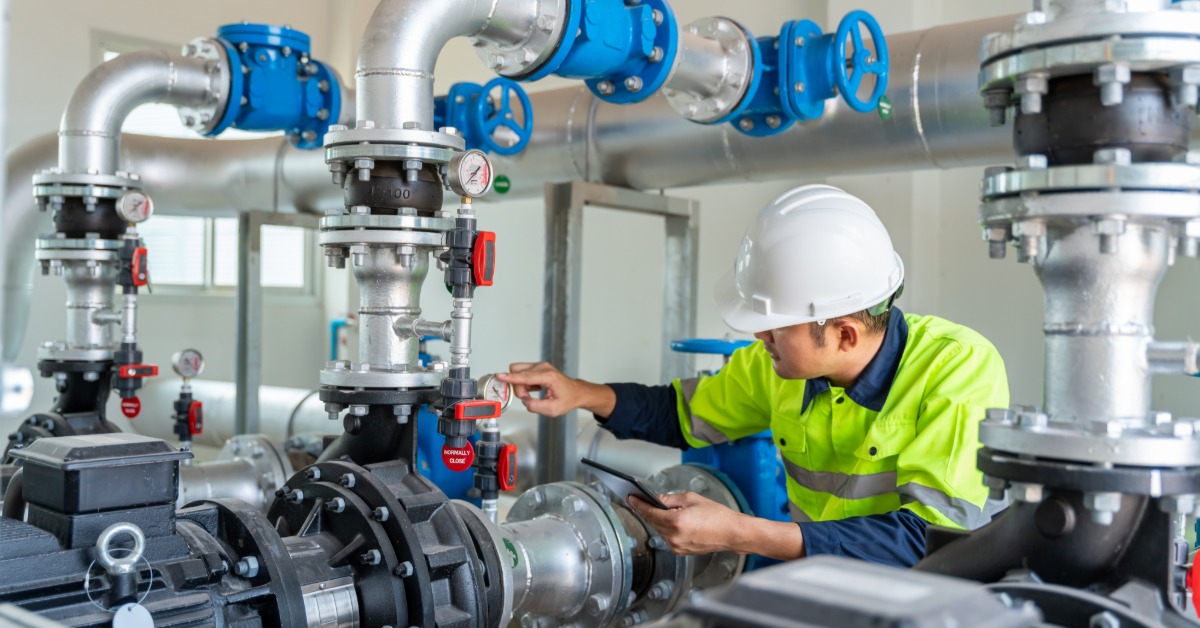
Industrial pumps receive little attention when everything is working properly. They move liquids, maintain processes, and quietly keep production lines doing what they are supposed to do. When one unexpectedly stops, however, that anonymous piece of machinery can suddenly become everyone’s favorite topic.
Understanding how to reduce downtime in industrial pump systems starts with treating reliability as an ongoing process rather than something that begins after a pump stops working. Better monitoring, maintenance, operating practices, and parts planning help facilities keep essential equipment available.
Pay Attention to What the Pump Is Telling You
Industrial pumps tend to provide warning signs before certain failures. The challenge is noticing those signs while there is still time to act.
Changes in vibration, temperature, pressure, flow rate, noise, or power consumption can indicate developing problems. A pump that suddenly emits grinding sounds deserves attention before the next scheduled maintenance window.
Modern condition-monitoring technology makes this considerably easier. Sensors can continuously track vibration and temperature, while connected monitoring systems identify changes in operating behavior. Instead of relying exclusively on periodic inspections, maintenance teams can use equipment data to determine when closer investigation is necessary. The technology does not eliminate inspections; it makes them more targeted.
Build Preventive Maintenance Around Operating Conditions
A maintenance schedule is useful, but simply servicing every pump at identical intervals can be inefficient. Pumps operate under different loads, environments, temperatures, and duty cycles, and maintenance planning should account for those differences.
Routine tasks include checking lubrication, inspecting seals, examining couplings, monitoring bearings, verifying alignment, and checking for leaks. Maintenance teams should also document what they find since historical records reveal recurring failures that otherwise look like unrelated incidents.
Condition-based and predictive maintenance take this approach further. Rather than replacing components simply because a calendar says so, facilities can combine manufacturer recommendations with operating data and maintenance history.
Keep Critical Parts Available
Sometimes, diagnosing the failure is the easy part. The real problem is discovering that the replacement component will not arrive for another week. Facilities can reduce this risk by identifying components that are both failure-sensitive and difficult to obtain quickly. Seals, bearings, gaskets, couplings, and other components may be sensible candidates for on-site inventory depending on the pump and application.
Specialized equipment requires additional consideration. Compatibility matters because components that look similar are not necessarily interchangeable. For equipment such as Blackmer pumps, correctly sourcing OEM Blackmer pump parts and service can help maintenance teams account for equipment-specific requirements rather than improvising when a critical component fails.
The objective is not to turn the maintenance room into a warehouse. It is to determine which parts would create the greatest operational headache if they were unavailable at the moment they were needed.
Stop Operating Pumps Outside Their Comfort Zone
A perfectly maintained pump can still have a shortened service life when it routinely operates outside its intended range. Incorrect flow conditions, excessive pressure, cavitation, poor suction conditions, and running dry can place unnecessary stress on equipment. Cavitation is particularly troublesome because collapsing vapor bubbles can damage internal surfaces while producing vibration and that unmistakable gravel-like noise.
System design matters here. Pipes, valves, filters, tanks, and controls all influence how a pump operates. If the surrounding system forces a pump into unfavorable conditions, repeatedly repairing the pump treats the symptom rather than the cause. Teams investigating recurring failures should examine the complete system instead of automatically blaming the component that broke.
Make Installation and Alignment a Priority
Some reliability problems begin before the pump has completed its first shift. Improper installation can contribute to vibration, seal problems, bearing wear, and coupling failures. Pump and motor alignment should be checked carefully during installation and after maintenance that could affect equipment positioning.
Pipe strain is another concern. Connecting piping should not force the pump into alignment. Proper support and installation practices help prevent external forces from being transferred into the equipment.
Commissioning is also a useful opportunity to establish baseline readings for vibration, temperature, pressure, and other operating characteristics. Those measurements give maintenance teams something meaningful to compare against later data.
Train Operators To Recognize Early Warning Signs
Monitoring technology is useful, but people remain some of the best sensors in an industrial facility. Operators who work around equipment every day often recognize subtle changes before an automated alarm appears. A new sound, unusual odor, small leak, or change in performance may provide the first indication of a developing problem.
Give operators a straightforward method for reporting abnormalities and make sure those observations reach maintenance personnel. Reporting should not require navigating a bureaucratic obstacle course just to mention that a pump suddenly sounds strange. Basic training can also help operators understand what normal operating conditions look like and which changes warrant immediate attention.
Use Failure Data Instead of Simply Resetting the Clock
When equipment fails, getting production running again is understandably the priority. Once the immediate problem is resolved, however, facilities can gain considerable value from asking why it happened.
Was the failed seal simply worn out, or was excessive pressure responsible? Did a bearing reach the end of its expected life, or did contamination accelerate the damage? Was cavitation caused by a pump problem or a restriction elsewhere in the system?
Tracking failure modes, repair history, operating hours, and replaced components makes recurring patterns easier to identify. Even a relatively simple digital maintenance system can provide useful information if records are entered consistently.
Plan for the Failures You Cannot Prevent
No maintenance program can guarantee that equipment will run forever, which is why critical pump systems need contingency planning. Depending on the operation, that could mean installing redundant pumps, maintaining a ready spare, establishing relationships with repair providers, or documenting procedures for quickly isolating failed equipment.
Facilities should prioritize pumps according to their operational importance. A pump whose failure stops an entire production process deserves a different level of contingency planning than equipment whose function can temporarily be handled another way.
Knowing how to reduce downtime in industrial pump systems ultimately means combining prevention with preparation. Monitoring reveals developing issues, maintenance addresses wear, correct operating conditions reduce stress, and thoughtful spare-parts planning shortens repairs.