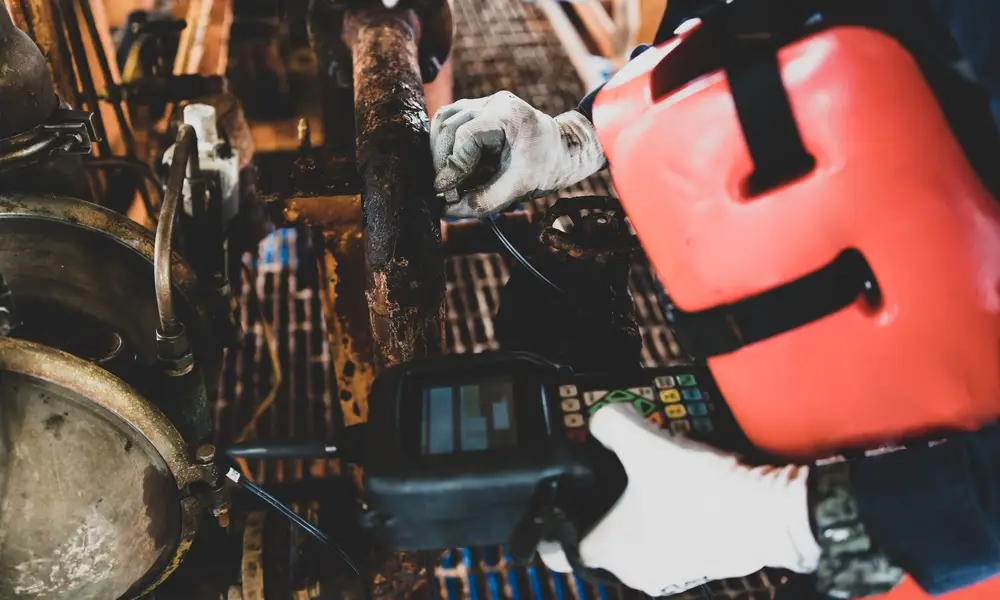
Sour gas creates an integrity threat long before surface damage becomes easy to identify. Upstream corrosion problems hidden in sour gas develop where hydrogen sulfide contacts water and metallic equipment under changing conditions such as flow or temperature. The resulting damage may progress beneath deposits or inside stressed steel without producing an obvious early warning.
Water Activates the Corrosion Process
Dry hydrogen sulfide is less aggressive toward carbon steel than hydrogen sulfide dissolved in an aqueous phase. Once free water or condensed moisture is present, electrochemical reactions begin at the metal surface and release atomic hydrogen. That shift turns an invisible gas-phase hazard into an active internal corrosion environment.
Iron Sulfide Films Change Over Time
Sour corrosion commonly produces iron sulfide films on exposed steel. A dense, adherent layer may slow metal loss, but its protection depends on chemistry and operating conditions. Flow disturbances or changes in pH destabilize the film, exposing fresh steel and creating localized attack beneath uneven deposits.
Hydrogen Damage Extends Below the Surface
Atomic hydrogen generated during corrosion may enter the steel rather than combine harmlessly at the surface. Once trapped around inclusions or other microstructural discontinuities, hydrogen pressure can initiate blistering or hydrogen-induced cracking. Sulfide stress cracking presents a separate concern when susceptible material operates under tensile stress in a wet sour environment.
Process Conditions Control Severity
Hydrogen sulfide concentration alone does not define sour-service risk. Partial pressure, water chemistry, temperature, and material hardness influence whether general corrosion or cracking becomes the dominant threat. Operating changes that alter condensation or fluid velocity may shift the damage mechanism even when the produced gas composition appears stable.
Mitigation Must Address the Source
Material selection and corrosion inhibition work best when tied to the current sour environment. Upstream treatment strategies that remove hydrogen sulfide activities reduce the corrosive species available to dissolve into produced water and attack equipment. Inspection plans should then target locations where water collects, protective films break down, or stress concentrates within susceptible components.
Sour gas demands more than routine corrosion control because its most serious damage may remain concealed until equipment integrity is already compromised. Recognizing upstream corrosion problems hidden in sour gas as an active operational risk supports earlier intervention and more reliable asset decisions. A well-managed sour service environment protects both production continuity and the long-term performance of critical infrastructure.