Dancing to the Bass: A Deep Dive into the ZiiGaat x Vivir Digital RUMBA

The sub-$40 budget In-Ear Monitor (IEM) market is an absolute bloodbath. Every week, a new brand drops a highly-hyped pair of earphones promising “flagship killer” sound for the price of a decent lunch. To cut through the noise, audio companies often partner with prominent reviewers to tune their IEMs for a specific audience.
Enter the ZiiGaat x Vivir Digital RUMBA. ZiiGaat teamed up with Mexican audio reviewer Roys from Vivir Digital to create a $34.99 USD single dynamic driver IEM that completely abandons the pursuit of sterile, analytical perfection. Instead, they built an unapologetically fun, bass-forward crowd-pleaser. But does this budget collaboration actually make you want to dance, or does it stumble over its own feet? Let’s break down the hardware, the crucial “tip-rolling” trap, and the actual acoustic performance.
The Hardware: Lightweight Resin and a Cable Quirk
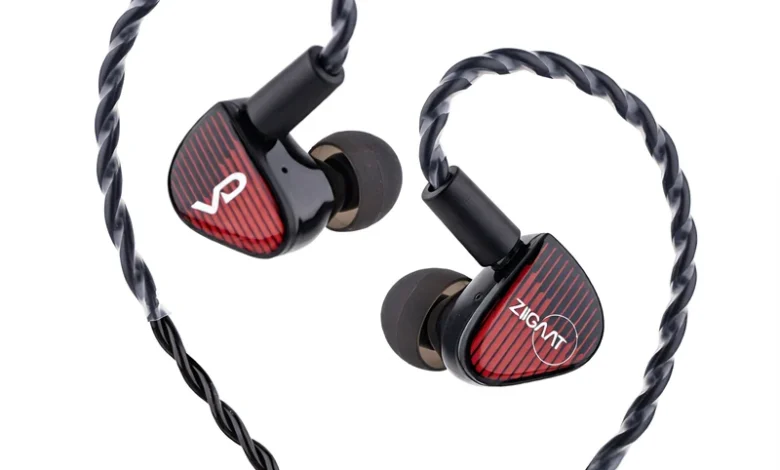
At first glance, the RUMBA looks striking. The shells are cast from black resin with a red faceplate bearing the gold “VD” (Vivir Digital) logo.
Because they house a single 10 mm graphene dynamic driver with a dual-cavity acoustic design, the shells are remarkably small and light. If you suffer from “ear fatigue” when wearing massive, multi-driver IEMs, the RUMBA will feel like an absolute relief. They utilize a medium-shallow insertion depth, meaning they don’t feel like they are aggressively invading your ear canal.
The Cable Anomaly: ZiiGaat includes a detachable 0.78mm 2-pin, a detachable 4-core cable. For the price, it’s remarkably soft and doesn’t transmit microphonic noise (that annoying rustling sound when the cable rubs against your shirt). However, the standout feature is the length. If you are tall, or if you route your cables under your shirt to a portable DAC in your pocket, this extra slack is an absolute godsend.
The Trade-off: At $35, budget cuts have to happen somewhere. The package includes the earphones, cable, ear tips, and documentation, but no carrying case.
The “Tip-Rolling” Trap: Do Not Trust Your First Impression
If you buy the RUMBA, you need to know this: the stock ear tips might ruin the earphones for you.
Many users report that out of the box, the RUMBA sounds oddly lifeless, distant, and lacking in bass. This is a classic “seal” issue. Because the shells are lightweight and vented, achieving a consistent ear-tip seal is important for achieving the intended bass response for the 10mm graphene driver to push low-frequency air.
If you use the wider-bore stock tips and they don’t fit perfectly, the bass entirely escapes. The Fix: You must “tip-roll.” Swapping to a slightly smaller, narrower-bore ear tip instantly transforms the RUMBA. The bass suddenly hits with weight, the lower-mids warm up, and the IEM comes alive exactly as Vivir Digital intended.
The Sound: Warm, Forgiving, and Fun
Once you have the proper seal, what does the RUMBA actually sound like? It is a classic, warm, V-shaped tuning that prioritizes pure musical enjoyment over microscopic detail retrieval.
- The Bass: This is the star of the show. The graphene driver pushes excellent sub-bass rumble and a punchy, warm mid-bass. It adds fantastic physicality to Pop, EDM, and Hip-Hop. It’s not a bloated “basshead” IEM that ruins the rest of the track, but it undeniably colors the music with a thick, engaging energy.
- The Mids: Usually, heavy bass drowns out the vocals. Surprisingly, the RUMBA handles the midrange quite well. The warmth carries over into the lower mids, giving male vocals (like rock or acoustic singers) excellent note weight and body. They sound natural, never thin or tinny. Female vocals remain clear and smooth, avoiding the piercing “shoutiness” that plagues many cheap V-shaped IEMs.
- The Treble: ZiiGaat played it very safe here. The treble is smooth and fatigue-free. It has enough energy to render cymbals and high-hats accurately, but to my ears, the treble rolls off around 12kHz. You won’t get the sparkling “air” or upper-end atmosphere of more expensive sets. The benefit? The RUMBA may be comfortable for long listening sessions, depending on fit and personal treble sensitivity, and it is incredibly forgiving of poorly recorded, compressed Spotify tracks.
The Gaming vs. Movies Divide
Because of its heavy, warm tuning, the RUMBA is a phenomenal companion for general media consumption. If you plug these into a laptop to watch Netflix or an action movie, the cinematic explosions have massive weight, and dialogue remains clear and smooth.
However, do not buy these for competitive gaming.
In games like Valorant, CS2, or Apex Legends, the RUMBA falls completely flat. In my testing, imaging was not a strength, and competitive gaming performance was limited. Because the soundstage is intimate and the tuning is so warm, crucial audio cues like enemy footsteps become muddied and masked behind louder, boomier sound effects.
USA Pricing and The Final Verdict
The ZiiGaat x Vivir Digital RUMBA retails for $34.99 USD (or $35.99 if an optional inline-microphone version is available).
Specifications
- Impedance: 32 ohms
- Sensitivity: 109 dB at 1 kHz/mW
- Frequency response: 10 Hz–22 kHz
- Rated power: 5 mW
- Maximum power: 10 mW
- Total harmonic distortion: below 0.5% at 1 kHz
- Channel imbalance: below 1.5 dB
The Verdict: If you are looking for an analytical, highly technical IEM to dissect the micro-details of orchestral music, or if you need a tactical advantage in competitive shooters, look elsewhere.
However, if you want a ridiculously comfortable, lightweight daily driver that makes your favorite Pop, Rock, and Hip-Hop tracks sound punchy, warm, and fun, the RUMBA is an absolute steal. By focusing on natural vocals and hard-hitting bass rather than artificial treble spikes, ZiiGaat and Vivir Digital have crafted one of the easiest-to-recommend budget IEMs of the year. Just remember to use the right ear tips.