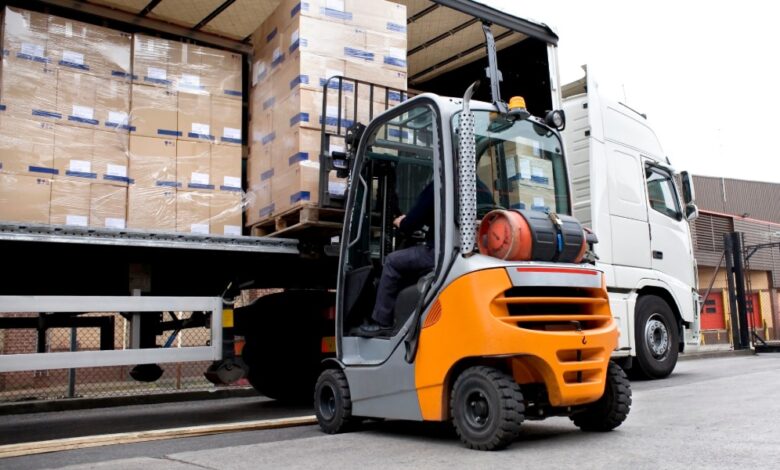
A pallet can look perfectly respectable on the warehouse floor and turn into a leaning monument to bad decisions after a few hundred miles in a trailer. Shipping puts palletized products through forces that are easy to underestimate: Trucks accelerate and brake, trailers vibrate for hours, and forklifts introduce sudden movement.
Preventing failures requires more than adding another lap of stretch film and hoping for the best. This guide will teach you how to avoid load failures for your pallets in transit, so they arrive at their destination the same way they departed.
Start With a Stable Pallet Pattern
Stretch film can secure a well-built load. It cannot magically fix a badly constructed one.
Product placement should create a stable base before wrapping begins. Uneven rows can introduce weak points, while gaps between packages leave room for movement. Excessive product overhang creates another problem because cartons extending beyond the pallet deck lose support from underneath.
Weight distribution matters just as much. Heavy products generally belong lower in the stack, where they help keep the center of gravity closer to the pallet. Placing dense items near the top can turn the load into something resembling a very slow, very expensive game of Jenga.
The pallet pattern should also suit the packaging. Corrugated cartons behave differently from bags, bottles, buckets, or irregular products. A pattern that works perfectly for one SKU may prove unreliable for another.
Watch for Small Changes in Packaging
Changes that appear minor can affect an entire load.
A supplier might switch to thinner cartons. A facility could change the number of products packed in each case. Packaging dimensions might shift slightly. Any of those adjustments can change how layers interact when the load experiences vibration.
That makes pallet configurations worth reviewing whenever packaging specifications change. Reusing an old setup simply because the product name remains the same can introduce problems that do not appear until the shipment reaches the road.
Use the Right Pallet for the Job
Damaged boards, protruding fasteners, or broken corners can undermine a load before it leaves the building. A weak pallet may flex unexpectedly during forklift handling. Sharp areas can also puncture stretch film near the bottom of a wrapped load.
Operators should inspect pallets before loading them. The pallet also needs enough capacity for the planned weight and must fit the product footprint.
Apply Enough Containment Force
Stretch wrap does more than cover a stack of boxes. When operators apply it correctly, the film creates containment force that helps hold the load together as one unit. However, insufficient and excessive containment force are some of the most common causes of pallet load failure during transit.
Too little force allows individual packages or layers to move during transportation. Too much force can crush vulnerable cartons or deform lightweight products.
Finding the right balance requires considering load weight, package strength, film characteristics, and distribution conditions. Operators should not assume that one wrapper setting will work across every product configuration.
Reinforce the Areas That Need It
Loads do not necessarily require identical film application from top to bottom.
The lower section may need additional support because movement near the base can allow the entire stack to shift. Other loads may require reinforcement around an unstable middle section or near the top.
The wrapping process should respond to the actual load rather than applying film uniformly by default.
Connect the Load to the Pallet
A wrapped stack and its pallet need to behave like a single shipping unit. If the products can slide across the pallet deck independently, braking or cornering can push the load out of alignment even when the upper layers remain tightly wrapped.
Wrapping near the base helps create that connection. The film should secure the load without interfering with areas needed for forklift or pallet jack access.
Operators also must protect the lower film from damage. A puncture near the bottom can reduce support at one of the most important parts of the load.
Match the Stretch Film to the Load
Another way to avoid load failures for your pallets in transit is to match the stretch film to the load. Film characteristics affect how it stretches, resists punctures, and maintains force around a load. Products with sharp corners may demand stronger puncture resistance than smooth cartons. Heavy loads can create different requirements from lightweight consumer goods.
Stretching film beyond its useful range can also reduce performance. Applying too little stretch creates a different issue because the film may fail to generate enough containment.
Facilities should match film specifications and wrapper settings to the loads they ship. A material that performs well in one application does not automatically transfer to every packaging line.
Test Loads Under Realistic Conditions
Standing beside a freshly wrapped pallet and giving it an approving nod is not a transit test.
Facilities should evaluate how loads respond to conditions that resemble actual distribution. Depending on the operation, that may include vibration testing, acceleration testing, or controlled handling trials.
Even simple shipping feedback can reveal useful patterns. If damage frequently appears on a particular route or SKU, teams should investigate the load configuration rather than treating every incident as random bad luck.
Standardize Successful Wrapping Settings
Once a facility finds a combination that works, it should make that process repeatable. Machine-based wrapping recipes can help different shifts apply comparable film force and coverage to the same load type. Standardization reduces the variability that comes from relying entirely on operator judgment.
This becomes especially useful in warehouses handling several pallet configurations each day. Operators can select settings matched to a specific product instead of treating every shipment as a fresh experiment.
Standardization also makes troubleshooting easier. If a load starts failing despite consistent wrapping settings, teams can investigate other changes such as packaging materials, pallet quality, or product arrangement.
Inspect Before the Pallet Leaves
The final inspection is the last chance to catch an obvious problem without involving a freight claim. Check whether the load sits squarely on the pallet. Look for torn film, damaged cartons, or loose sections of wrap. Confirm that the base remains secure and that nothing interferes with forklift access.
Inspection should take seconds, not become an archaeological expedition. A consistent checklist can help workers recognize the warning signs that deserve attention.
Build Transit Performance into the Process
Preventing load failure requires thinking beyond the wrapping station.
The pallet pattern establishes the foundation. Stretch film provides containment, while the wrapping process determines the distribution of force. Equipment condition and final inspections help keep the process consistent.
A pallet that survives transit is not simply wrapped. It is engineered as a complete unit for the environment it will face. That approach can reduce damaged goods, improve shipping consistency, and spare everyone at the receiving dock from discovering that the boxes have developed their own travel plans.