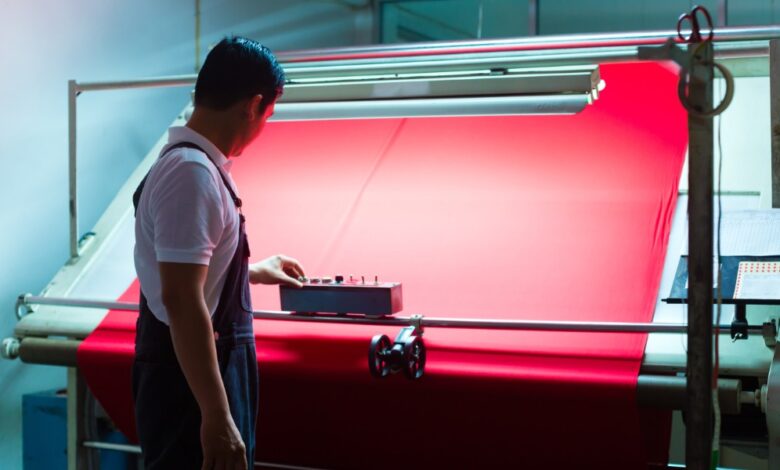
Textile manufacturing has entered a new era where resilience depends on far more than the basic strength of a chosen fabric. Modern products often face repeated stress and severe environmental exposure, so manufacturers need production methods that preserve performance throughout demanding service conditions. Greater precision across the production floor gives textile companies more control over how a product reacts once it enters real use.
Innovation also gives manufacturers more opportunities to solve durability concerns before full production begins. Better control over material behavior helps teams address weak areas early and refine construction methods with greater confidence. As production technology evolves, these manufacturing advancements for resilient textile products help create textile products that remain dependable without excessive weight or unnecessary structural complexity.
Advanced Fibers Create a Stronger Foundation
A resilient textile product begins with fibers capable of handling the pressure associated with its intended environment. Modern synthetic fibers can provide impressive strength without forcing manufacturers to rely on heavy materials that restrict movement or flexibility. This balance gives designers greater freedom when a product must remain durable without becoming rigid or difficult to use.
Fiber selection also affects how a textile responds once repeated stress begins to change its original structure. A material that performs well during initial tests may react differently after extensive exposure to friction or environmental pressure. Manufacturers that understand these changes can choose materials that retain useful characteristics across a broader portion of the product’s service life.
Precision Equipment Raises Construction Standards
Production accuracy can determine whether a strong textile reaches its full performance potential once fabrication begins. Modern industrial equipment gives operators greater control over seam formation and helps prevent small construction errors from becoming major structural weaknesses. A precise production process also makes quality easier to reproduce when order volumes increase.
Equipment accuracy becomes especially valuable when technical fabrics react differently from conventional materials under pressure. Some materials require careful control because excessive force during production can damage the textile before the customer ever uses the product. Precise machinery allows manufacturers to adapt production conditions to the fabric instead of forcing every textile through the same process.
Smart Textiles Introduce New Production Possibilities
Smart textile development has expanded expectations for what resilient fabric products can accomplish in specialized environments. Electronic elements can become part of a textile structure, but manufacturers must protect those components without compromising the physical qualities customers expect. Production methods must account for how repeated movement and environmental exposure affect the complete product rather than only its fabric shell.
Learning about the rise of smart textiles in contract sewing will help manufacturers prepare for production demands that extend beyond conventional fabrication. Smart products require thoughtful construction because delicate technology must remain functional inside a structure designed for frequent use. Successful integration allows manufacturers to expand textile capabilities without allowing advanced components to become a source of premature product failure.
Automated Cutting Creates Better Structural Control
Material preparation has a direct effect on how accurately textile components connect during later production stages. Automated cutting technology helps manufacturers reproduce complex shapes with far greater consistency than methods that depend heavily on manual control. Cleaner dimensional accuracy also reduces the chance that unwanted tension will develop once separate fabric sections connect.
Digital pattern control makes this process more adaptable when product requirements change between orders. Manufacturers can adjust dimensions without introducing the inconsistencies that often appear when pattern revisions rely on repeated manual interpretation. The result is a more controlled transition from digital product specifications to physical textile components ready for assembly.
Protective Treatments Extend Material Performance
A textile may possess excellent structural strength but still deteriorate when its environment attacks the material surface. Modern protective treatments can change how fabric reacts to exposure and help preserve its original performance under demanding conditions. Manufacturers can tailor these treatments to the expected application rather than depend on a universal approach that may offer unnecessary protection.
Application accuracy matters because uneven treatment can create vulnerable areas across an otherwise durable textile surface. Modern production controls help manufacturers achieve more predictable coverage without placing excessive material onto the fabric. This precision protects textile performance while allowing the original material to retain the physical character required for its intended application.
Digital Inspection Brings Defects Into Focus
Quality control becomes more effective when manufacturers can detect subtle production problems before those issues spread across an entire order. Digital inspection technology gives production teams another level of visibility and can reveal inconsistencies that become difficult to notice during rapid manual reviews. Faster detection also gives operators an opportunity to correct the production process closer to the source of the problem.
The information captured during inspection can reveal patterns that individual defect reports might never expose. Manufacturers can study production data to understand where variation appears and determine whether a process requires adjustment. This deeper visibility turns quality control into an active production resource rather than a final checkpoint that only identifies problems once fabrication ends.
Better Seam Engineering Protects High-Stress Areas
Strong fabric cannot compensate for a seam that fails when pressure concentrates around a connection point. Improving textile product resilience when seam construction reflects the forces the finished textile will experience during actual use. Thoughtful seam engineering helps distribute pressure more effectively and reduces the chance that repeated force will attack one vulnerable location.
This process requires more than simply adding extra material wherever a product appears weak. Excess reinforcement can alter flexibility and create new stress points that reduce the effectiveness of the original design. Manufacturers achieve better results when reinforcement responds to actual performance demands and becomes an intentional part of the overall textile structure.
Performance Tests Reveal Hidden Weaknesses
A material specification can provide useful information, but real resilience becomes clearer when manufacturers examine how textiles react under controlled stress. Performance tests allow production teams to challenge a material before it becomes part of a large commercial order. This process can reveal weaknesses that may remain invisible during routine visual inspection.
Complete product tests offer another level of insight because separate materials can behave differently once they become part of one structure. Pressure may move through the finished product in unexpected ways and expose areas that require a design revision. Early evidence gives manufacturers the opportunity to refine construction before a weakness becomes expensive to correct at full production scale.
Resilient textile manufacturing continues to advance as production technology gives manufacturers greater control over how materials become finished products. Durability now develops through deliberate decisions across the entire manufacturing process rather than from one isolated material feature. Greater precision allows manufacturers to address performance concerns earlier and create products that respond more effectively to demanding use.
Future progress will depend on how effectively manufacturers turn new production capabilities into reliable results. Resilient textile products must perform beyond the factory floor, where real conditions expose every weakness in construction. Manufacturers that focus on controlled processes and purposeful innovation can build textile products prepared for those demands without unnecessary complexity.