



A series of biology experiments, called BioNutrients, is testing ways to use microorganisms to produce nutrients – off Earth and on demand – that will be critical for human health in space.
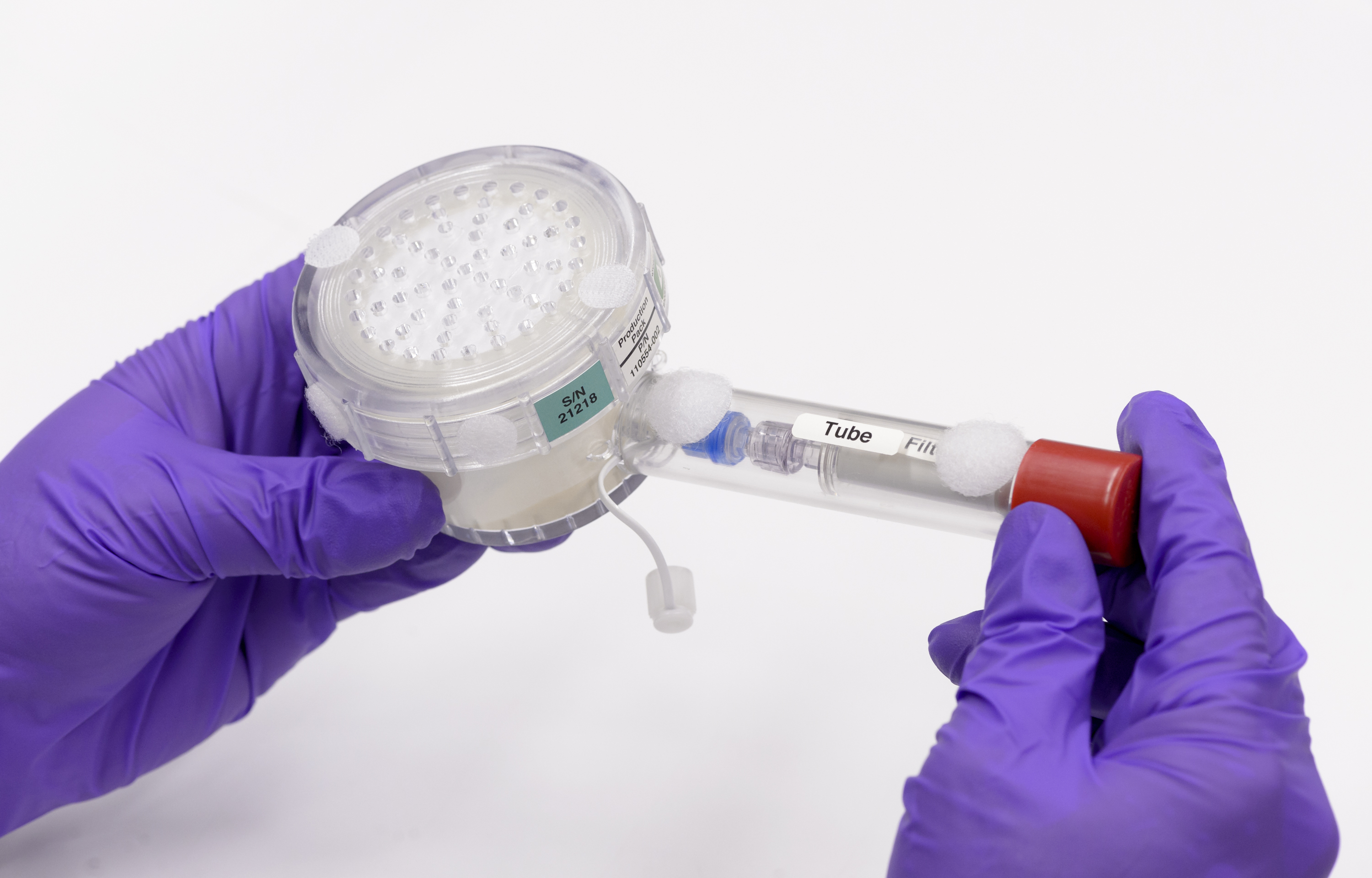
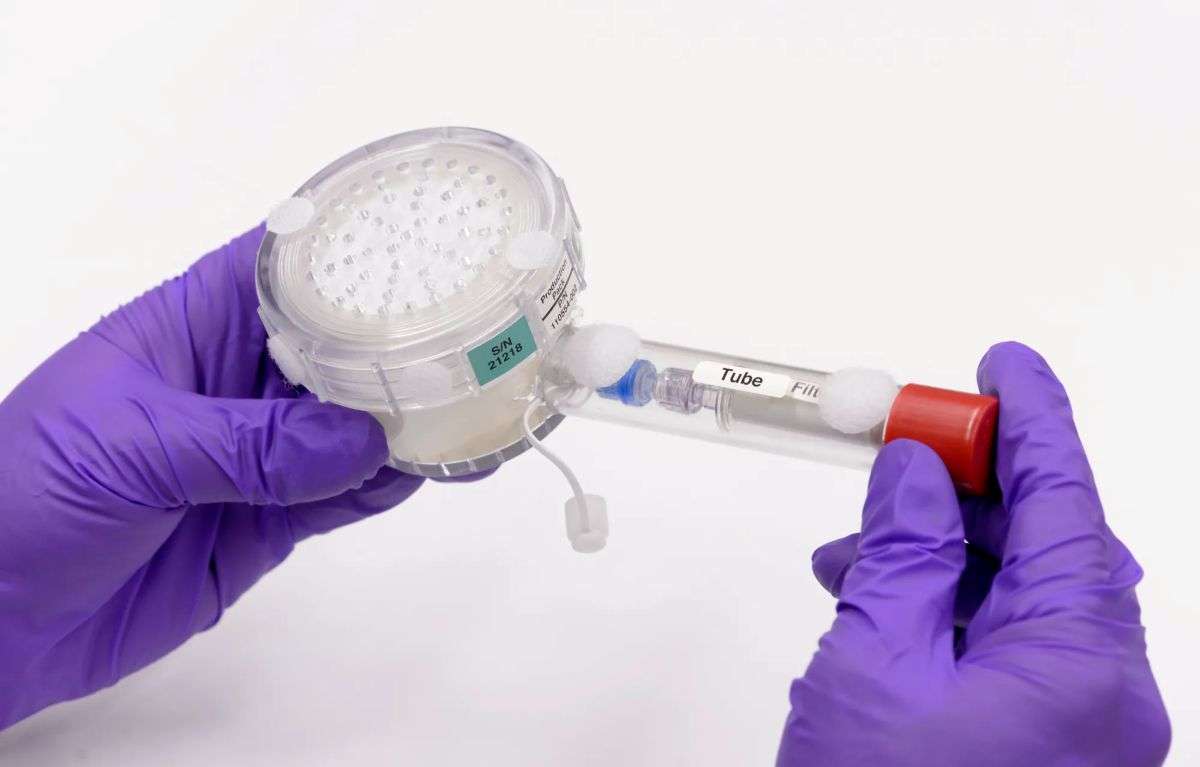
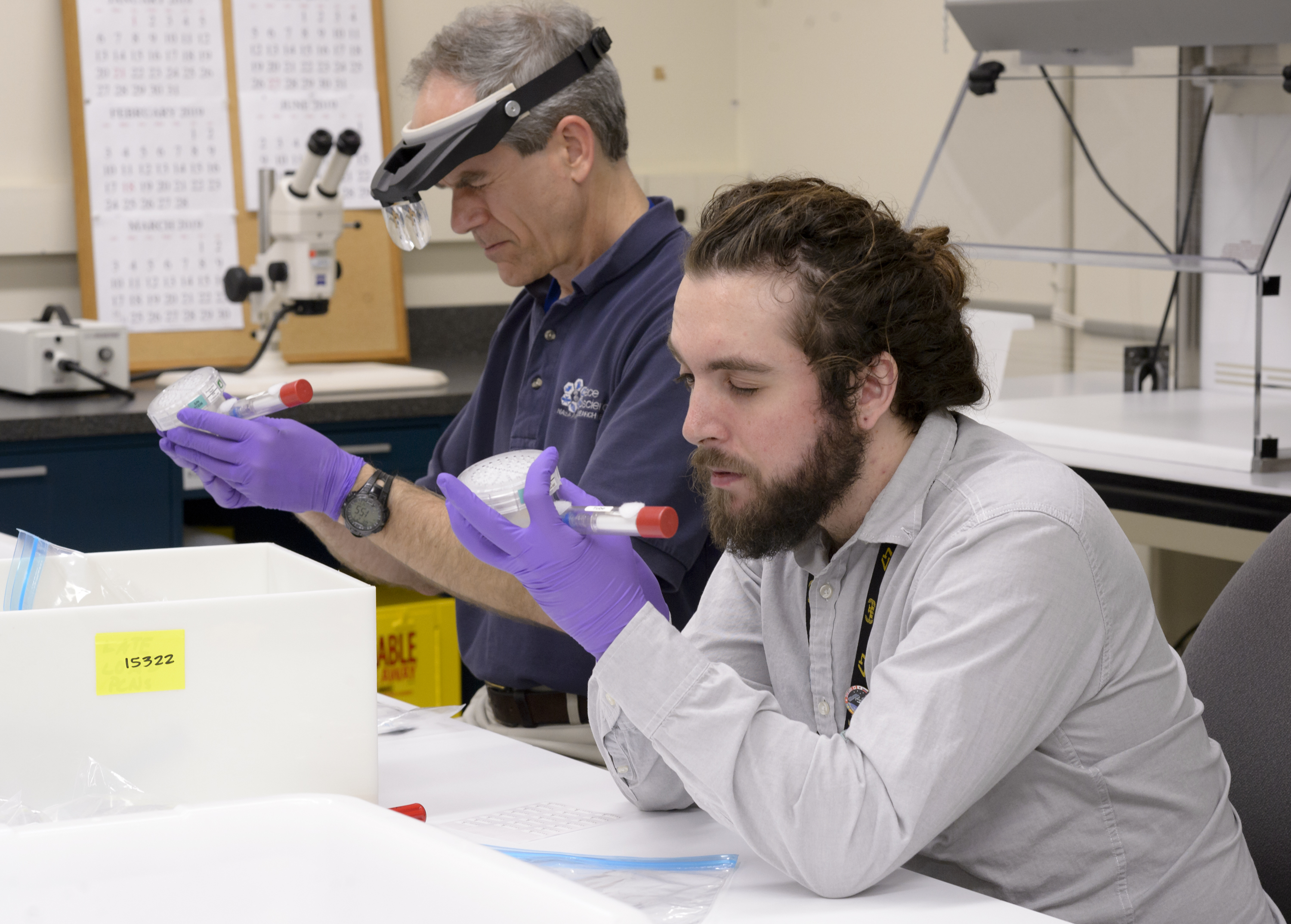
For the BioNutrients-1 experiment, the specially engineered yeast and its powdered food source are held in the container at the left. Its lid holds a membrane that allows carbon dioxide from the yeast to escape. The clear tube at right protects another filter system leading into the compartment with the microorganisms. To activate the yeast and begin the experiment, astronauts on board the space station will inject water through the filter, making it sterile. The water will dissolve the nutrient powder and the yeast will grow and multiply in this liquid environment, producing an important nutrient for human health.
NASA/Dominic Hart
Editor’s note: This article was updated on Aug. 19, 2025, to clarify which BioNutrients experiments in the series are completed and adds new information about the upcoming experiment, BioNutrients-3.
In the future, NASA’s long-duration human exploration missions to the Moon and Mars will require minimizing the amounts of supplies launched, increasing reuse and recycling, and using local resources to make crucial products for crew during spaceflight. Certain supplies, such as vitamins, have a limited shelf life and are most effective freshly made. To meet these needs, NASA is developing technologies to biomanufacture valuable products on-demand.
Sailors might have avoided scurvy if NASA had been around in the age of exploration on the high seas. The condition is caused by a vitamin C deficiency, and many people died from spending months at sea without fresh fruits and vegetables. In the age of exploration into deep space, astronauts, too, will need a way to get the right nutrition. Planning new ways to supply food for a multi-year mission on the Moon or Mars may require making food and nutrients in space. NASA scientists are testing an early version of a potential solution: get microorganisms to produce vital nutrients so that, whenever they’re needed, astronauts can drink them down. The same kind of system designed for space also could help provide nutrition for people in remote areas of our planet.
Microbial Nutrient Factories
With an experiment called BioNutrients-1 – the first of a series of studies, that was launched to the International Space Station in April 2019 – astronauts aboard the orbiting lab helped test a new system over the course of nearly six years. BioNutrients-1 was developed by scientists at NASA’s Ames Research Center in California’s Silicon Valley using this strategy: take a safe organism already present in our food (in this case, baker’s yeast), modify it so that it produces an essential nutrient, and build the right hardware to let astronauts grow the yeast in space. Like tiny living factories, the microorganisms will go about making the desired product. The nutrients that the yeast will produce in this experiment are called beta carotene and zeaxanthin. These are antioxidants usually found in vegetables, and they’re critical for keeping our eyes healthy.
Although astronauts on the space station did not consume anything for the BioNutrients-1 experiment, they conducted multiple rounds of tests on the system. For each test, they added sterile water to a mixture of dehydrated yeast and its powdered food source, mixed well and kept the packets warm for 48 hours. Then, they froze the samples to be analyzed later, back on Earth. NASA scientists checked how the system performed, including how much yeast grew in the packets and how much nutrient the experiment produced.
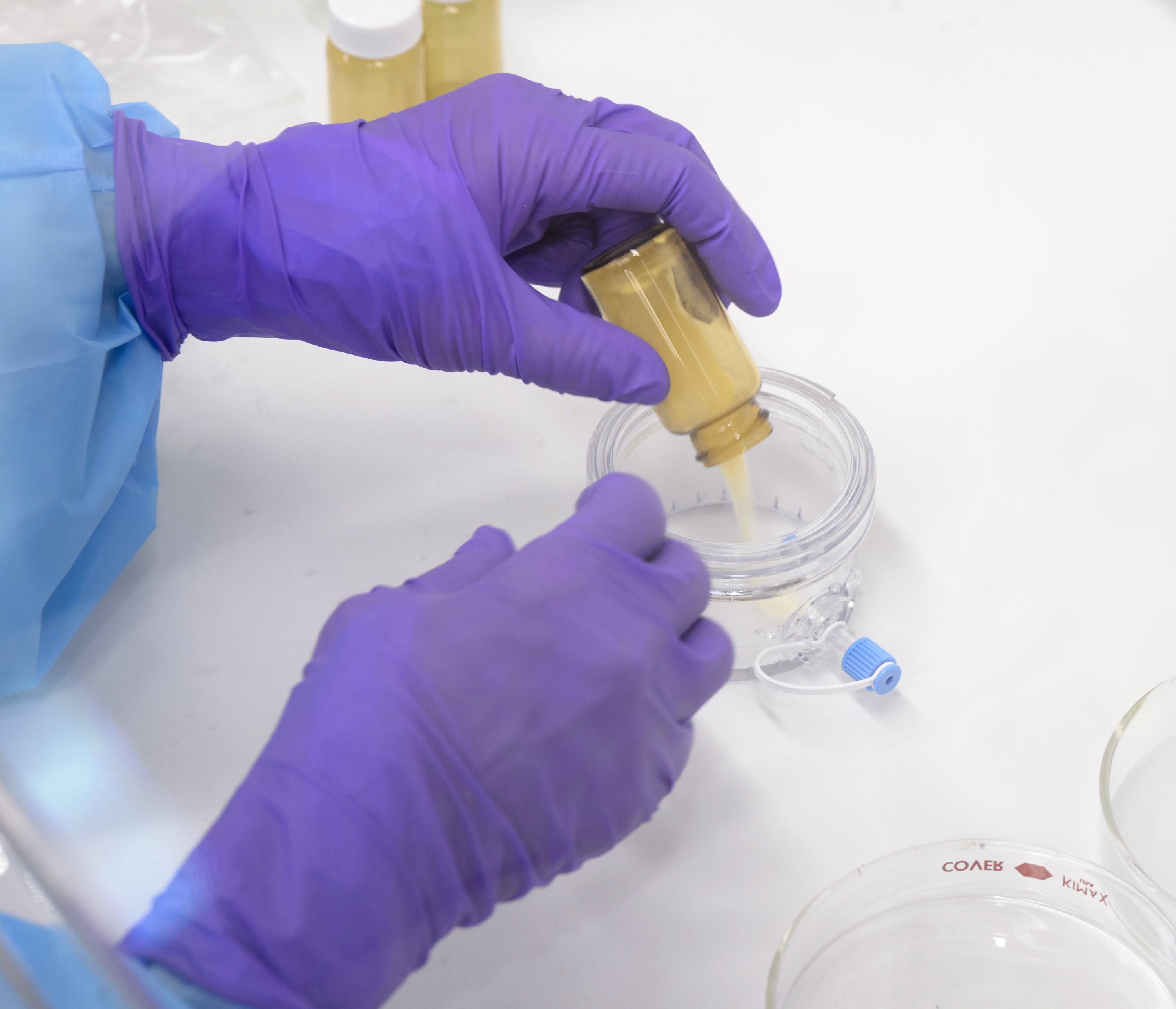
The microorganisms at the heart of the BioNutrients-1 experiment and their powdered food source (shown here) are loaded into the hardware for spaceflight using sterile techniques. Astronauts on the International Space Station will help test the BioNutrients system’s ability to use yeast cells as tiny factories to produce essential nutrients for human health.
NASA/Dominic Hart
Essential (Nutrients) for Exploration
An on-demand nutrient production system like this will be vital for human exploration, because it may not be possible to provide complete nutrition from stored foods during a multi-year mission. What’s more, even with a supply of nutritional supplements, many nutrients have a limited shelf life. Some things, like vitamins, also work better in their fresh form than in a processed tablet.
Space station crew members performed tests on different yeast types, periodically, over the course of the BioNutrients-1 experiment. This allowed scientists to check how long their specially engineered yeast stays good on the shelf and able to churn out fresh nutrients that humans will need to stay healthy in space.
About The Author


Got a Questions?
Find us on Socials or Contact us and we’ll get back to you as soon as possible.