Commercial roofing isn’t like residential roofing, but a lot of business owners don’t realize the implications of that. If you own a commercial property, you must know the challenges that commercial roofing faces. This will give you an edge before you’re dealing with a crisis instead of a manageable repair.
Drainage System Failure
Flat and low-slope roofs are the standard on commercial buildings, and they don’t let water run off like residential roofs do. Their longevity depends almost entirely on a functioning drainage system. When drains, scuppers, or gutters get clogged with debris, water pools on the surface. That ponding water adds weight, accelerates membrane deterioration, and can seep into the building interior through even the smallest compromised seam.
UV Exposure
The sun never clocks out, and your flat commercial roof is almost always receiving unmitigated UV exposure. This exposure dries out roofing membranes and causes thermal expansion and contraction, which eventually lead to cracking. Popular commercial roofing materials like modified bitumen are engineered to handle UV stress, though their performance depends on how well they were installed and maintained.
Foot Traffic
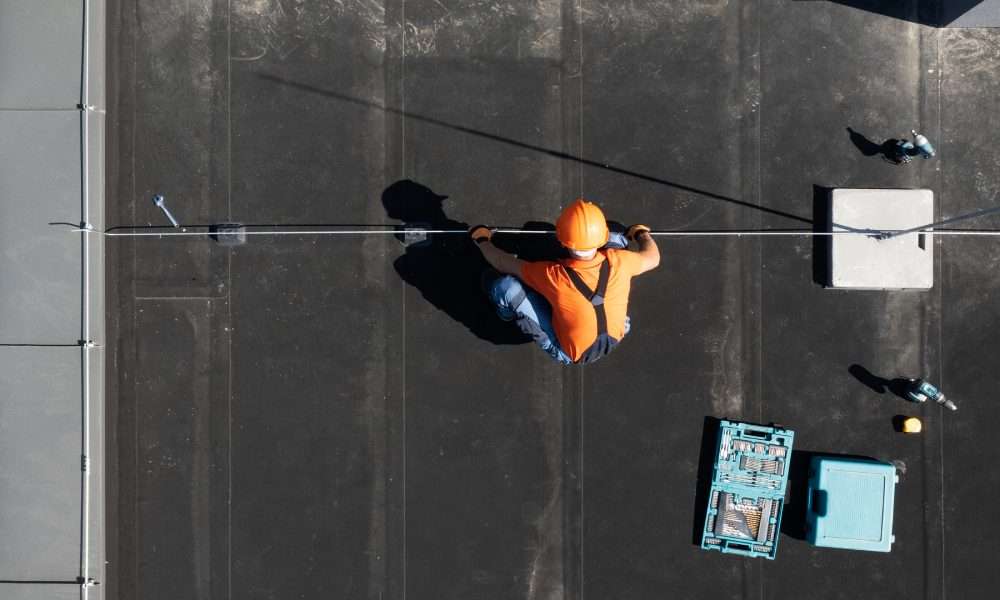
Maintenance crews (like HVAC technicians) walk your roof regularly, and every footstep on a commercial membrane creates wear. Concentrated pressure from equipment and foot paths cracks membrane surfaces and loosens seams over time. Most commercial buildings don’t have designated walkway systems, so this damage accumulates quietly until a leak reveals it. Installing walkway pads on high-traffic routes is a solid protective measure to take.
Flashing Failures
Flashing seals the transitions around rooftop penetrations like pipes, HVAC units, skylights, and parapet walls. These seams are the most vulnerable points on any commercial roof. Flashing can separate from the roofing material due to thermal movement, improper installation, or simple age. When it fails, water gets a direct path through the roof deck. Staying on top of flashing inspections, especially after extreme weather, catches these failures before they cause structural damage.
Poor Installation
A commercial roof installed without proper attention to detail rarely lasts as long as its projected service life. For example, improper seam bonding or inadequate substrate preparation creates failure points. Cutting corners on labor costs upfront usually results in replacing or extensively repairing the roof much sooner than planned.
Know What You’re Up Against
The challenges commercial roofing faces aren’t mysteries, so you can set up a plan to prevent them from damaging your property. Mostly, you want to understand your roof’s specific vulnerabilities and stay on top of scheduled inspections and maintenance. Waiting for a problem to appear before acting almost always costs more than staying ahead of it.