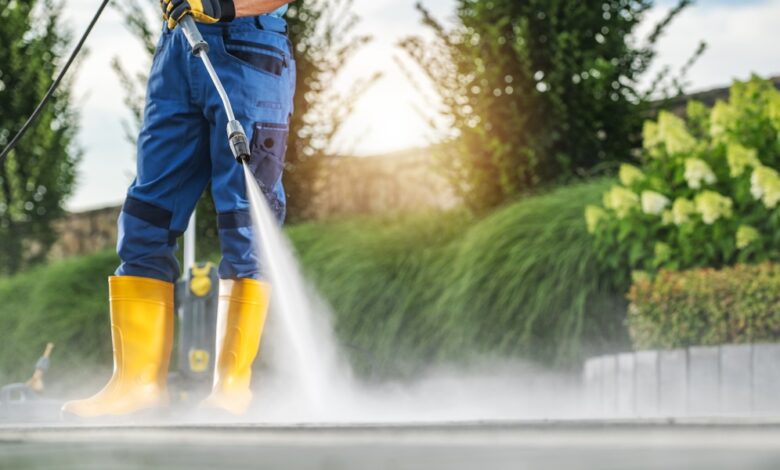
Pressure washing has become one of the most familiar ways to clean outdoor surfaces. When a driveway turns gray, a patio develops dark patches, or a walkway looks grimy, reaching for a pressure washer can seem like the obvious solution. The immediate results can also be satisfying, especially when a powerful stream of water strips away years of visible dirt.
But cleaning an outdoor surface is not simply a matter of applying as much pressure as possible. Different stains have different causes, and the materials underneath them respond differently to aggressive cleaning. In some situations, high-pressure water can remove the visible problem without addressing what caused it—in others, it can actually damage the surface.
Understanding why pressure washing isn’t the answer to every outdoor stain can help homeowners choose cleaning methods that produce better results while protecting patios, walkways, siding, fences, and other exterior features.
Outdoor Stains Aren’t All the Same
A dark mark on a patio can come from several different sources. These problems can look similar from a distance, but they do not necessarily respond to the same treatment. Loose dirt sitting on top of a surface is very different from contamination that has penetrated porous material or biological growth that has established itself within tiny cracks and pores.
Before cleaning anything, it helps to identify what is actually creating the discoloration. Choosing a method based solely on appearance can lead to unnecessary work and disappointing results.
More Pressure Does Not Always Mean a Better Clean
One of the biggest misconceptions about pressure washing is that stubborn stains simply require more power. Increasing pressure may remove additional material, but that material is not always dirt.
Concrete, natural stone, brick, mortar, and paving materials can gradually weather. A concentrated jet of water may erode weakened areas, disturb joints, expose aggregate, or leave visible cleaning lines. Painted and coated surfaces can be even more vulnerable because excessive pressure may lift the finish away from the underlying material.
There is also the risk of creating an uneven appearance. If the nozzle remains too close to the surface or moves inconsistently, some areas may be cleaned much more aggressively than others. The resulting stripes and patches can sometimes be more noticeable than the original staining.
Effective cleaning should remove unwanted buildup while leaving the underlying material intact.
Porous Materials Create a Different Challenge
Many outdoor surfaces are porous. Concrete, brick, sandstone, and certain types of paving can absorb moisture and contaminants rather than keeping everything on the surface.
That matters because pressure washing primarily works through mechanical force. It can remove material from the exterior, but contaminants deeper inside the pores may remain. Once moisture returns and conditions become favorable, staining or organic growth can become visible again.
Repeatedly blasting the same area may therefore create a cycle in which the surface is cleaned temporarily without solving the underlying issue. Worse, aggressive cleaning can roughen some materials, potentially creating additional places where dirt and organic matter can collect.
A cleaning strategy should account for the characteristics of the material instead of treating every patio or walkway as though it were a sealed, nonporous surface.
Biological Growth Requires More Than Surface Removal
Green and black discoloration on outdoor surfaces often has a biological component. Algae, moss, lichen, and similar growth thrive where moisture lingers, particularly in shaded areas with limited airflow.
Pressure washing may remove the visible portion of this growth, producing an immediate cosmetic improvement. However, simply stripping away what can be seen does not necessarily address growth embedded within a porous surface.
This is where cleaning products and treatment methods designed for particular contaminants may be useful. Homeowners dealing with persistent patio discoloration can benefit from understanding the different approaches involved in cleaning patio surfaces and treating stubborn buildup rather than assuming water pressure alone will solve every problem.
The goal is not merely to make a surface look cleaner for a few days. A more effective approach considers what caused the staining and how thoroughly it needs to be treated.
Oil and Grease Need Their Own Approach
Oil stains demonstrate particularly well why mechanical cleaning has limitations. When oil lands on porous concrete or paving, it can penetrate below the surface. Water alone does little to break down oily substances, regardless of how forcefully it is applied.
Using high pressure immediately can sometimes spread contaminated water across a larger area. Depending on the location, runoff can also carry grease, detergents, and other contaminants toward lawns, gardens, storm drains, or neighboring surfaces.
Absorbent materials, appropriate degreasers, and targeted cleaning techniques are often more suitable for these stains. Older oil marks may require repeated treatment because contaminants that have penetrated deeply are difficult to remove in a single attempt.
Matching the treatment to the substance causing the stain generally produces a better result than simply increasing water pressure.
Rust and Mineral Deposits Can Be Especially Stubborn
Not every reddish, orange, or white mark outdoors is ordinary dirt. Metal furniture, irrigation systems, fertilizers, hard water, and other sources can leave rust or mineral deposits on exterior surfaces.
Pressure washing may have little effect on these stains because the discoloration is caused by chemical deposits rather than loose surface debris. Repeated passes with a pressure washer can therefore expose the underlying material to unnecessary wear while leaving much of the stain behind.
A targeted product suitable for both the stain and the surface may be necessary. Testing any treatment in a small, inconspicuous area is particularly important with natural stone and decorative paving, since some chemicals can alter color or react with minerals in the material.
Choose the Method Based on the Problem
Pressure washers remain useful tools. They can efficiently remove loose grime and surface contamination from many durable materials when operated correctly. The problem arises when pressure washing becomes the automatic response to every mark found outdoors.
A better approach starts with three basic questions: What caused the stain? What material is underneath it? What cleaning method can remove the contamination without unnecessarily damaging that material?
Those questions explain why pressure washing isn’t the answer to every outdoor stain. Exterior cleaning works best when the method is chosen for the specific problem rather than simply for its power. By paying attention to the stain, surface, surroundings, and underlying cause, homeowners can keep outdoor areas cleaner without shortening the life of the materials they are trying to maintain.