What Businesses Should Consider Before Shipping New Products
Prepare new products for shipping by evaluating packaging, costs, carriers, product protection, returns, customer expectations, and fulfillment needs.

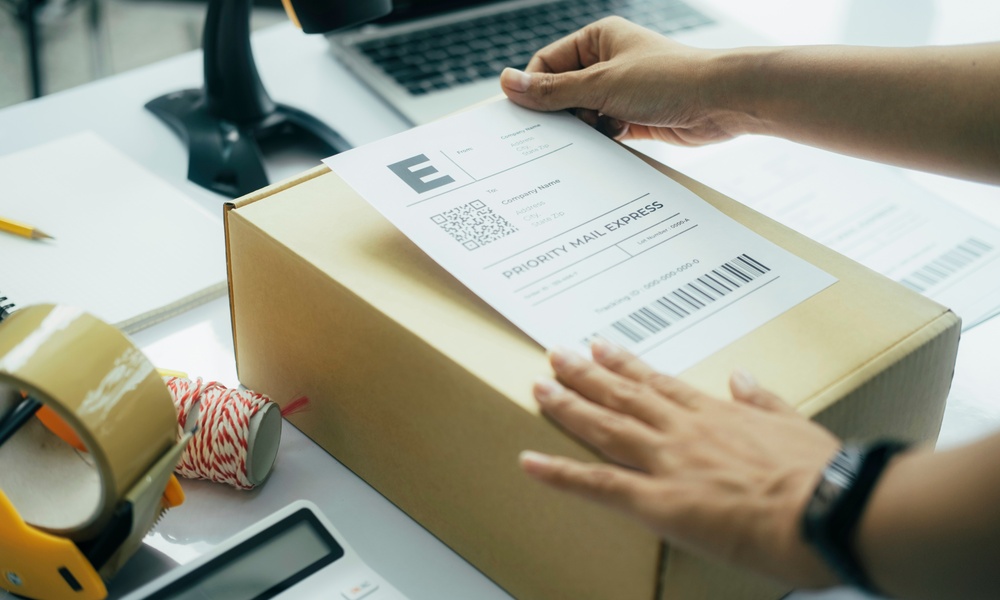
Bringing a new product to market requires more than developing something customers want to buy. Businesses also need a reliable way to move that product from a warehouse, store, or production facility into the hands of customers. Shipping decisions can influence costs, customer satisfaction, product condition, operational efficiency, and even how buyers perceive a brand. For companies introducing an unfamiliar item into their fulfillment process, what businesses should consider before shipping new products extends well beyond choosing a carrier and printing a label.
Table Of Content
- Understand the Product’s Shipping Requirements
- Choose Packaging Based on the Product
- Account for Dimensional Weight
- Test Packaging Before the Launch
- Calculate the Full Cost of Fulfillment
- Consider How Order Volume Could Change
- Evaluate Carrier Options Carefully
- Build Shipping Into the Product Launch Strategy
- Like this
- Related
Understand the Product’s Shipping Requirements
Every product presents a different set of logistical challenges. A lightweight textile item may be relatively straightforward to ship, while electronics, glassware, liquids, machinery components, or unusually shaped products may require more planning.
Start by evaluating the item’s dimensions and sensitivity to environmental conditions. Products that can crack, bend, leak, scratch, or otherwise become damaged require packaging designed around those vulnerabilities. Temperature and moisture sensitivity may also affect how an item should be stored and transported.
Businesses should perform this assessment using the fully packaged product rather than considering the item by itself. Packaging adds weight and dimensions, both of which can affect shipping rates and handling requirements.
Choose Packaging Based on the Product
Packaging should provide sufficient protection without adding unnecessary material, weight, or volume. Finding that balance can require testing, especially when a company has never shipped a particular type of product before.
The outer container needs to withstand normal handling throughout the distribution process. Interior materials may then be needed to limit movement, cushion impacts, separate components, or protect delicate surfaces. Even durable products can suffer damage when they have enough empty space to shift repeatedly inside a package.
The product itself can also influence the type of container that makes sense. Understanding which products can safely ship in cardboard boxes can help businesses determine when standard corrugated packaging is appropriate and when another approach may be necessary.
Packaging should ultimately be treated as part of the shipping system rather than as an afterthought added once production is complete.
Account for Dimensional Weight
Shipping expenses are not always determined by actual weight alone. Carriers may calculate dimensional weight based on how much space a package occupies in their transportation network. As a result, a lightweight product packed inside an unnecessarily large box can sometimes cost considerably more to ship than expected.
Before launching a new product, businesses should evaluate several possible packaging configurations. Reducing excess space may lower material consumption while creating a smaller package that is more economical to transport.
However, minimizing package size should not come at the expense of adequate protection. Saving money on individual shipments offers little benefit if insufficient packaging leads to damaged products, refunds, replacements, and dissatisfied customers.
Test Packaging Before the Launch
A package that appears secure on a packing table may perform differently after traveling through sorting facilities, conveyor systems, delivery vehicles, and repeated handling. Testing helps reveal weaknesses before real customer orders are affected.
Companies can conduct internal tests that simulate drops, vibration, compression, and other common shipping stresses. Depending on the product and distribution requirements, more formal packaging tests may also be appropriate.
Testing should include the exact materials and packaging configuration that will be used for customer orders. If packaging is later changed to reduce costs or improve efficiency, the revised configuration should be evaluated again.
This process can also help businesses determine whether they are using excessive packaging. Testing may reveal opportunities to remove unnecessary materials while maintaining suitable protection.
Calculate the Full Cost of Fulfillment
Postage is only one component of shipping costs. Boxes, inserts, tape, labels, cushioning materials, labor, storage space, carrier fees, and replacement shipments can all affect the true cost of fulfilling an order.
These expenses should be estimated before setting product prices and shipping policies. Otherwise, a business may launch an item only to find that fulfillment consumes a much larger portion of its margin than anticipated.
Companies should also think about how order combinations affect costs. A product that is economical to ship individually may require different packaging when purchased alongside other items. Understanding these scenarios ahead of time can make fulfillment costs easier to predict.
Consider How Order Volume Could Change
New products do not always sell at the rate businesses expect. Demand may be slower than forecast, or a successful launch could generate far more orders than anticipated. Shipping processes should therefore be designed with some flexibility.
A packaging method that works when employees prepare 20 orders per day may become inefficient at 500 orders per day. Complicated assembly procedures, excessive materials, or too many packaging variations can slow fulfillment as volume increases.
Businesses can prepare for growth by developing repeatable packing procedures and limiting unnecessary complexity. Standardization can make employee training easier and help orders move through the fulfillment process more consistently.
Evaluate Carrier Options Carefully
The right carrier may depend on package size, weight, destination, delivery speed, shipment volume, and customer expectations. Instead of assuming one provider will be ideal for every order, businesses should compare available services based on their specific shipping profile.
Reliability matters alongside price. Frequent delays, poor tracking visibility, or inconsistent handling can create customer service problems even when transportation rates initially appear attractive.
Businesses should also understand how surcharges affect their shipments. Residential delivery, oversized packages, remote destinations, fuel charges, and other factors can increase the final cost beyond a carrier’s base rate.
Build Shipping Into the Product Launch Strategy
Shipping can have consequences throughout the business, from margins and warehouse operations to customer retention. Treating fulfillment as part of product planning gives teams more time to solve potential problems before they affect real orders.
Understanding the factors companies should evaluate before sending new products to customers can also encourage coordination between product development, packaging, operations, marketing, and customer service teams. Each department may identify considerations that would otherwise be overlooked.
A successful product launch does not end when an item becomes available for purchase. Businesses also need to deliver that product efficiently, affordably, and in the condition customers expect. By testing packaging, understanding costs, preparing for different order volumes, evaluating carrier options, and reviewing results after launch, companies can build a shipping process capable of supporting both the product and its long-term growth.








No Comment! Be the first one.