
NASA
-
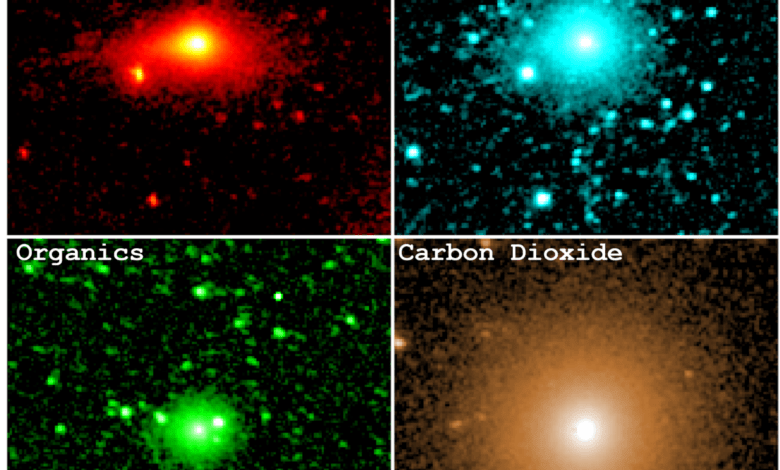
NASA’s SPHEREx Examines Comet 3I/ATLAS’s Coma
Description These observations by NASA’s SPHEREx (Spectro-Photometer for the History of the Universe, Epoch of Reionization and Ices Explorer) show the infrared light emitted by the dust, water, organic molecules, and carbon dioxide contained within comet 3I/ATLAS’s coma. The comet brightened significantly during the December 2025 period when SPHEREx made the observations — about two months after the icy body…
Read More » -

NASA Heat Shield Tech Contributes to America’s Space Industry
This Jan. 29, 2026, photo captures the streak the Varda Space Industries W-5 capsule made while returning to Earth. The capsule uses a protective heat shield Varda produced made of cutting-edge material it licensed from NASA. The material, known as C-PICA (Conformal Phenolic Impregnated Carbon Ablator), provides a stronger, less expensive, and more efficient thermal protection coating to capsules, allowing them –…
Read More » -

Seasons Change in Southwest Virginia
As the seasons sweep through southwest Virginia, the lush summer landscape transforms, fading into fall and winter. From October 4 to December 6, 2025, the forests in this animation turn from green to orange to brown before being blanketed by white snow. The animation is composed of images from Harmonized Landsat and Sentinel-2 (HLS), a NASA product that combines imagery from the…
Read More » -

Tracking Glacial Change with Landsat and Radar
For the first time, scientists have created a comprehensive global dataset revealing how the world’s glaciers speed up and slow down with the seasons. Published in Science in November 2025, this groundbreaking study analyzed over 36 million satellite image pairs—including decades of Landsat data—to track the seasonal “pulse” of every major glacier on Earth. The research, built off the ITS_LIVE ice velocity dataset from NASA’s Jet Propulsion Laboratory…
Read More » -

Chilled New York City
The New York metropolitan area was showing the effects of a prolonged cold spell in late January 2026. During a stretch of frigid weather, ice choked the Hudson River along Manhattan’s western shore. The OLI (Operational Land Imager) on Landsat 8 captured this image of the wintry landscape around midday on January 28. The image is false-color (bands 5-4-3) to distinguish ice (light blue) from open…
Read More » -
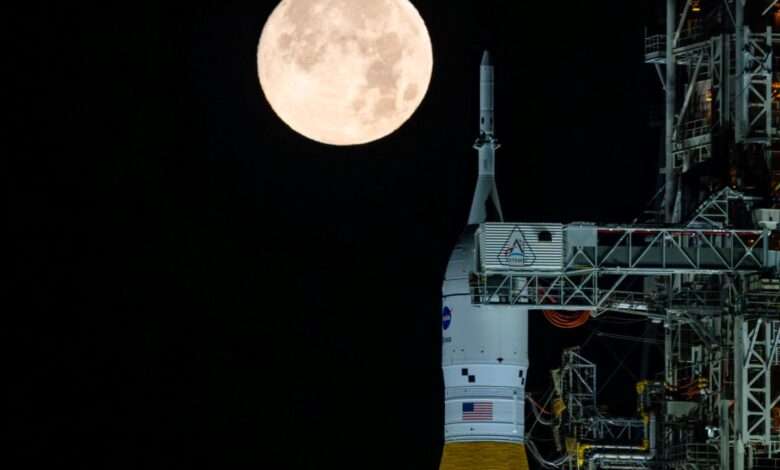
Full Moon over Artemis II
A full moon is seen shining over NASA’s SLS (Space Launch System) and Orion spacecraft, atop the mobile launcher at Launch Pad 39B at NASA’s Kennedy Space Center in Florida in the early hours of February 1, 2026. The agency concluded a wet dress rehearsal for the agency’s Artemis II test flight early Tuesday morning, successfully loading cryogenic propellant into…
Read More » -
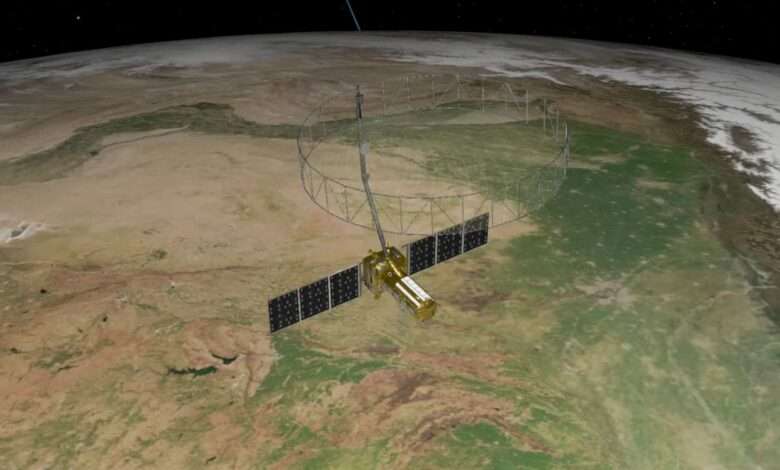
NASA Space to Soil Challenge
Rapid advances in commercial space, artificial intelligence, and edge computing are transforming what is possible for Earth observation. By pushing more intelligence onboard, missions can move from passively collecting data to actively interpreting and responding to changing surface conditions in near-real time, enabling more targeted observations and dramatically improving the value of data returned to the ground. Within this context,…
Read More » -

Cracking Antarctic Sea Ice
‘Tis the season for long and ruler-straight cracks in McMurdo Sound’s sea ice. Though natural breaks in sea ice are called leads, the better term for the human-made fracture seen in these satellite images is a ship channel. In the austral summer, usually in January, an icebreaker rams a path through the fast ice—a type of sea ice that is anchored to the shore—that often covers…
Read More » -
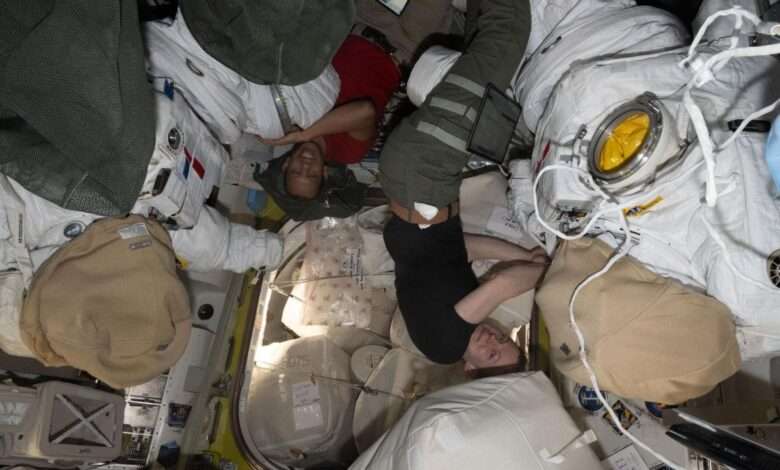
NASA Astronaut to Answer Questions from Students in Pennsylvania
NASA astronaut Chris Williams will connect with students in Pennsylvania to answer prerecorded science, technology, engineering, and mathematics (STEM) questions while aboard the International Space Station. The Earth-to-space call will begin at 12:20 p.m. EST Thursday, Feb. 5, and will stream live on the agency’s Learn With NASA YouTube channel. Media interested in covering the event must RSVP by 5 p.m., Wednesday, Feb.…
Read More » -
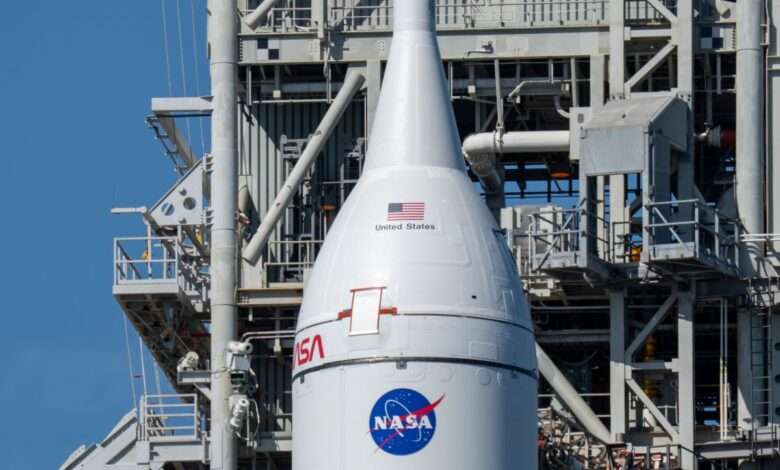
NASA’s Orion Spacecraft at Launch Pad
NASA’s Orion spacecraft, which will carry the Artemis II crew around the Moon, sits at the launch pad on Jan. 17, 2026, after rollout. It rests atop the SLS (Space Launch System) rocket. Orion can provide living space on missions for four astronauts for up to 21 days without docking to another spacecraft. Advances in technology for deep space travel such as life support, avionics,…
Read More »