
NASA
-

Pacific Moisture Drenches the U.S. Northwest
Waves of heavy rainfall in early December 2025 spurred landslides and flooding in parts of the Pacific Northwest. The deluge was the result of a potent atmospheric river that took aim at the region starting around December 7. Atmospheric rivers are long, narrow bands of moisture that move like rivers in the sky, transporting water vapor from the tropics toward…
Read More » -

NASA Selects Two Heliophysics Missions for Continued Development
NASA has selected one small explorer mission concept to advance toward flight design and another for an extended period of concept development. NASA’s Science Mission Directorate Science Management Council selected CINEMA (Cross-scale Investigation of Earth’s Magnetotail and Aurora) to enter Phase B of development, which includes planning and design for flight and mission operations. The principal investigator for the CINEMA…
Read More » -
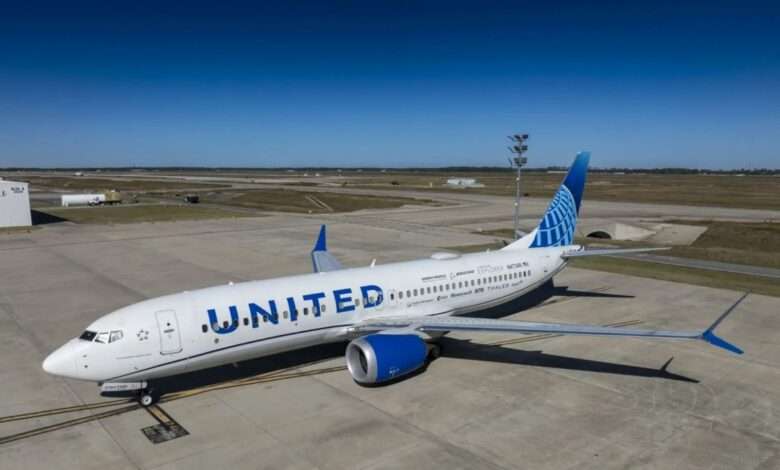
NASA Works with Boeing, Other Collaborators Toward More Efficient Global Flights
Picture this: You’re just about done with a transoceanic flight, and the tracker in your seat-back screen shows you approaching your destination airport. And then … you notice your plane is moving away. Pretty far away. You approach again and again, only to realize you’re on a long, circling loop that can last an hour or more before you land. …
Read More » -

NASA’s Parker Solar Probe Spies Solar Wind ‘U-Turn’
Images captured by NASA’s Parker Solar Probe as the spacecraft made its record-breaking closest approach to the Sun in December 2024 have now revealed new details about how solar magnetic fields responsible for space weather escape from the Sun — and how sometimes they don’t. Like a toddler, our Sun occasionally has disruptive outbursts. But instead of throwing a fit,…
Read More » -
An Unrelenting Tule Fog
An atmospheric phenomenon occurring over much of California was unmistakable in satellite imagery in late autumn 2025. Fog stretching some 400 miles (640 kilometers) across the state’s Central Valley appeared day after day for more than two weeks in late November and early December. Known as tule (TOO-lee) fog, named after a sedge that grows in the area’s marshes, these low clouds…
Read More » -
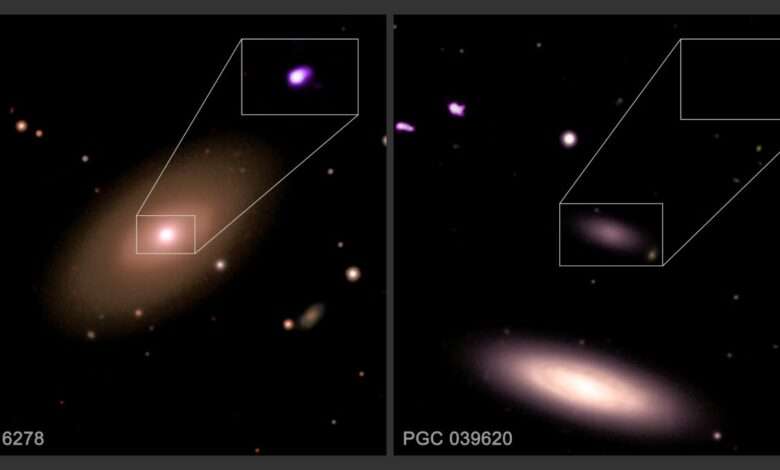
NASA’s Chandra Finds Small Galaxies May Buck the Black Hole Trend
Most smaller galaxies may not have supermassive black holes in their centers, according to a recent study using NASA’s Chandra X-ray Observatory. This contrasts with the common idea that nearly every galaxy has one of these giant black holes within their cores, as NASA leads the world in exploring how our universe works. A team of astronomers used data from…
Read More » -
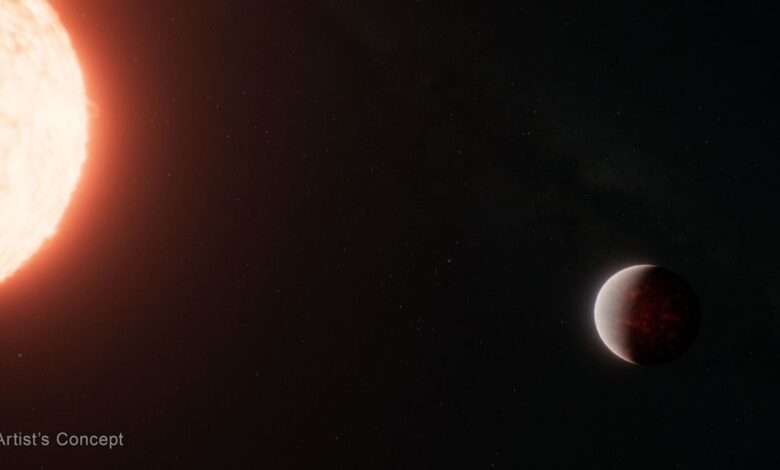
NASA’s Webb Detects Thick Atmosphere Around Broiling Lava World
Researchers using NASA’s James Webb Space Telescope have detected the strongest evidence yet for an atmosphere on a rocky planet outside our solar system, as NASA leads the world in exploring the universe from the Moon to Mars and beyond. Observations of the ultra-hot super-Earth TOI-561 b suggest that the exoplanet is surrounded by a thick blanket of gases above a global…
Read More » -
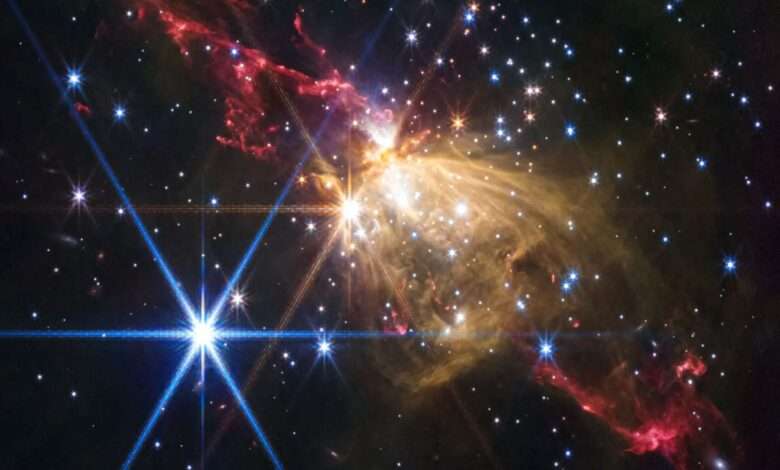
Stellar Jet
NASA’s James Webb Space Telescope captured a blowtorch of seething gasses erupting from a volcanically growing monster star in this image released on Sept. 10, 2025. Stellar jets, which are powered by the gravitational energy released as a star grows in mass, encode the formation history of the protostar. This image provides evidence that protostellar jets scale with the mass of their parent…
Read More » -
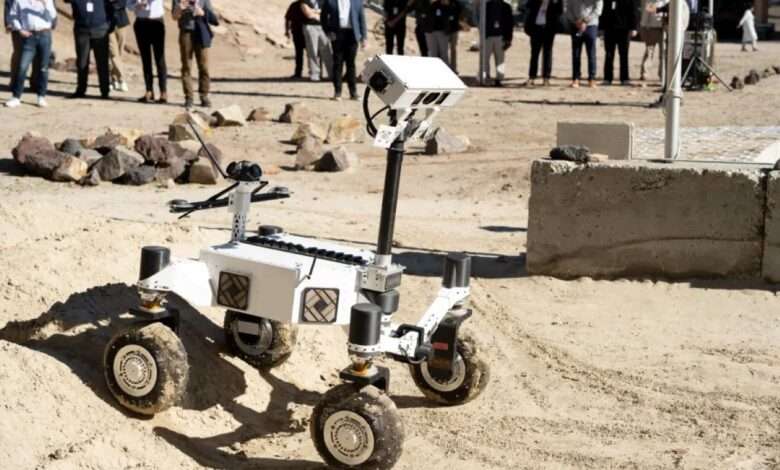
NASA JPL Unveils Rover Operations Center for Moon, Mars Missions
The center leverages AI along with JPL’s unique infrastructure, unrivaled tools, and years of operations expertise to support industry partners developing future planetary surface missions. NASA’s Jet Propulsion Laboratory in Southern California on Wednesday inaugurated its Rover Operations Center (ROC), a center of excellence for current and future surface missions to the Moon and Mars. During the launch event, leaders…
Read More » -
25 Years of Space Station Technology Driving Exploration
NASA and its partners have supported humans continuously living and working in space since November 2000. After 25 years of habitation, the International Space Station continues to be a proving ground for technology that powers NASA’s Artemis campaign, future lunar missions, and human exploration of Mars. Take a look at key technology advancements made possible by research aboard the orbiting laboratory. …
Read More »