
NASA
-
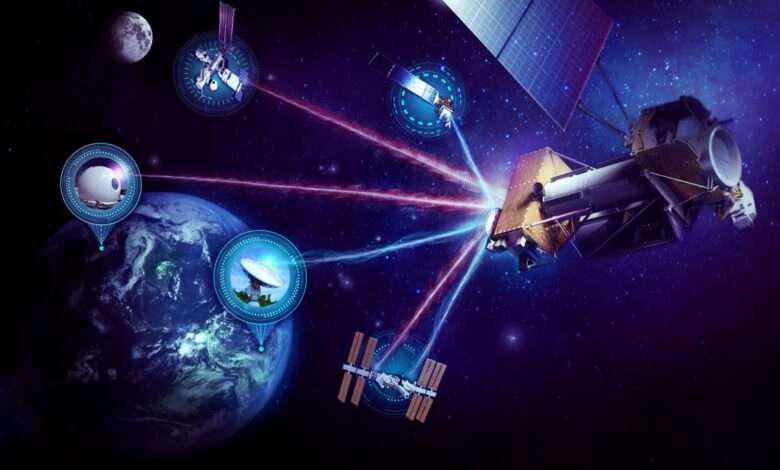
NASA Glenn Teams Win 2025 R&D 100 Awards
NASA’s Glenn Research Center in Cleveland has earned 2025 R&D 100 Awards for developing a system that delivers high-speed internet for space and co-inventing technology for a new class of soft magnetic nanocrystalline materials designed to operate at extreme temperatures. This brings NASA Glenn’s total to 130 R&D 100 Awards. High-Rate Delay Tolerant Networking NASA Glenn’s Daniel Raible and Rachel Dudukovich led…
Read More » -
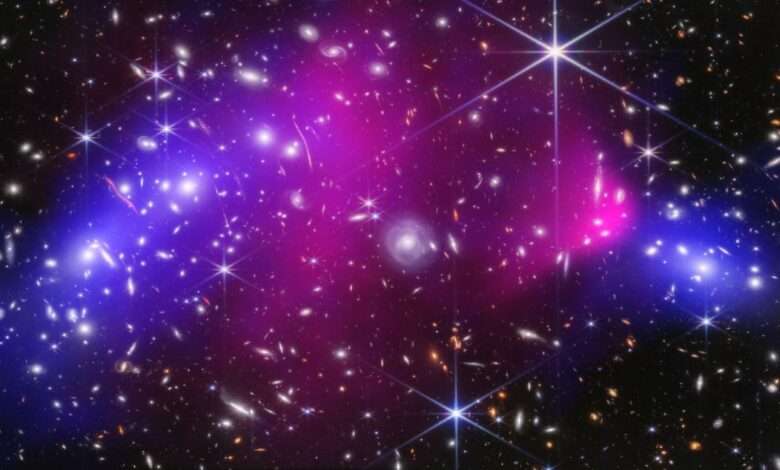
Mapping Dark Matter
This image released on June 30, 2025, combines data from NASA’s James Webb Space Telescope and NASA’s Chandra X-ray Observatory to visualize dark matter. Researchers used Webb’s observations to carefully measure the mass of the galaxy clusters shown here as well as the collective light emitted by stars that are no longer bound to individual galaxies. Learn more. Image credit:…
Read More » -

Hubble Studies Star Ages in Colorful Galaxy
Stars of all ages are on display in this NASA/ESA Hubble Space Telescope image of the sparkling spiral galaxy called NGC 6000, located 102 million light-years away in the constellation Scorpius. NGC 6000 has a glowing yellow center and glittering blue outskirts. These colors reflect differences in the average ages, masses, and temperatures of the galaxy’s stars. At the heart of the…
Read More » -
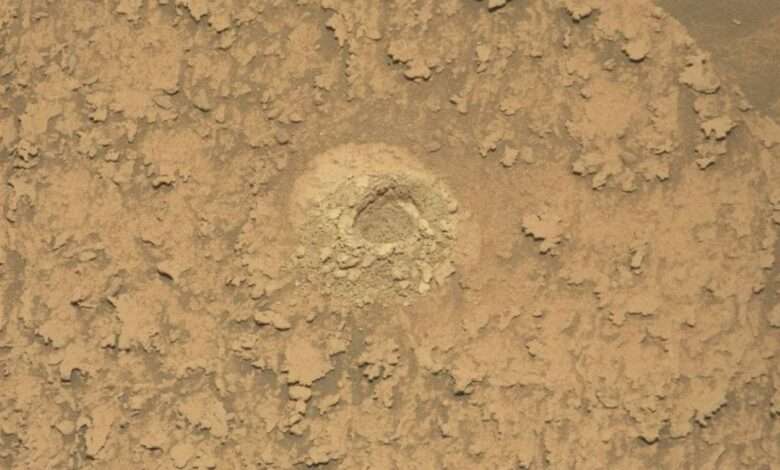
Curiosity Blog, Sols 4695-4701: Searching for Answers at Monte Grande
Written by William Farrand, Senior Research Scientist, Space Science Institute Earth planning date: Friday, Oct. 24, 2025 Curiosity has successfully drilled its 44th hole on Mars, which is a major milestone in our investigation of the enigmatic “boxwork unit,” a region of resistant ridges surrounding pits or “hollows” of less-resistant rock. The drilling took place over the past weekend within the…
Read More » -
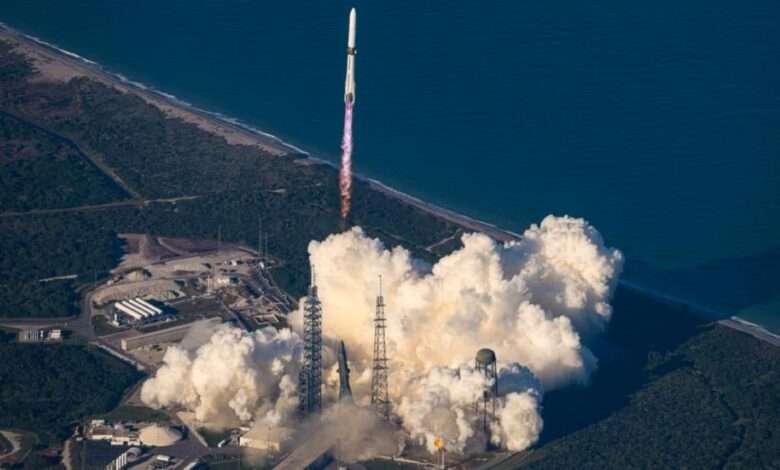
NASA, Blue Origin Launch Two Spacecraft to Study Mars, Solar Wind
A pair of NASA spacecraft ultimately destined for Mars will study how its magnetic environment is impacted by the Sun. The mission also will help the agency prepare for future human exploration of Mars. NASA’s ESCAPADE (Escape and Plasma Acceleration and Dynamics Explorers) spacecraft launched at 3:55 p.m. EST, Thursday, aboard a Blue Origin New Glenn rocket from Launch Complex…
Read More » -

Curiosity Blog, Sols 4689-4694: Drill in the Boxwork Unit is GO!
Written by Catherine O’Connell-Cooper, APXS Payload Uplink/Downlink Lead, University of New Brunswick Earth planning date: Friday, Oct. 17, 2025 Curiosity has been investigating the “boxwork unit” for several months now. Readers might remember we drilled at the edge of the boxwork at “Altadena,” back in June. Since then, we have driven just under a kilometer across the boxwork unit (about 0.6…
Read More » -

Curiosity Blog, Sols 4682-4688: Seven Mars Years
Written by Diana Hayes, Graduate Student at York University, Toronto Earth planning date: Friday, Oct. 10, 2025 This week was one of seasonal changes and milestones for the mission. As was mentioned several weeks ago, Mars has now moved out of its “cloudy season” and is transitioning into the “dusty season” as the planet moves closer to the Sun. This means…
Read More » -
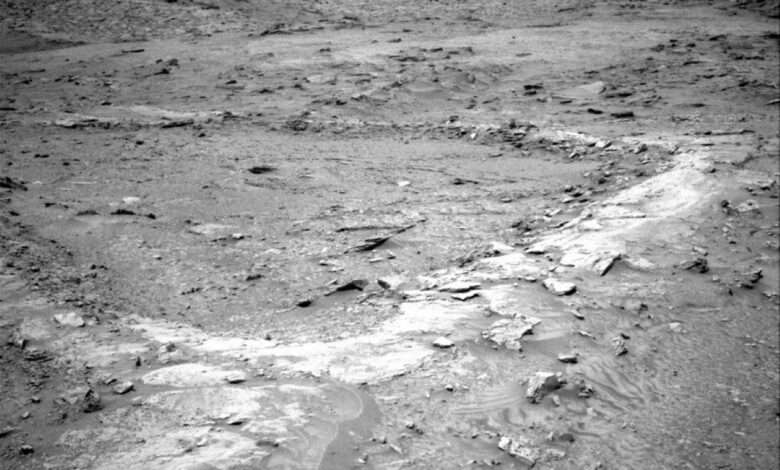
Curiosity Blog, Sols 4675-4681: Deciding Where to Dig Into the Boxworks
Written by Michelle Minitti, MAHLI Deputy Principal Investigator at Framework Earth planning date: Friday, Oct. 3, 2025 Before Curiosity landed 13 years ago, the science team eyed all the geologic wonders scattered across the flanks of Mount Sharp and looked forward to the day when we could put the rover to work on them. We have visited so many of…
Read More » -
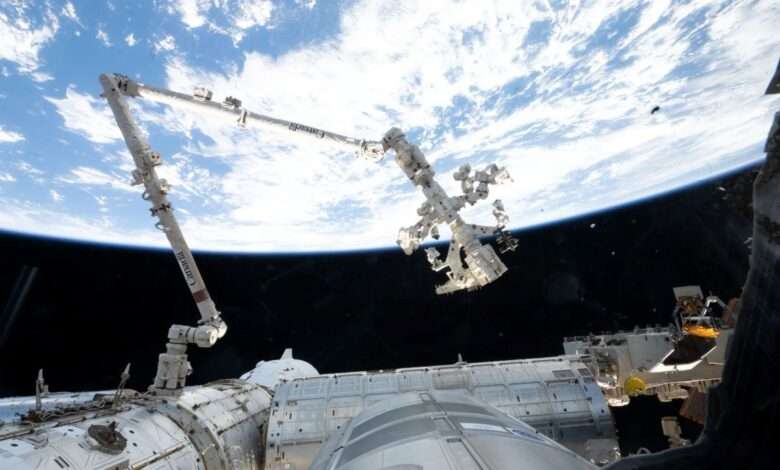
A Robotic Helping Hand
NASA astronaut Jonny Kim took this photo on July 23, 2025, as the International Space Station orbited 259 miles above a cloudy Pacific Ocean southwest of Mexico. Visible in the image is the 57.7-foot-long Canadarm2 robotic arm, which extends from a data grapple fixture on the International Space Station’s Harmony module. Attached to its latching end effector is Dextre, the station’s fine-tuned robotic hand…
Read More » -
NASA Patent Remix Challenge
NASA’s Technology Transfer Office invites entrepreneurs, innovators, and creative thinkers to apply NASA’s patented technologies to practical applications. Participants will select an existing NASA patent and develop a business or product concept that will be evaluated based on value proposition, business model viability, development feasibility, and quality of presentation. Entries should clearly demonstrate creativity, feasibility, and a compelling rationale for…
Read More »