
NASA
-
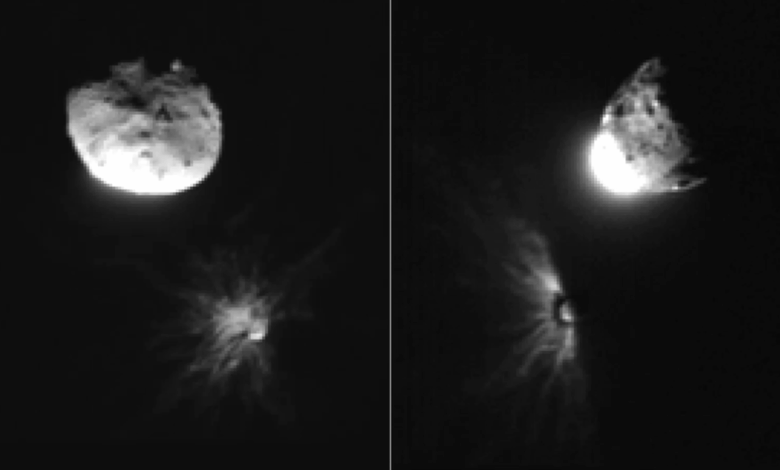
Close-Up Views of NASA’s DART Impact to Inform Planetary Defense
On Sept. 11, 2022, engineers at a flight control center in Turin, Italy, sent a radio signal into deep space. Its destination was NASA’s DART (Double Asteroid Redirection Test) spacecraft flying toward an asteroid more than 5 million miles away. The message prompted the spacecraft to execute a series of pre-programmed commands that caused a small, shoebox-sized satellite contributed by the Italian…
Read More » -

NASA Invites Media to Joint Launch of Sun, Space Weather Missions
Lee esta nota de prensa en español aquí. Media accreditation is open for the launch of three observatories that will study the Sun and enhance the ability to make accurate space weather forecasts, helping protect technology systems that affect life on Earth. NASA is targeting no earlier than Tuesday, Sept. 23, for the launch of the agency’s IMAP (Interstellar Mapping and…
Read More » -

Curiosity Blog, Sols 4636-4637: Up Against a Wall
Written by Michelle Minitti, MAHLI Deputy Principal Investigator, Framework Earth planning date: Wednesday, Aug. 20, 2025 What does a good rover do when her back is up against a wall? Fight for science! Curiosity indeed fought the good fight at “Río Frío,” the wall of one of the many ridges cutting through the boxwork terrain we have been systematically exploring.…
Read More » -

Bring NASA Science into Your Library!
Calling all librarians! NASA sponsors dozens of research projects that need help from you and the people in your community. These projects invite everyone who’s interested to collaborate with scientists, investigating mysteries from how star systems form to how our planet sustains life. You can help by making observations with your cell phone or by studying fresh data on your laptop from…
Read More » -

X-ray and Radio go ‘Hand in Hand’ in New Image
In 2009, NASA’s Chandra X-ray Observatory released a captivating image: a pulsar and its surrounding nebula that is shaped like a hand. Since then, astronomers have used Chandra and other telescopes to continue to observe this object. Now, new radio data from the Australia Telescope Compact Array (ATCA), has been combined with Chandra’s X-ray data to provide a fresh view…
Read More » -
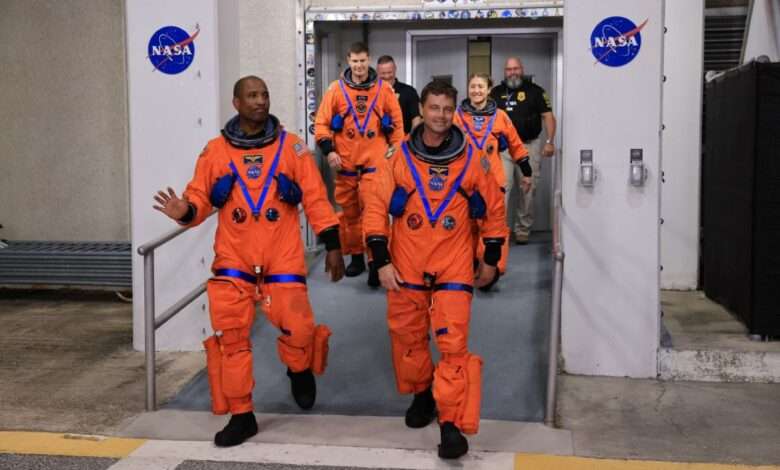
NASA to Announce New Astronaut Class, Preview Artemis II Moon Mission
Lee esta nota de prensa en español aquí. NASA is opening media accreditation for multi-day events to introduce America’s newest astronaut class and provide briefings for the Artemis II crewed test flight around the Moon. The activities will take place in September at the agency’s Johnson Space Center in Houston. After evaluating more than 8,000 applications, NASA will debut its 2025…
Read More » -
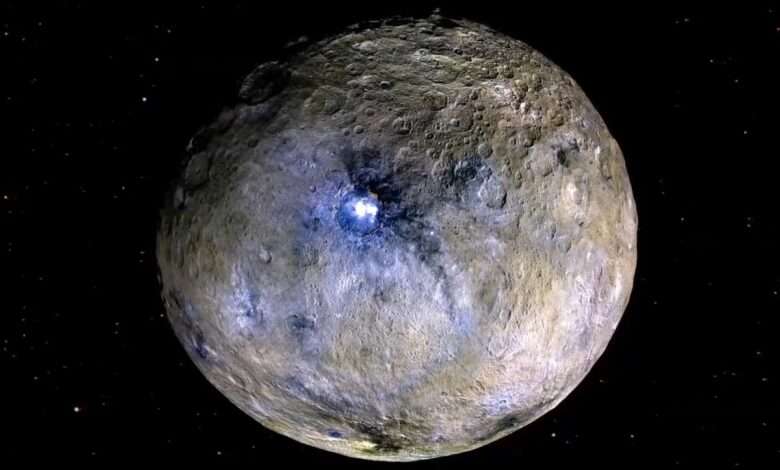
NASA: Ceres May Have Had Long-Standing Energy to Fuel Habitability
The dwarf planet is cold now, but new research paints a picture of Ceres hosting a deep, long-lived energy source that may have maintained habitable conditions in the past. New NASA research has found that Ceres may have had a lasting source of chemical energy: the right types of molecules needed to fuel some microbial metabolisms. Although there is no…
Read More » -
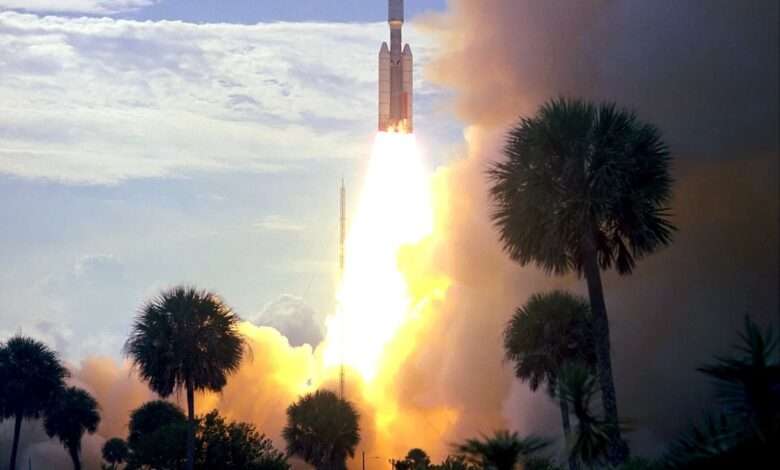
Viking 1 Begins Journey to Mars
A Titan-Centaur rocket carrying the Viking 1 spacecraft launches from Complex 41 at Cape Canaveral Air Force Station on Aug. 20, 1975. Viking 1 touched down on the red planet on July 20, 1976, becoming the first truly successful landing on Mars. Viking 1 was the first of a pair of complex deep space probes that were designed to reach…
Read More » -

Steve Platnick Steps Down from NASA After 34 Years of Service
Dr. Steven “Steve” Platnick has taken the NASA Deferred Resignation Program (DRP). His last work day was August 8, 2025. Steve spent more than three decades at, or associated with, NASA. While he began his civil servant career at NASA’s Goddard Space Flight Center (GSFC) in 2002, his Goddard association went back to 1993, first as a contractor and then…
Read More » -

Curiosity Blog, Sols 4634-4635: A Waiting Game
Written by Lucy Thompson, Planetary Scientist and APXS Team Member, University of New Brunswick, Canada Earth Planning Date: Monday, Aug. 18, 2025 The downlink data from our weekend activities arrived on Earth as we started planning this morning. As the APXS payload uplink and downlink lead, I assess the downlink data to ensure that our observations executed and that the…
Read More »