
NASA
-
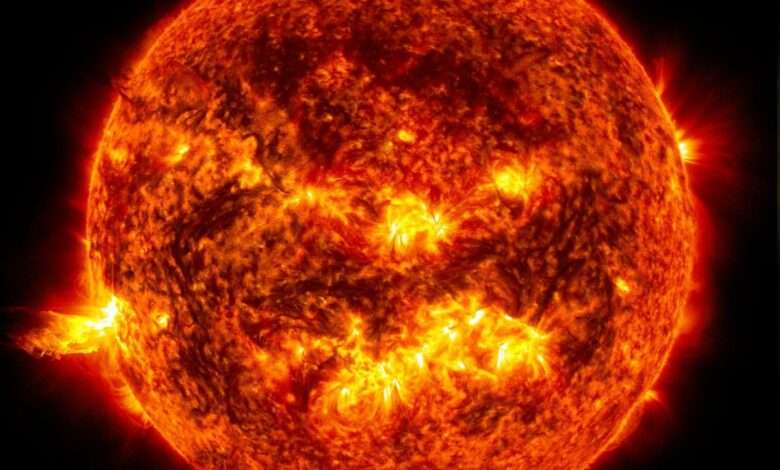
NASA, IBM’s ‘Hot’ New AI Model Unlocks Secrets of Sun
Editor’s Note: This article was updated Aug. 20, 2025, to correct the number of years of training data used and the model accuracy. The original article said the model was trained on 14 years of Solar Dynamics Observatory data and surpassed existing benchmarks by 15%; the model was actually trained on 9 years of data and surpassed existing benchmarks by 16%.…
Read More » -

Curiosity Blog, Sols 4631-4633: Radiant Ridge Revolution
Written by Remington Free, Operations Systems Engineer at NASA’s Jet Propulsion Laboratory Earth planning date: Friday, Aug. 15, 2025 Today we uplinked a three-sol weekend plan with lots of exciting activities — to support both the science and engineering teams! While usually our science activities take front and center stage, we often also do engineering maintenance activities as well to…
Read More » -

Sun at the Center: Teacher Ambassadors Bring Heliophysics to Classrooms Nationwide
For the fourth year in a row, the American Association of Physics Teachers, a collaborator on the NASA Heliophysics Education Activation Team (HEAT), selected eight new educators to serve as ambassadors for heliophysics education. Meeting in Boulder, CO, from July 14-17, 2025, these teachers met to work through AAPT’s lessons that bring physics content to life in the context of NASA heliophysics missions and…
Read More » -
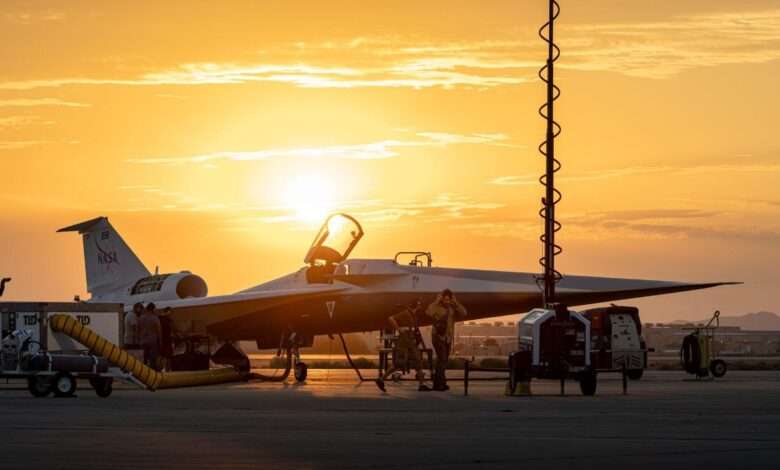
NASA’s X-59 Nears First Flight
As we honor the legacy of aviation pioneers this National Aviation Day, NASA’s X-59 is preparing to push the boundaries of what’s possible in air travel. The quiet supersonic aircraft’s historic first flight is on the horizon, with final ground tests about to begin. Following completion of low-speed taxi tests in July 2025 in Palmdale, California, medium- and high-speed taxi tests mark…
Read More » -
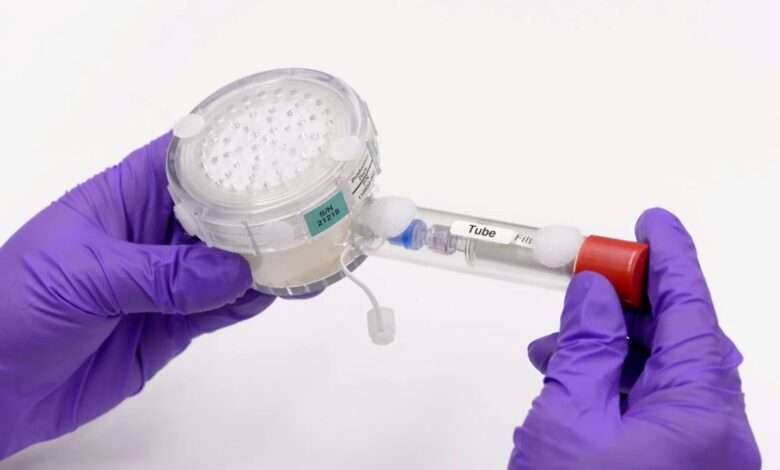
What is BioNutrients?
A series of biology experiments, called BioNutrients, is testing ways to use microorganisms to produce nutrients – off Earth and on demand – that will be critical for human health in space. For the BioNutrients-1 experiment, the specially engineered yeast and its powdered food source are held in the container at the left. Its lid holds a membrane that allows…
Read More » -
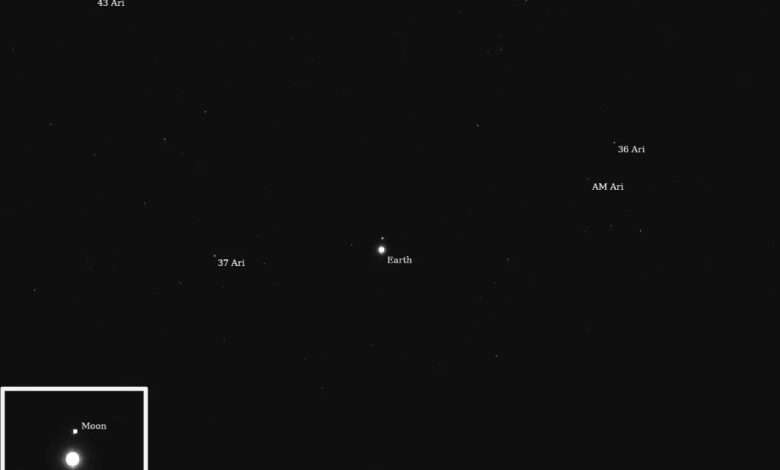
NASA’s Psyche Captures Images of Earth, Moon
Headed for a metal-rich asteroid of the same name, the Psyche spacecraft successfully calibrated its cameras by looking homeward. On schedule for its 2029 arrival at the asteroid Psyche, NASA’s Psyche spacecraft recently looked back toward home and captured images of Earth and our Moon from about 180 million miles (290 million kilometers) away. The images were obtained during one…
Read More » -

Moonlight and Our Atmosphere
The Moon’s light is refracted by Earth’s atmosphere in this April 13, 2025, photograph from the International Space Station as it orbited into a sunset 264 miles above the border between Bolivia and Brazil in South America. Understanding the Moon helps us understand other planets, how they have evolved and the processes which have shaped their surfaces. It also helps us understand the…
Read More » -
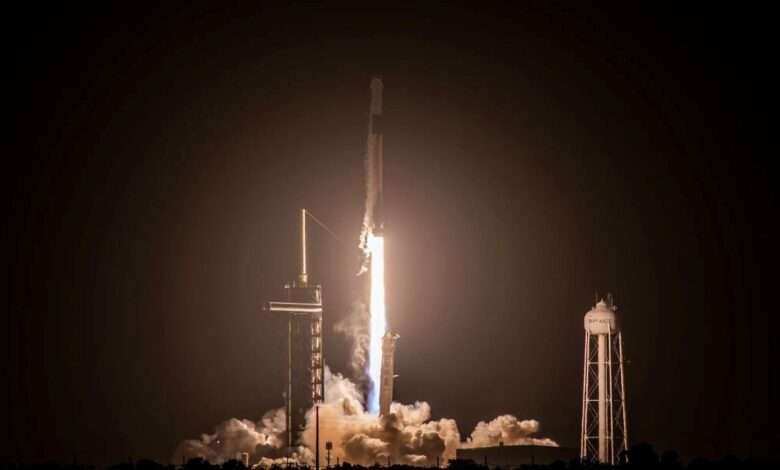
NASA Sets Coverage for SpaceX 33rd Station Resupply Launch, Arrival
NASA and SpaceX are targeting 2:45 a.m. EDT, Sunday, Aug. 24, for the next launch to deliver science investigations, supplies, and equipment to the International Space Station. This is the 33rd SpaceX commercial resupply services mission to the orbital laboratory for NASA. Filled with more than 5,000 pounds of supplies, a SpaceX Dragon spacecraft on a Falcon 9 rocket will…
Read More » -

Where the Wild Things Are: Wildlife Management with Johnson’s Matt Strausser
If you asked someone what they expected to see during a visit to NASA’s Johnson Space Center, they would probably list things like astronauts, engineers, and maybe a spacecraft or two. It might be a surprise to learn you can also spy hundreds of species of animals – from geckos and snakes to white-tailed deer and red-tailed hawks. Ensuring those…
Read More » -
NASA-funded Compact Radar Drives Big Changes in Airborne and Suborbital Radar Capabilities
A collaboration between NASA and the small business Aloft Sensing produced a new compact radar system that will enable researchers to leverage High Altitude Long Endurance (HALE) platforms to observe dynamic Earth systems. This new radar is small, provides highly sensitive measurements, and doesn’t require GPS for positioning; eventually, it could be used on vehicles in space. HALE InSAR flies…
Read More »