
NASA
-
NASA Joins Genesis Mission to Accelerate AI-Driven Discovery
NASA is supporting the Genesis Mission, a national effort to drive the use of artificial intelligence in tackling complex scientific and engineering challenges to advance a new era of discovery. President Donald J. Trump issued the Executive Order “Launching the Genesis Mission” on Nov. 24, 2025, creating a national mission to leverage artificial intelligence to accelerate scientific discovery. The mission…
Read More » -
A Week of Smoky Skies Across North America
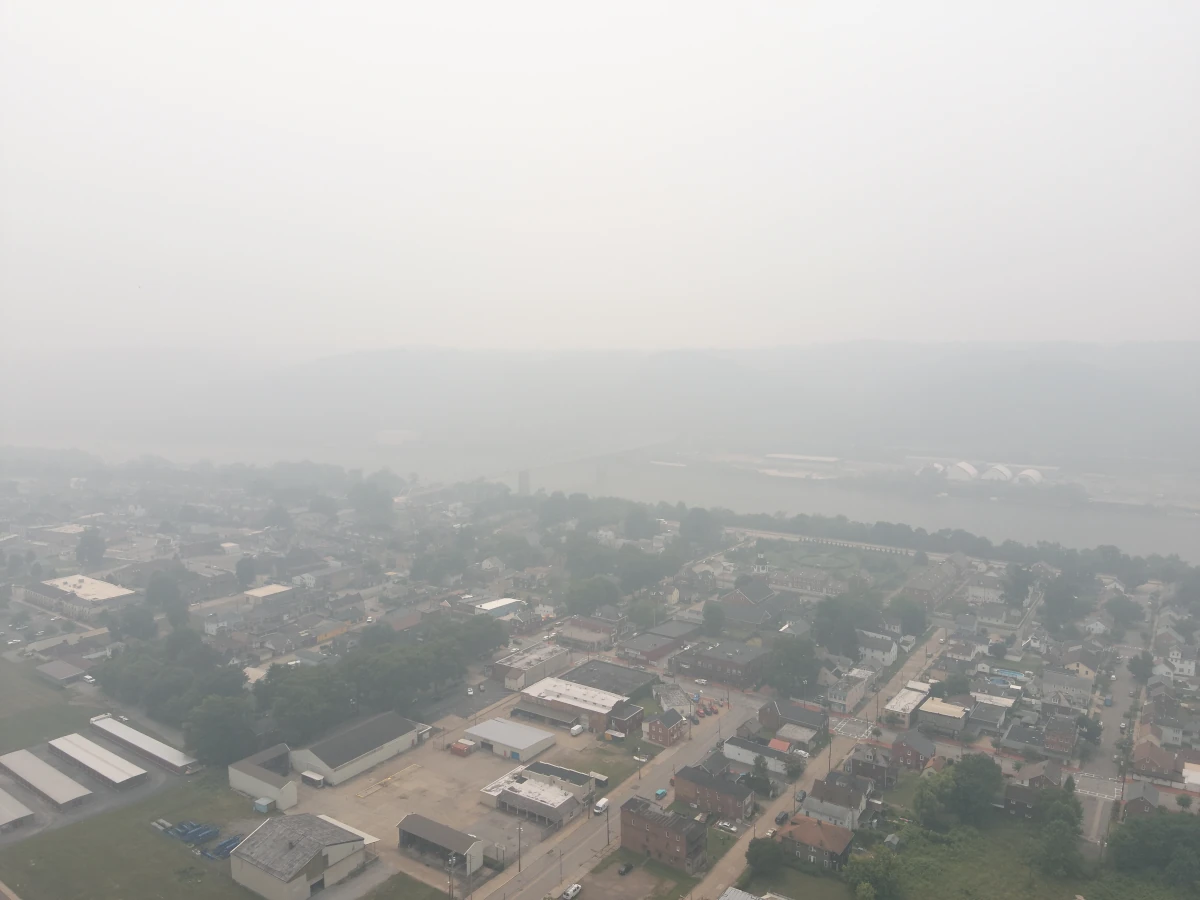
Play Video Wildland fire activity in Canada ramped up in July 2026, a time of year when lightning ignitions typically increase, according to a seasonal outlook published by several North American fire agencies. The blazes sent smoke plumes pouring across the U.S. and Canada, affecting air quality in both countries. This animation tracks brown carbon, the organic aerosols emitted by fires…
Read More » -

NISAR’s L-Band Radar Reveals ‘Hummingbird’ in Antarctica
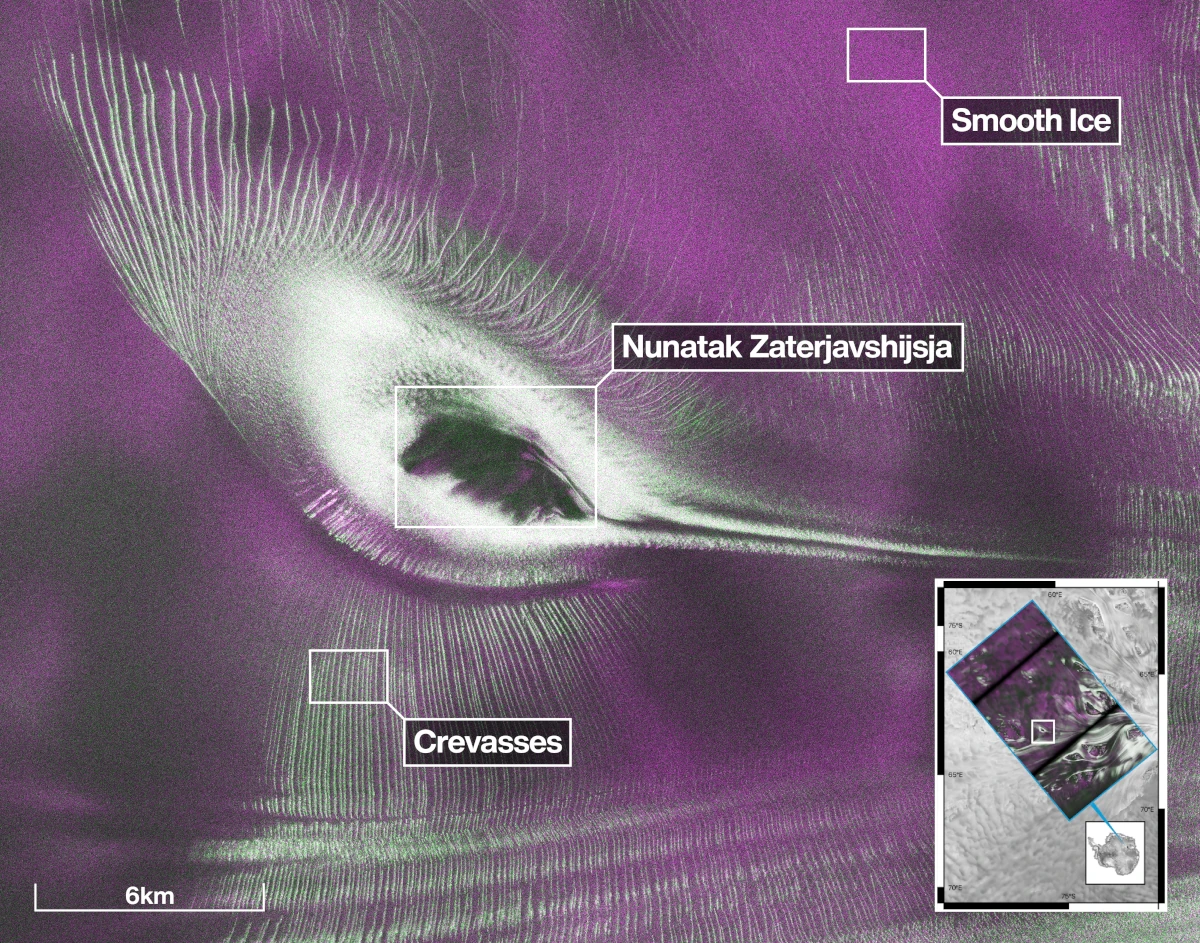
Description Data from the Earth-orbiting U.S.-India NISAR (NASA-ISRO Synthetic Aperture Radar) satellite’s L-band radar was used to produce an image of Nunatak Zaterjavshijsja — a mountaintop in East Antarctica — poking out amid a stream of ice flowing northeast to the ocean. The obstruction causes stresses in the ice, heavily fracturing the surrounding surfaces with deep cracks, called crevasses, which…
Read More » -
NASA to Host Media Briefing on Roman Telescope, Launching Next Month
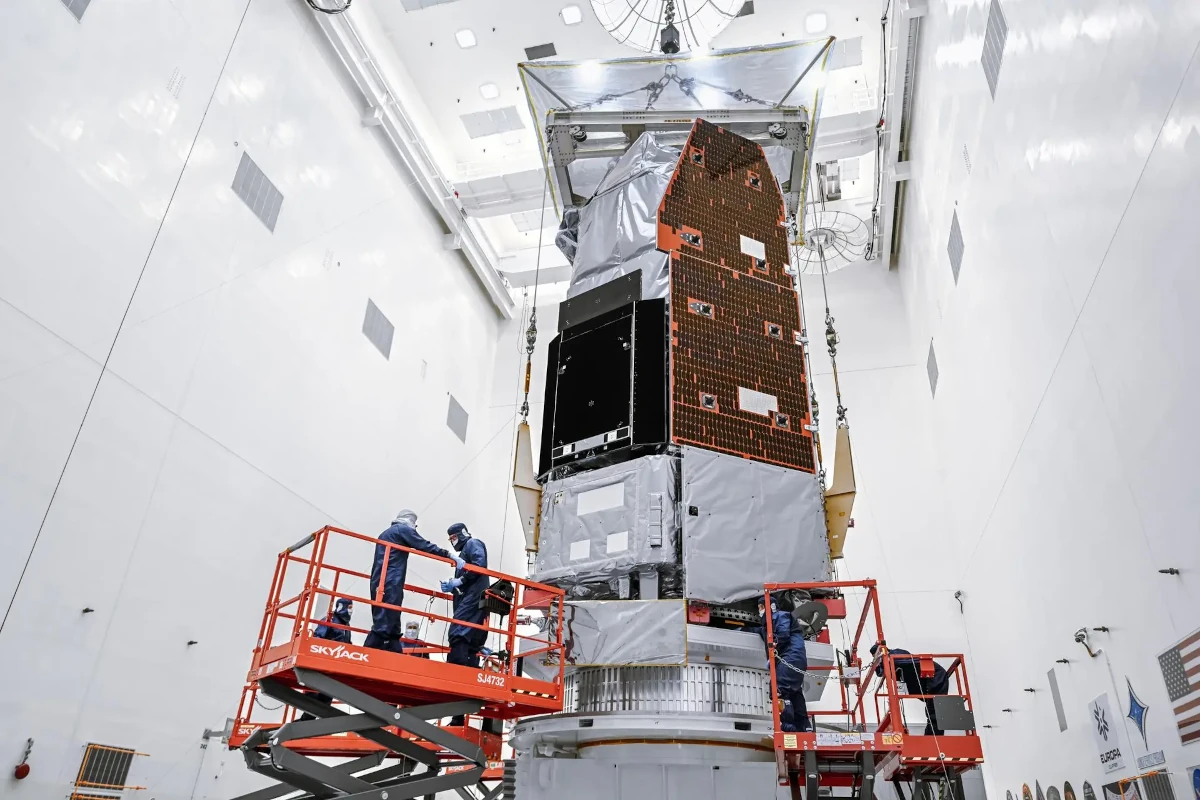
Media are invited to join NASA for a virtual news conference at 2 p.m. EDT, Wednesday, July 29, to preview the Nancy Grace Roman Space Telescope mission, scheduled to launch from the agency’s Kennedy Space Center in Florida on Sunday, Aug. 30. NASA will stream this event live through a variety of platforms. Learn where to watch online: https://www.nasa.gov/live. Participants in the briefing,…
Read More » -
US-India Satellite Delivers Data, Reveals ‘Hummingbird’ in Antarctica
As of July 20, the public can access data from the two powerful radar instruments aboard the NISAR (NASA-ISRO Synthetic Aperture Radar) satellite. Teams in the United States and India will release files processed from the satellite’s L-band and S-band radars on an ongoing basis, helping researchers and other users track the movement of Earth’s land and ice masses, monitor…
Read More » -
NASA Langley Celebrates Community through Music with ‘Symphony Under the Stars’ Event
NASA Langley’s “Stars, Stripes, and Supernovas – Symphony Under the Stars” event brought employees, families, and community members together for an evening filled with music, connection, and celebration. Organizers planned the event, which took place July 16, to mark the 250th anniversary of the founding of the United States of America. The evening featured a dynamic mix of performances from an orchestra that included NASA Langley employees…
Read More » -
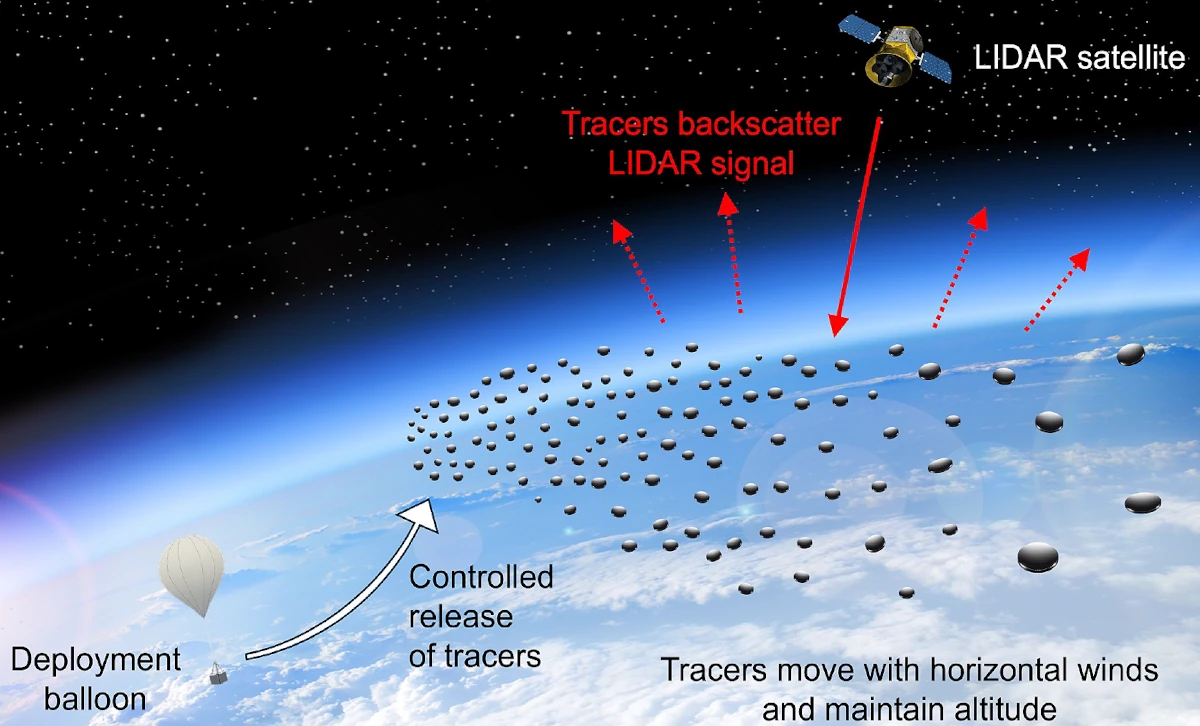
Photophoretic Tracers for Near-Space Remote Sensing at 30-100 km Altitudes
Benjamin SchaferRarified Technologies, Inc. We propose a new approach to atmospheric sensing at 30-100 km altitudes using photophoretically levitating tracers. These lightweight structures harness sunlight to remain suspended for up to months at controlled altitudes and can be remotely tracked by satellite-based lidar or radar. Unlike natural aerosols, these tracers are designed to provide strong and tunable backscatter at standard remote sensing…
Read More » -
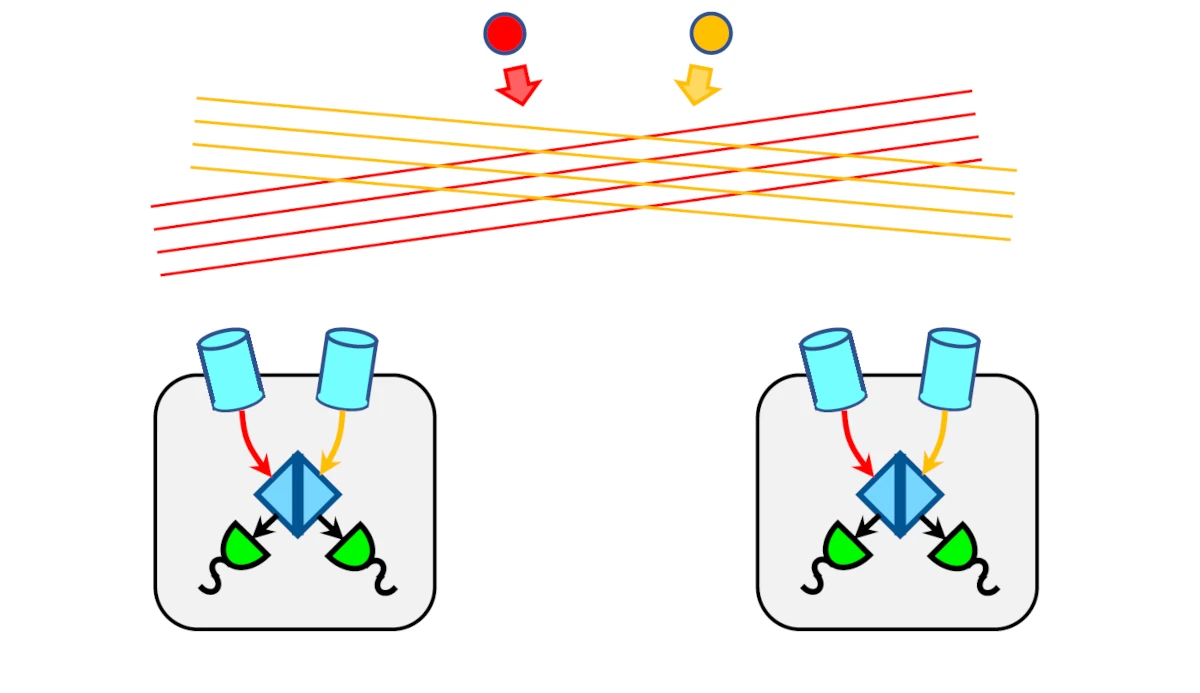
Precision Astrometry Using Optically Independent Spacecraft for Graviational Wave Detection
Paul StankusBrookhaven Science Associates The scientific goal is to enable a new method for observing gravitational waves at low frequencies, based on the astrometric GW signature — gravitational waves passing by the Earth will cause a (very small) coordinated apparent motion of all sky objects. Our innovation is to deploy a new approach to precision astrometry using quantum mechanical two-photon interference,…
Read More » -
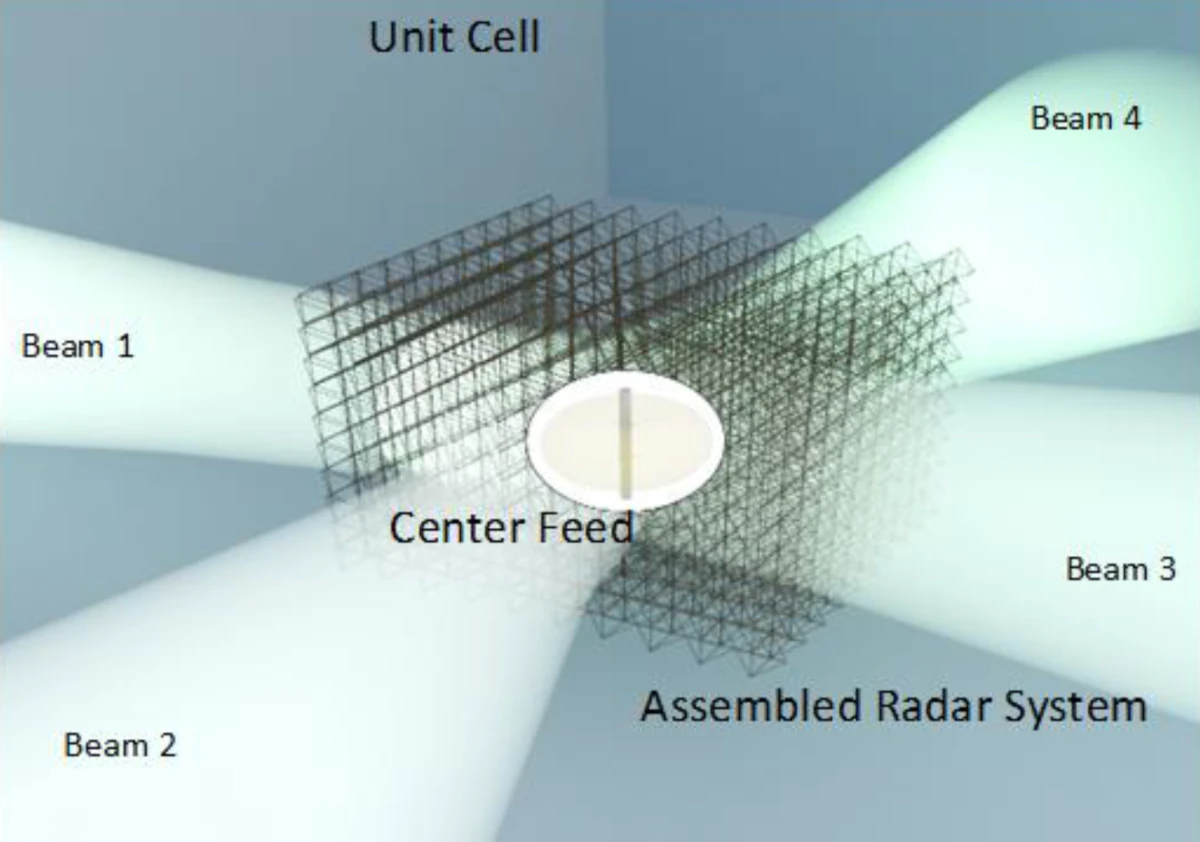
Robotically Assembled Electromagnetic Metamaterials for Long-Range Space Situational Awareness
David SmithDuke University The increasing population of spacefaring vehicles and satellites motivates increasingly powerful technologies for space situational awareness (SSA). While the US space surveillance network (SSN) is able to monitor objects down to about four inches in size using, for example, the latest upgrade to the space fence, the associated requirements limit implementation to ground-based tracking of low earth orbit…
Read More » -
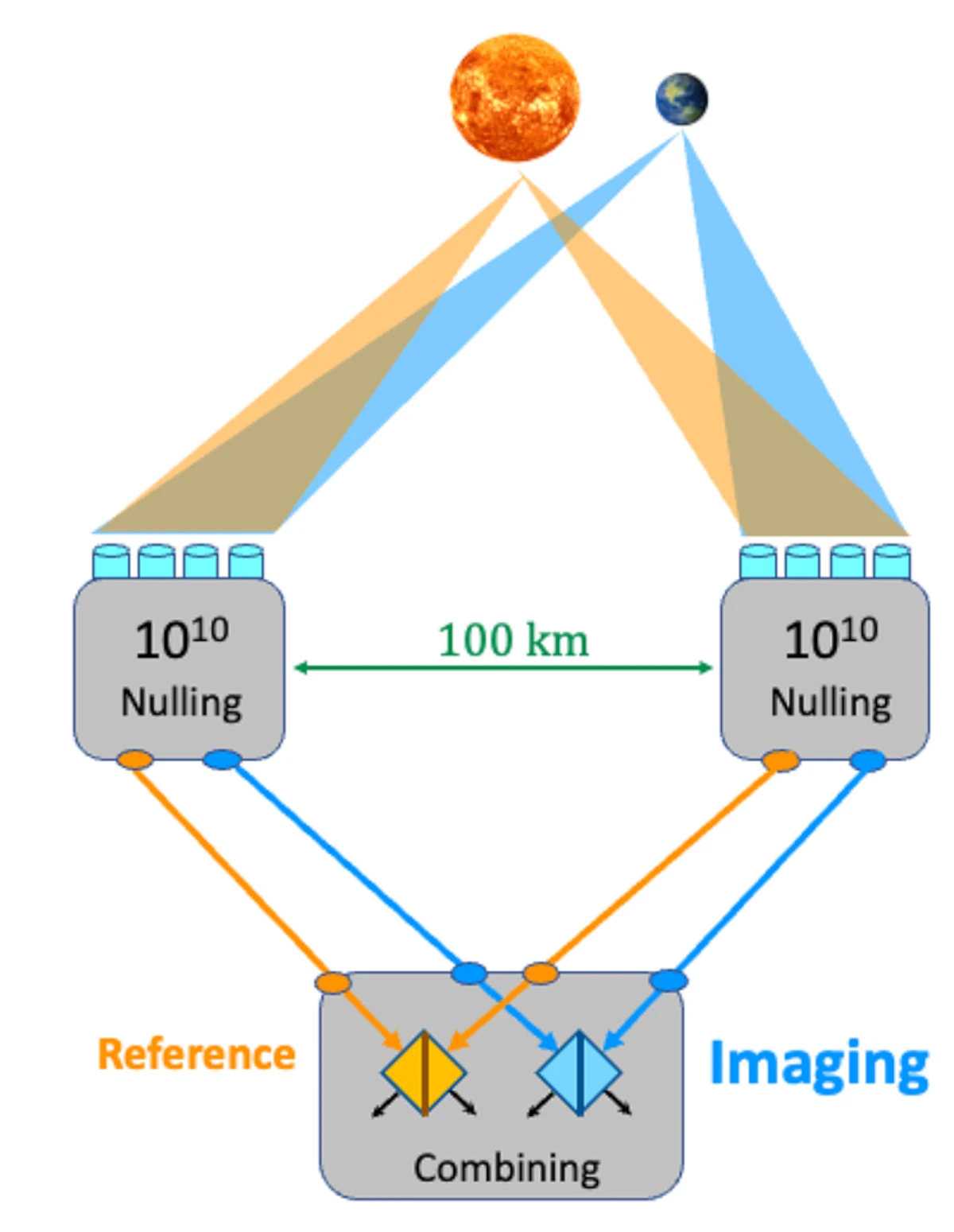
Mapping Alien Continents: Achieving Optical VLBI for Exoplanet Imaging
Paul StankusBrookhaven Science Associates The scientific goal of the proposed work will be reconstructing the image, ie resolving surface features, of an Earth-like exoplanet around a nearby star as seen in visible light. The innovation is in two stages. First, the design of a new kind of nulling interferometer — “dynamic hierarchical nulling” — combining inputs from multiple apertures and capable…
Read More »