
NASA
-
NASA Welcomes Chile as Newest Artemis Accords Signatory
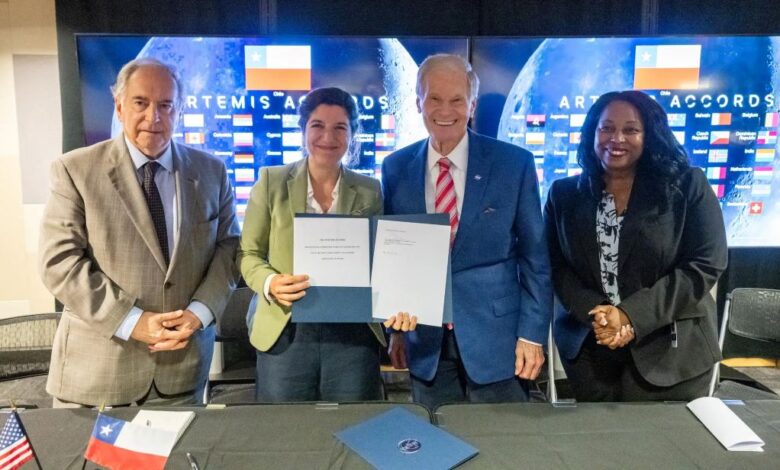
Chile signed the Artemis Accords Friday during a ceremony hosted by NASA Administrator Bill Nelson at the agency’s headquarters in Washington, becoming the 47th nation and the seventh South American country to commit to the responsible exploration of space for all humanity. “Today we welcome Chile’s signing of the Artemis Accords and its commitment to the shared values of all…
Read More » -
Autumn Leaves – Call for Volunteers
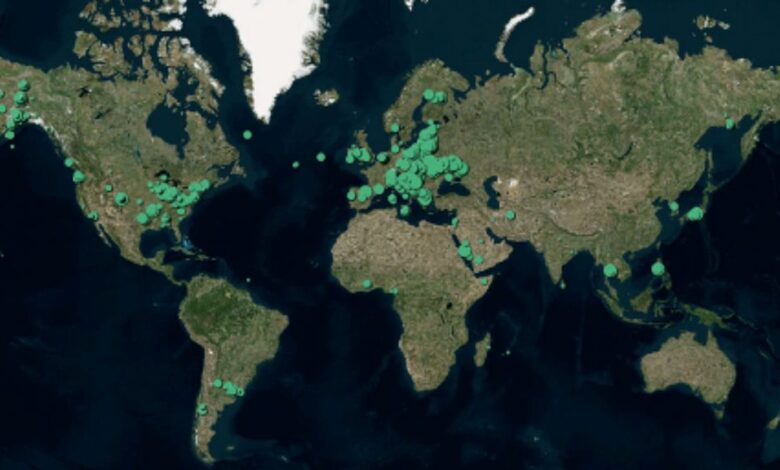
The Global Learning and Observations to Benefit the Environment (GLOBE) Program is calling on volunteers of all ages to help students and citizen scientists document seasonal change through leaf color and land cover. The data collection event will support students across North America, Latin America, Central America, and Europe, who are working together to document the seasonal changes taking place from…
Read More » -
Kites in the Classroom: Training Teachers to Conduct Remote Sensing Missions
The NASA Science Activation program’s AEROKATS and ROVER Education Network (AREN), led by Wayne Regional Educational Service Agency (RESA) in Wayne County, MI, provides learners with hands-on opportunities to engage with science instruments & NASA technologies and practices in authentic, experiential learning environments. On July 25, 2024, the AREN team held a four-day virtual workshop: “Using Kites and Sensors to…
Read More » -
Hubble Sees a Celestial Cannonball
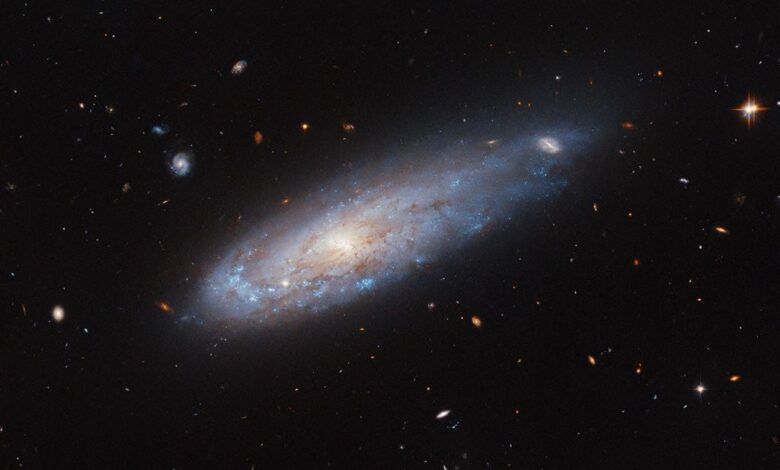
Download this image The spiral galaxy in this NASA/ESA Hubble Space Telescope image is IC 3225. It looks remarkably as if it was launched from a cannon, speeding through space like a comet with a tail of gas streaming from its disk behind it. The scenes that galaxies appear in from Earth’s point of view are fascinating; many seem to hang calmly in the…
Read More » -
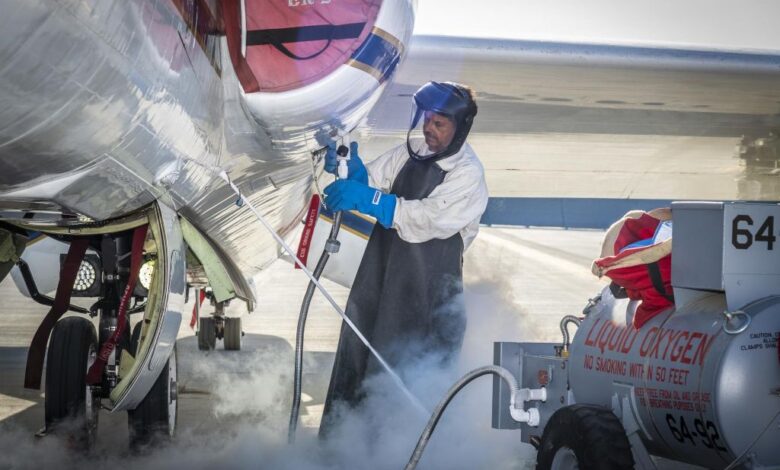
High-Altitude ER-2 Flights Get Down-to-Earth Data
Operating at altitudes above 99% of the Earth’s atmosphere, NASA’s ER-2 aircraft is the agency’s highest-flying airborne science platform. With its unique ability to observe from as high as 65,000 feet, the ER-2 aircraft is often a platform for Earth science that facilitates new and crucial information about our planet, especially when the plane is part of collaborative and multidisciplinary…
Read More » -
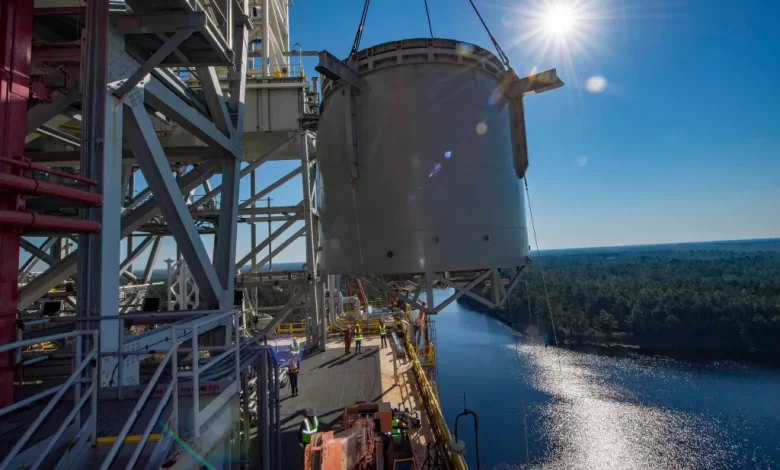
NASA Stennis Achieves Milestone in Preparation for Future Artemis Testing
NASA’s Stennis Space Center near Bay St. Louis, Mississippi, achieved a key milestone this week for testing a new SLS (Space Launch System) rocket stage to fly on future Artemis missions to the Moon and beyond. Over a two-week period beginning Oct. 10, crews completed a safe lift and installation of the interstage simulator component needed for future testing of…
Read More » -

Back on Earth: NASA’s SpaceX Crew-8 Mission Splashes Down Off Florida
NASA’s SpaceX Crew-8 mission successfully splashed down at 3:29 a.m. EDT Friday, off Pensacola, Florida, concluding a nearly eight-month science mission and the agency’s eighth commercial crew rotation mission to the International Space Station. After launching March 3 on a SpaceX Falcon 9 rocket from NASA’s Kennedy Space Center in Florida, NASA astronauts Matthew Dominick, Michael Barratt, and Jeanette Epps, as well…
Read More » -
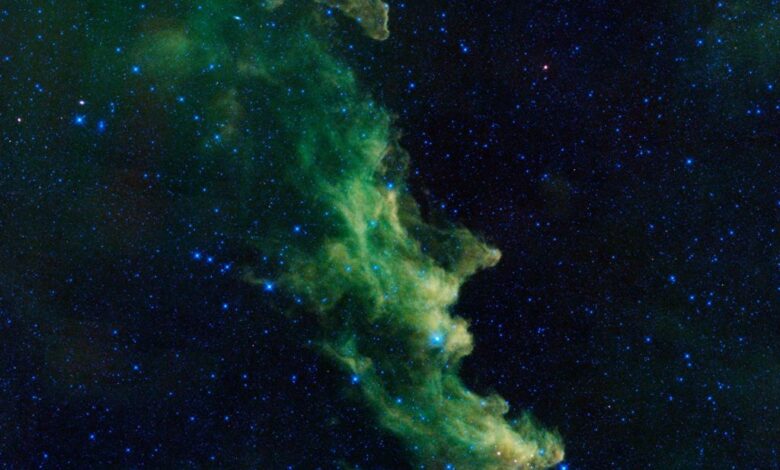
Sinister Solar System
Our universe is full of mysterious sights and sounds. Explore some of our most frightful finds from past Halloweens. Sinister Solar System Features These eye-catching posters depict some of the universe’s most mysterious astronomical phenomena with artistic flair.01NASA Posters Feature Cosmic Frights for HalloweenExplore NASA’s Galaxy of Horrors posters. Presented in the style of vintage horror movie advertisements, the new…
Read More » -
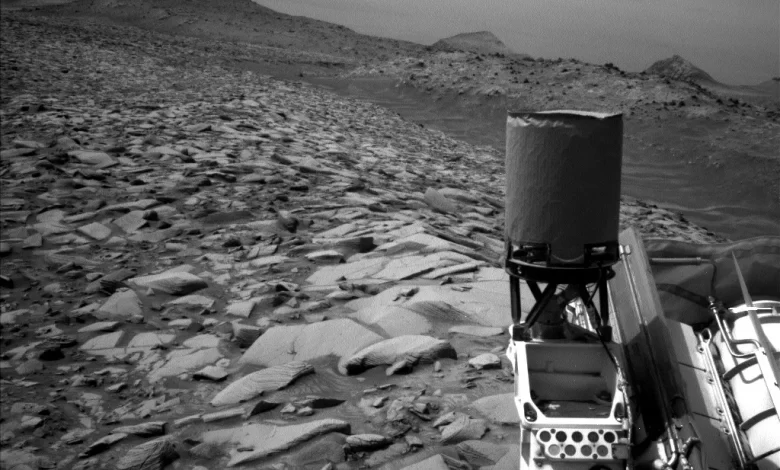
Sols 4341-4342: A Bumpy Road
Earth planning date: Monday, Oct. 21, 2024 After Curiosity’s busy weekend, the team is ready for another day of planning. We are able to take advantage of the Earth-Mars time offset to full plan on both sols of our plan today. For this plan, I served as Mobility Rover Planner, and planned Curiosity’s drive. The first sol begins with some…
Read More » -
NASA Awards NOAA’s Solar Wind Plasma Sensors Contract
NASA has selected the University of New Hampshire in Durham to build Solar Wind Plasma Sensors for the Lagrange 1 Series project, part of the National Oceanic and Atmospheric Administration’s (NOAA) Space Weather Next Program. This cost-plus-no-fee contract is valued at approximately $24.3 million and includes the development of two sensors that will study the Sun’s constant outflow of solar…
Read More »