
NASA
-

Lake Coatepeque
Just inland from the Pacific coast of El Salvador, the striking blue waters of Lake Coatepeque fill part of a caldera of the same name. An astronaut aboard the International Space Station took this photo of the lake and surrounding terrain on February 10, 2026, as the station passed over Central America. The caldera formed during a series of explosive…
Read More » -
NASA Invites Media to 63rd Annual Goddard Space Science Symposium
Media are invited to attend the 63rd annual Goddard Space Science Symposium, taking place Thursday, March 12, and Friday, March 13, at the National Housing Center in Washington. The event also will be streamed online. Organized by the American Astronautical Society (AAS) in conjunction with NASA’s Goddard Space Flight Center in Greenbelt, Maryland, the symposium gathers experts across NASA, other…
Read More » -

What Is Pi? (Grades 5-8)
This article is for students grades 5-8. What is Pi? Pi is a number. You might know it as 3.14 or the symbol π. But it’s way more than that! What Makes Pi Special? Pi is an irrational number. That means it goes on forever and it never repeats its sequence of numbers. Pi has been calculated to more than one…
Read More » -

NASA Armstrong Director Brad Flick to Retire After 40 Years of Service
On Monday, NASA announced Bradley Flick, director of NASA’s Armstrong Flight Research Center in Edwards, California, will retire Thursday, March 19, after a nearly 40-year career advancing aeronautics and flight research. Flick began his NASA journey in 1986 as a flight systems engineer and rose through the ranks to lead the center. His career spanned historic achievements by NASA, bookended…
Read More » -

Webb Studies Cranium Nebula
Nebula PMR 1 is a cloud of gas and dust that bears an uncanny resemblance to a brain in a transparent skull, inspiring its nickname, the “Exposed Cranium” nebula. Webb captured its unusual features in both near- and mid-infrared light. The nebula was first revealed in infrared light by a predecessor to Webb, NASA’s now-retired Spitzer Space Telescope, more than a decade…
Read More » -
NASA Astronauts to Answer Questions from Students in New York
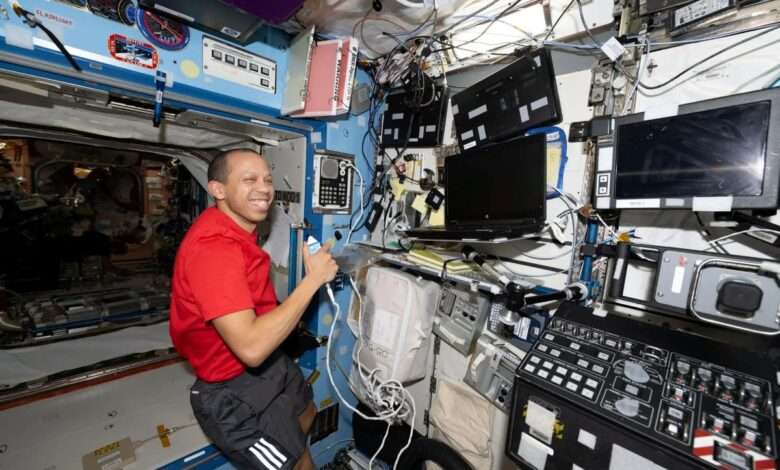
Students in New York will hear from NASA astronauts Jack Hathaway and Chris Williams as they answer prerecorded science, technology, engineering, and mathematics (STEM) questions while aboard the International Space Station. The Earth-to-space call will begin at 12:05 p.m. EDT Wednesday, March 11, and will stream live on the agency’s Learn With NASA YouTube channel. This event is hosted by the Queens Borough…
Read More » -
From Cabbages to Countdowns: NASA Marks 100 Years of Modern Rocketry
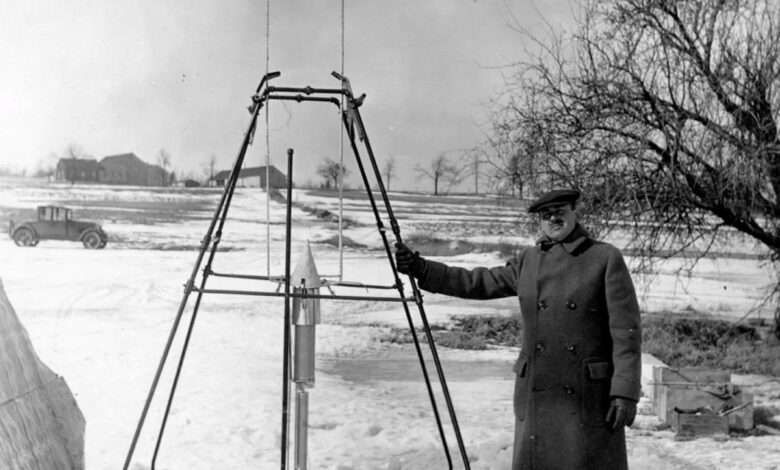
Snow covered the ground that Tuesday morning 100 years ago, when a college professor and his wife took a morning drive to the family farm a few miles south in Auburn, Massachusetts. Along for the ride, the couple brought two work colleagues — and “Nell.” They may not have known it at the time, but thanks to Nell, the four…
Read More » -
NASA Invites Media to Northrop Grumman CRS-24 Station Resupply Launch
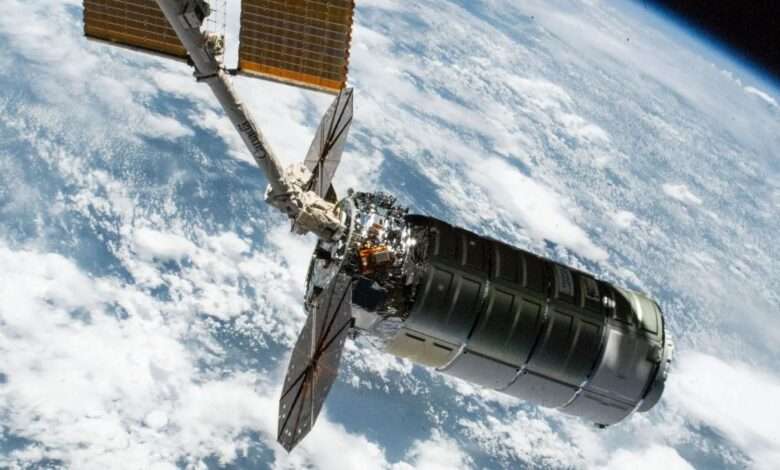
Media accreditation is open for the next launch to deliver NASA science investigations, supplies, and equipment to the International Space Station. A Northrop Grumman Cygnus XL spacecraft will launch in April to the orbital laboratory on a SpaceX Falcon 9 rocket for NASA. The mission is known as NASA’s Northrop Grumman Commercial Resupply Services 24 (NASA’s Northrop Grumman CRS-24). Liftoff…
Read More » -
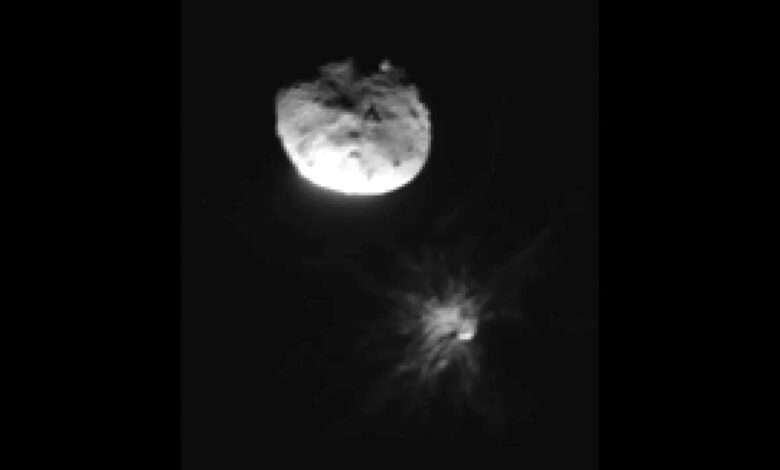
NASA’s DART Mission Changed Orbit of Asteroid Didymos Around Sun
New research reveals that when NASA’s DART (Double Asteroid Redirection Test) spacecraft intentionally impacted the asteroid moonlet Dimorphos in September 2022, it didn’t just change the motion of Dimorphos around its larger companion, Didymos; the crash also shifted the orbit of both asteroids around the Sun. Linked together by gravity, Didymos and Dimorphos orbit each other around a shared center…
Read More » -
About Transformative Aeronautics Concepts Program (TACP)
TACP Benefits Foundation for disruptive technologies: Placing emphasis on transformative concepts lays the groundwork for revolutionary advancements in aviation. Accelerated innovation in aerospace: Developing next-generation engineering methodologies and digital tools enables faster, more efficient design, testing, and certification processes. Strong collaborative ecosystem: TACP fosters partnerships among NASA, academia, industry, and government, creating a powerful network for innovation. These collaborations lead…
Read More »