
NASA
-

Two Observatories, One Cosmic Eye: Hubble and Euclid View Cat’s Eye Nebula
ESA/Hubble & NASA, ESA Euclid/Euclid Consortium/NASA/Q1-2025, J.-C. Cuillandre & E. Bertin (CEA Paris-Saclay), Z. Tsvetanov This new NASA/ESA Hubble Space Telescope image features one of the most visually intricate remnants of a dying star: the Cat’s Eye Nebula, also known as NGC 6543. This extraordinary planetary nebula lies in the constellation Draco and has captivated astronomers for decades with its elaborate and multilayered structure. Observations with ESA’s…
Read More » -
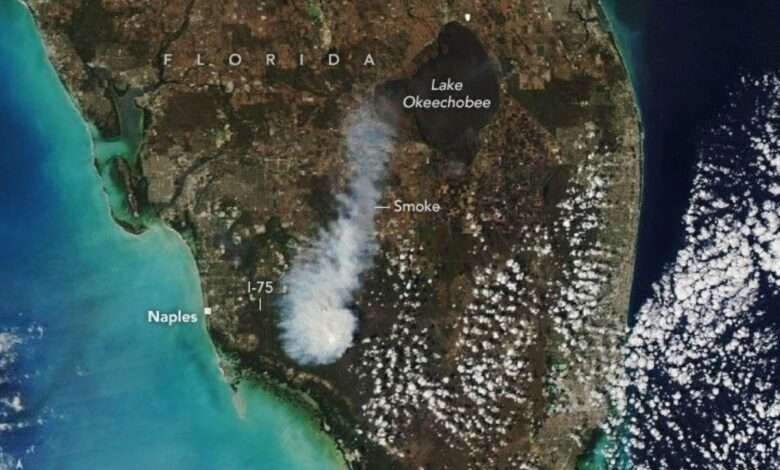
Smoke Rises Over Big Cypress National Preserve
On February 22, 2026, a wildland fire was discovered in Big Cypress National Preserve, about 25 miles (40 kilometers) east of Naples, Florida. The blaze, dubbed the National fire, moved through dry vegetation and sent a plume of smoke billowing over parts of the preserve and nearby communities. The MODIS (Moderate Resolution Imaging Spectroradiometer) on NASA’s Aqua satellite captured this image on the afternoon…
Read More » -

What’s Up: March 2026 Skywatching Tips from NASA
A total lunar eclipse glows red, Venus and Saturn get close, and we ring in the vernal equinox A total lunar eclipse blood moon takes centre stage, Venus and Saturn cozy up for a conjunction, and we celebrate the vernal equinox. Skywatching Highlights March 3: Total Lunar Eclipse (Blood Moon) March 8: Venus + Saturn Conjunction March 20: Vernal Equinox Transcript A total…
Read More » -
Collaborating Through Data: Inside the PSI Users Group
About the PSI Users Group The Physical Sciences Informatics (PSI) Users Group is a recurring Webex forum that brings together researchers, open-science practitioners, and collaborators from across the physical sciences community. Designed to foster collaboration, knowledge-sharing, and data-driven discovery, each meeting provides participants with a platform to directly engage with leading researchers and PIs. Each month, a guest speaker is…
Read More » -
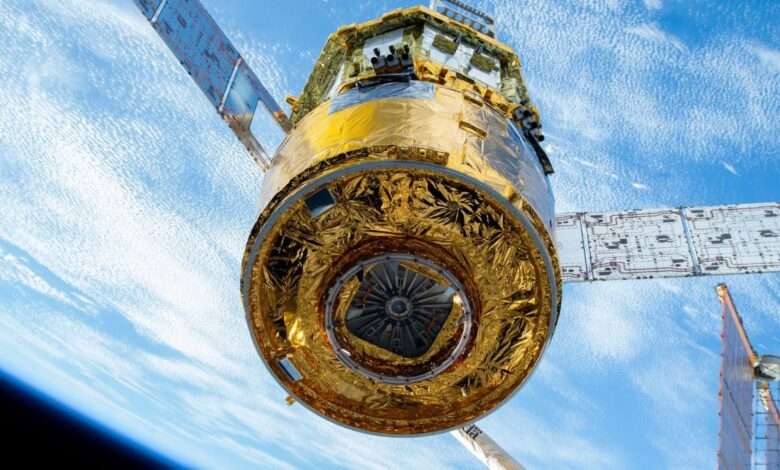
NASA, JAXA to Cover HTV-X1 Spacecraft Departure from Space Station
After delivering about 12,000 pounds of supplies, scientific investigations, hardware, and other cargo to the International Space Station for NASA and its international partners, JAXA’s (Japan Aerospace Exploration Agency’s) uncrewed HTV‑X1 cargo spacecraft is scheduled to depart Friday, March 6. Watch NASA’s live coverage beginning at 11:45 a.m. EST on NASA+, Amazon Prime, and the agency’s YouTube channel in advance of the spacecraft’s release…
Read More » -
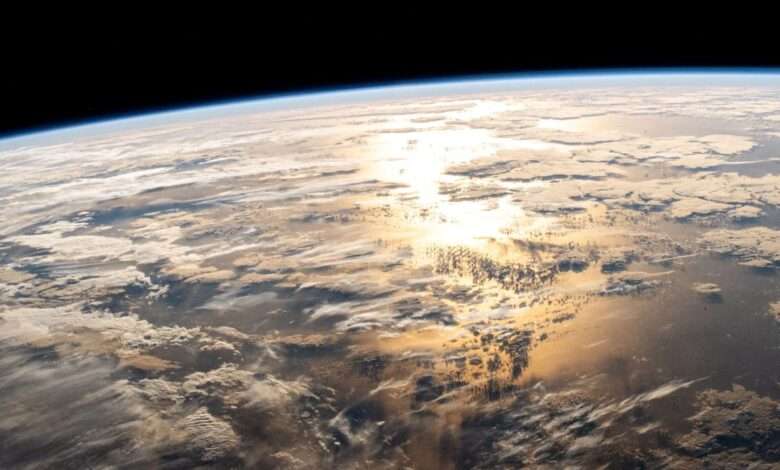
Sunglint on Atlantic Ocean
Sunlight beams off a partly cloudy Atlantic Ocean just after sunrise as the International Space Station orbited 263 miles above on March 5, 2025. This is an example of sunglint, an optical phenomenon that occurs when sunlight reflects off the surface of water at the same angle that a satellite sensor views it. The result is a mirror-like specular reflection of sunlight off the…
Read More » -
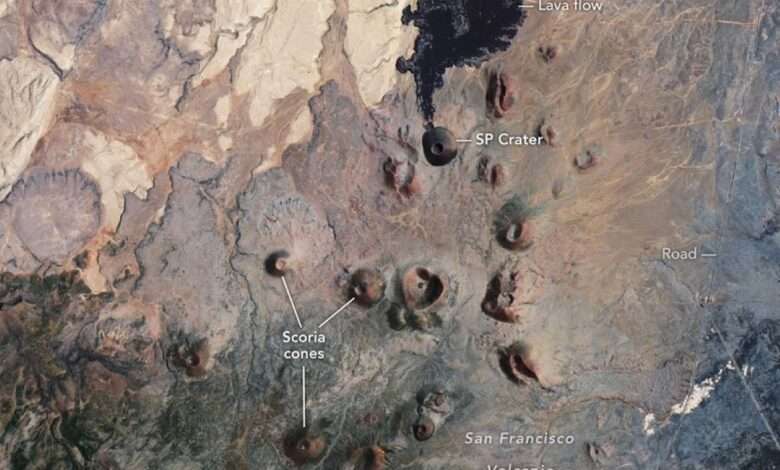
Scoria Cones on Earth and Mars
May 7, 2014 (Mars) Since the 1970s, planetary geologists have known that volcanic features cover large swaths of Mars. Early Mariner 9 images revealed massive shield volcanoes and lava plains on a scale unlike anything on Earth. Olympus Mons, the tallest volcano in the solar system, stands nearly three times higher than Mount Everest. Alba Mons, the planet’s widest volcano, spans a distance comparable to the length of…
Read More » -

Landsat 9: More Than Just A Picture
For over 50 years, the Landsat program has provided the longest continuous satellite record of Earth’s land surface from space. Landsat 9, launched in 2021, is the latest mission in this remarkable legacy — building on decades of Earth observation with upgraded technology, including enhanced radiometric resolution, improved signal-to-noise performance, and polar night thermal imaging. Working in tandem with Landsat…
Read More » -
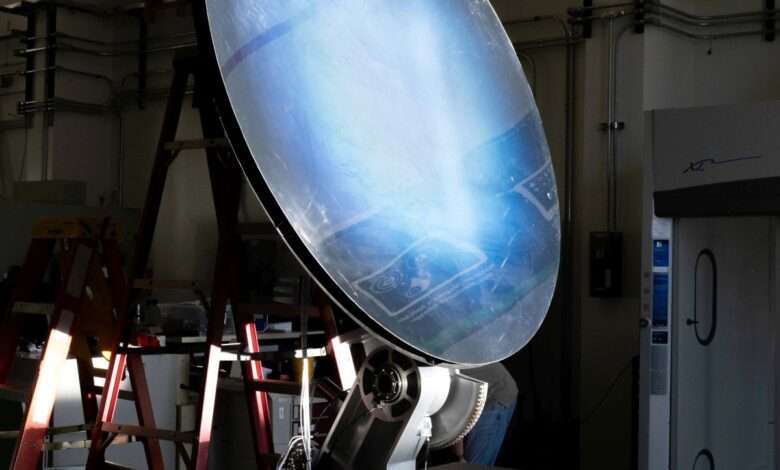
Harnessing the Sun to Extract Oxygen on the Moon
Light shines onto a solar concentrator being tested in this Aug. 7, 2025, photo. The concentrator is part of the Carbothermal Reduction Demonstration (CaRD) project, which aims to produce oxygen from simulated lunar regolith for use at the Moon’s south pole. For this test, the team integrated the solar concentrator, mirrors, and software and confirmed the production of carbon monoxide. If…
Read More » -
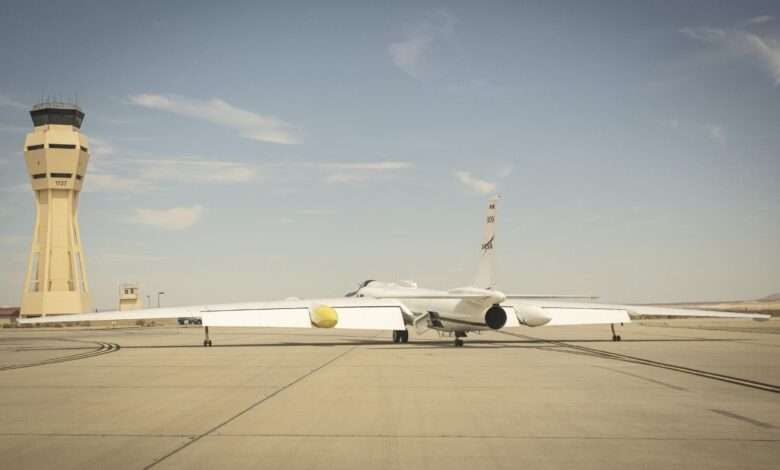
NASA’s Home for Experimental Flight Advances Aeronautics Mission
Nestled in the Mojave Desert, NASA’s Armstrong Flight Research Center in Edwards, California, pushes the boundaries of flight to advance the agency’s aeronautics mission. This is where Chuck Yeager broke the sound barrier and engineers are now pioneering the future of high-speed, autonomous, and electrified aircraft. Armstrong contributes to NASA’s broader mission of innovation and collaboration, leveraging its uniquely capable…
Read More »