
NASA
-
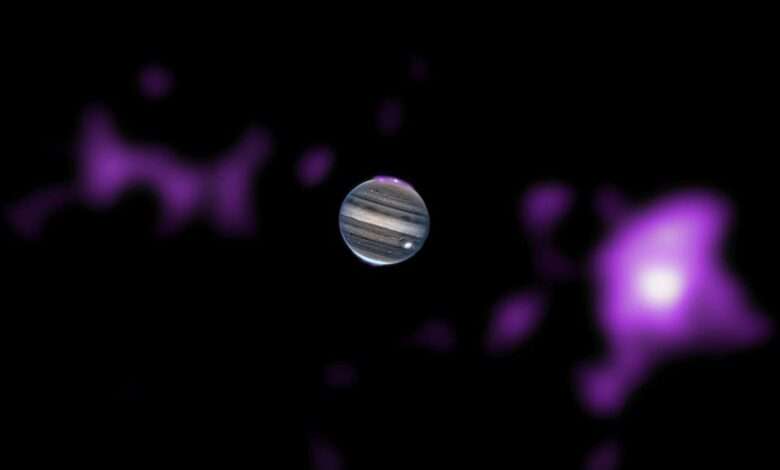
Listen to This Month’s ‘Planetary Parade’ With NASA’s Chandra
In late February, people in the Northern Hemisphere can look up for a special sight: six planets will all be visible from clear and dark night skies. New sonifications from NASA’s Chandra X-ray Observatory released Feb. 25 will help commemorate this latest “planetary parade.” Because the planets in our solar system travel around the Sun in the same plane (known as…
Read More » -
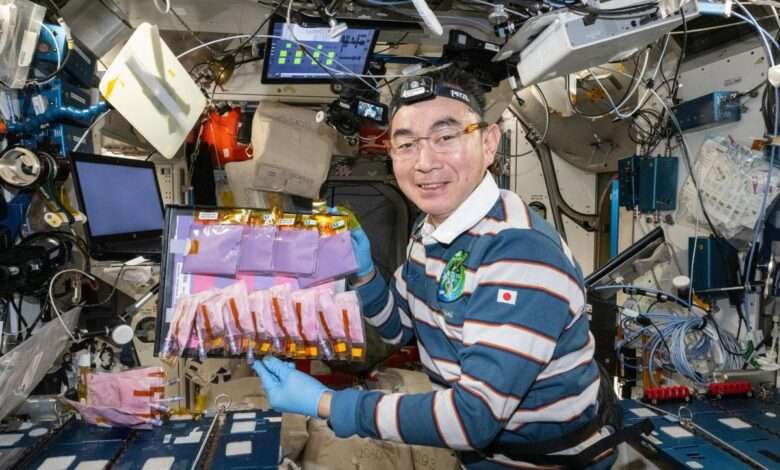
NASA Study to Analyze Fermented Food Samples from Space
Certain nutrients critical for human health lack the shelf life needed to span multi-year missions to the Moon, Mars, and beyond. NASA’s BioNutrients-3 is part of an experiment series testing ways to use microorganisms to produce these nutrients in space and on demand. The on-demand nature of this experiment is similar to making nutrient-dense fermented foods on Earth, such as how…
Read More » -
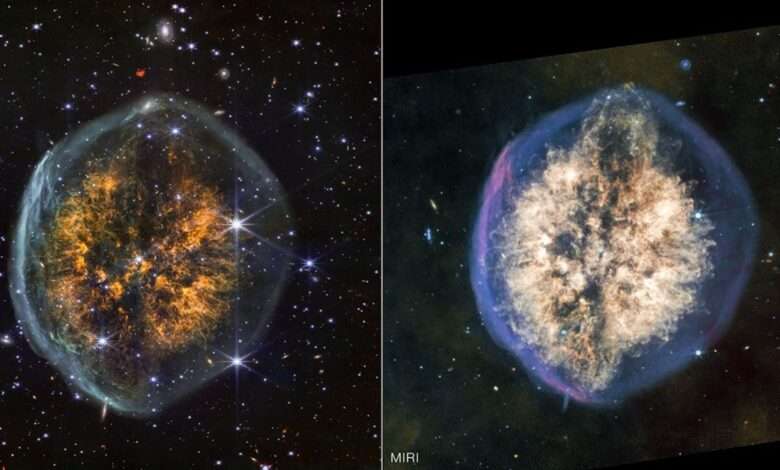
NASA’s Webb Examines Cranium Nebula
Two heads are better than one in the latest images from NASA’s James Webb Space Telescope, which reveal new detail in a mysterious, little-studied nebula surrounding a dying star. Nebula PMR 1 is a cloud of gas and dust that bears an uncanny resemblance to a brain in a transparent skull, inspiring its nickname, the “Exposed Cranium” nebula. Webb captured…
Read More » -
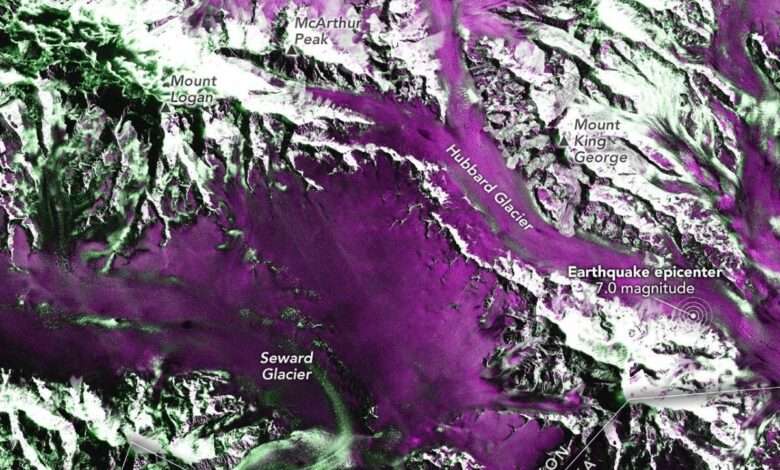
Landslide and Avalanche Debris Litter Hubbard Glacier
On December 6, 2025, a powerful magnitude 7.0 earthquake struck the remote St. Elias Mountains, a highly glaciated range that spans the Yukon-Alaska border. The quake shook the landscape beneath Hubbard Glacier, sending ice and rock careening down the range’s steep slopes. The NISAR (NASA-ISRO Synthetic Aperture Radar) satellite offered some of the earliest views of the changed landscape. Geophysicist Eric Fielding and colleagues…
Read More » -

Curiosity Blog, Sols 4812-4819: Back Into the Hollows
Written by Diana Hayes, Graduate student at York University, Toronto Earth planning date: Friday, Feb. 20, 2026 This has been a pretty routine week for Curiosity. As was mentioned last week, we’re now in the final phase of the boxwork exploration campaign. We’re currently making our way toward the eastern contact of the boxwork formation with the surrounding geology, which we…
Read More » -
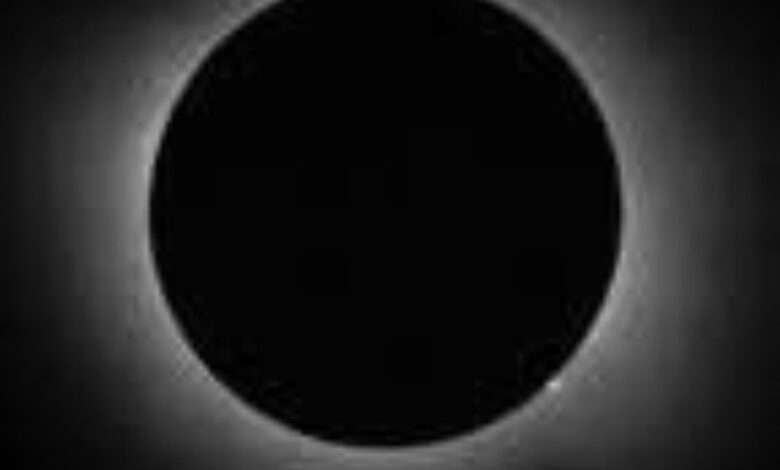
New Volunteer Data from 143 Observatories Unveils the 2024 Total Solar Eclipse
On April 8, 2024, volunteers participating in NASA’s Eclipse Megamovie citizen science project all around the United States hurried to photograph the solar eclipse with the latest, greatest equipment, capturing groundbreaking images of the Sun’s corona. Now, the Eclipse Megamovie team has released the remarkable new dataset that resulted from this effort — the first-ever, white-light eclipse dataset with calibration frames, spanning…
Read More » -
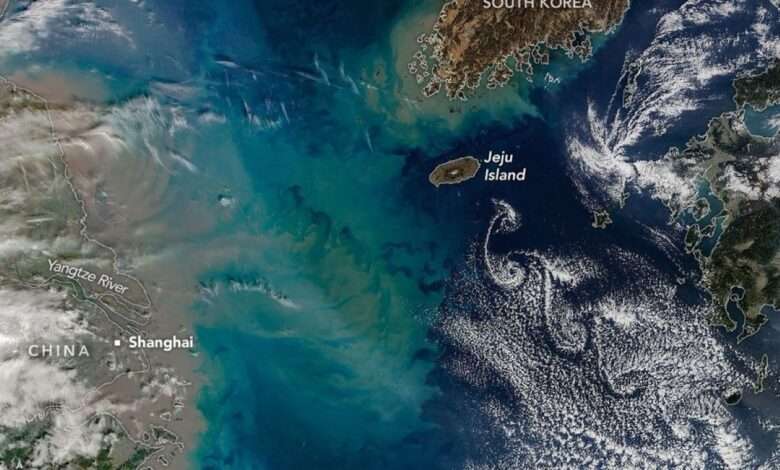
Showy Swirls Around Jeju Island
The tallest point in South Korea is not located in the Taebaek Mountains that run along the country’s eastern coast. Rather, it is found atop a volcanic peak on Jeju Island, about 100 kilometers (60 miles) south of the Korean Peninsula. In winter 2026, winds blew past the island in just the right way to send clouds spinning in its wake. The MODIS (Moderate Resolution…
Read More » -
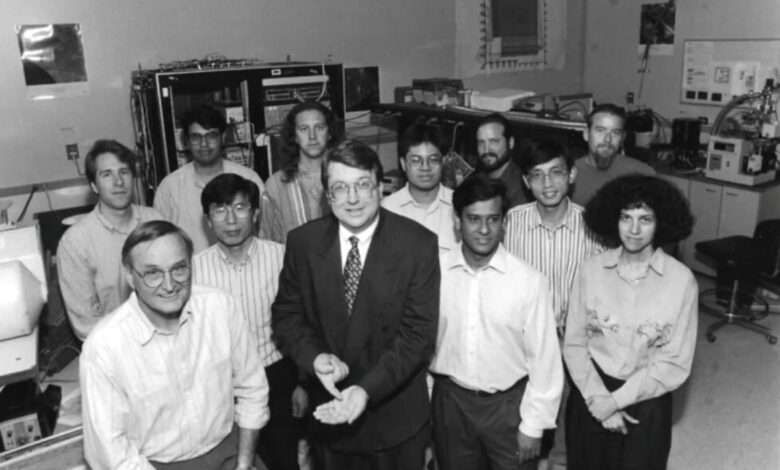
Technology Originally Developed for Space Missions Now Integral to Everyday Life
In the 1980s, sensors used to produce high-quality images for space science (including the amazing images from NASA’s Hubble Space Telescope) and other applications employed charge coupled device (CCD) technology. Dr. Eric Fossum was originally hired at JPL in 1990 to advance CCD technology for use in interplanetary space missions, but he ended up advancing another technology called complementary metal-oxide…
Read More » -
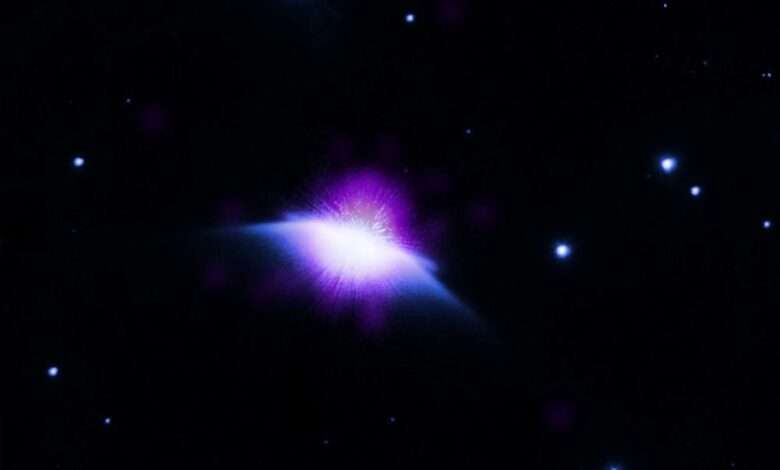
Young ‘Sun’ Caught Blowing Bubbles by NASA’s Chandra
For the first time, a much younger version of the Sun has been caught red-handed blowing bubbles in the galaxy, by astronomers using NASA’s Chandra X-ray Observatory. HD 61005 in X-ray, infrared, and optical light CurtainToggle2-UpImage Details The bubble – called an “astrosphere” – completely surrounds the juvenile star. Winds from the star’s surface are blowing up the bubble and…
Read More » -

Astronomy Activation Ambassadors: Embracing Multiple Perspectives
The Astronomy Activation Ambassadors (AAA) project, part of the NASA Science Activation program, aims to measurably enhance student STEM (Science, Technology, Engineering, & Mathematics) engagement via middle school, high school, and community college science teacher professional development. AAA participants draw on NASA resources and subject matter experts to enhance their teaching and help share their excitement about astronomy and planetary…
Read More »