
NASA
-
NASA
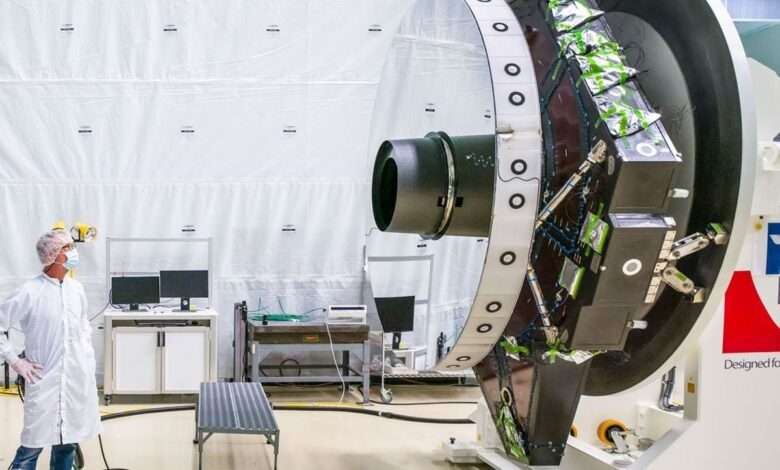
Building Roman
Technicians have completed the construction of NASA’s Nancy Grace Roman Space Telescope. The Roman observatory is slated to launch no later than May 2027, with the team aiming for as early as fall 2026. The mission will revolutionize our understanding of the universe with its deep, crisp, sweeping views of space. More than a thousand technicians and engineers assembled Roman…
Read More » -
NASA
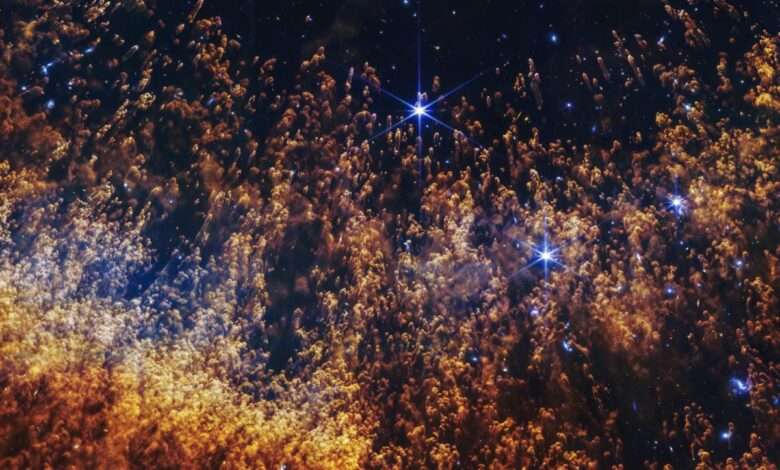
Webb Zooms into Helix Nebula
NASA’s James Webb Space Telescope has zoomed into the Helix Nebula to give an up-close view of the possible eventual fate of our own Sun and planetary system. In Webb’s high-resolution look, the structure of the gas being shed off by a dying star comes into full focus. The image reveals how stars recycle their material back into the cosmos,…
Read More » -
NASA

The West Faces Snow Drought
The mountains of the western United States are sporting thin winter coats in early 2026. Although most regions saw average or above-average precipitation in fall and early winter, warmer temperatures meant that much of it fell as rain. The result has been an unusually low snowpack for this time of year, constituting a snow drought. This image, acquired with the MODIS (Moderate Resolution…
Read More » -
NASA
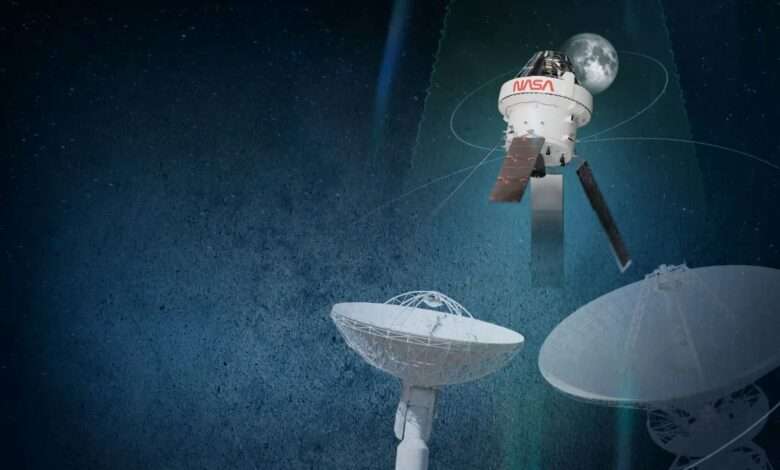
Networks Keeping NASA’s Artemis II Mission Connected
NASA’s Artemis II mission will transport four astronauts around the Moon, bringing the agency one step closer to sending the first astronauts to Mars. Throughout Artemis II, astronaut voice, images, video, and vital mission data must traverse thousands of miles, carried on signals from NASA’s communications systems. Through Artemis, NASA is establishing an enduring presence in space and exploring more of…
Read More » -
NASA

NASA Johnson Celebrates 25 Years in Space with Community Day
NASA’s Johnson Space Center brought the International Space Station’s 25-year legacy to the public on Jan. 24, 2026, during a community day event in Houston. Johnson’s visitor center, Space Center Houston, hosted the celebration commemorating 25 years of continuous human presence in space. For a quarter century, astronauts have lived and worked aboard the orbiting laboratory, advancing science, strengthening international partnerships, and shaping the future…
Read More » -
NASA

NASA Telescopes Spot Surprisingly Mature Cluster in Early Universe
A new discovery captures the cosmic moment when a galaxy cluster – among the largest structures in the universe – started to assemble only about a billion years after the big bang, one or two billion years earlier than previously thought. This result, made using NASA’s Chandra X-ray Observatory and James Webb Space Telescope, will lead astronomers to rethink when…
Read More » -
NASA

Chandra, Webb Catch Twinkling Lights
Data from Chandra adds red, green, and blue twinkling lights in this Dec. 22, 2025, image of Pismis 24 from NASA’s James Webb Space Telescope. Pismis 24 is a young cluster of stars in the core of the nearby Lobster Nebula, approximately 5,500 light-years from Earth in the constellation Scorpius. Home to a vibrant stellar nursery and one of the closest…
Read More » -
NASA
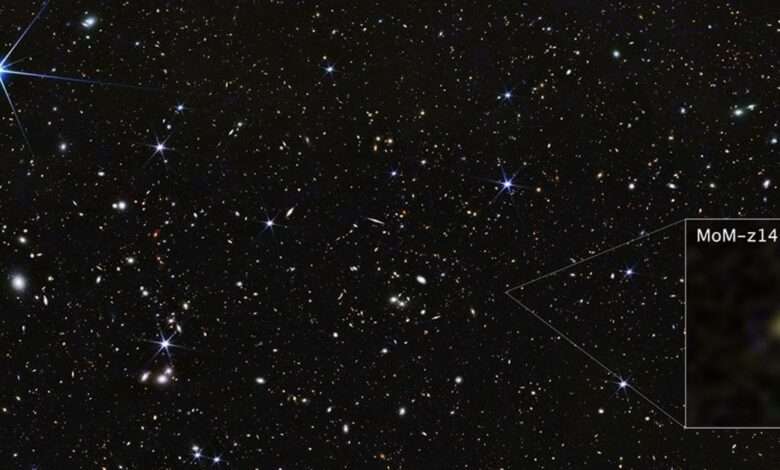
NASA Webb Pushes Boundaries of Observable Universe Closer to Big Bang
NASA’s James Webb Space Telescope has topped itself once again, delivering on its promise to push the boundaries of the observable universe closer to cosmic dawn with the confirmation of a bright galaxy that existed 280 million years after the big bang. By now Webb has established that it will eventually surpass virtually every benchmark it sets in these early years, but…
Read More » -
NASA

Discovery Alert: An Ice-Cold Earth?
The Discovery A candidate planet that might be remarkably similar to Earth, HD 137010 b, has one potentially big difference: It could be colder than perpetually frozen Mars. Key Facts Scientists continue to mine data gathered by NASA’s Kepler Space Telescope, retired in 2018, and continue to turn up surprises. A new paper reveals the latest: a possible rocky planet slightly…
Read More » -
NASA
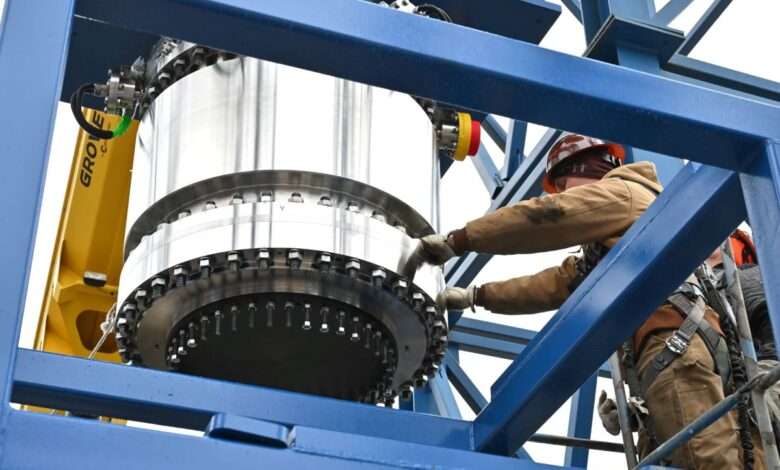
NASA Testing Advances Space Nuclear Propulsion Capabilities
Nuclear propulsion and power technologies could unlock new frontiers in missions to the Moon, Mars, and beyond. NASA has reached an important milestone advancing nuclear propulsion that could benefit future deep space missions by completing a cold-flow test campaign of the first flight reactor engineering development unit since the 1960s. “Nuclear propulsion has multiple benefits including speed and endurance that…
Read More »