
NASA
-
NASA

Summary of the 2025 GEDI Science Team Meeting
Introduction The 2025 Global Ecosystem Dynamics Investigation (GEDI) Science Team Meeting (STM) took place April 1–3, 2025 at the University of Maryland, College Park (UMD). Upwards of 60 participants attended in-person, while several others joined virtually by Zoom. The GEDI Mission and Competed Science Team members were in attendance along with the GEDI NASA program manager and various postdoctoral associates, graduate students,…
Read More » -
NASA

Portable Planetarium takes Thousands of Alaskan Students on a Cosmic Adventure
Exploring the Cosmos and Inspiring Young Minds From January through June 2025, the Education Outreach Office at the University of Alaska Fairbanks Geophysical Institute (GI) continued its mission of bringing science to life by delivering the magic of its portable planetarium to communities across Alaska. This year, they reached over 1,807 students, educators, and participants through engaging, interactive astronomy experiences.…
Read More » -
NASA
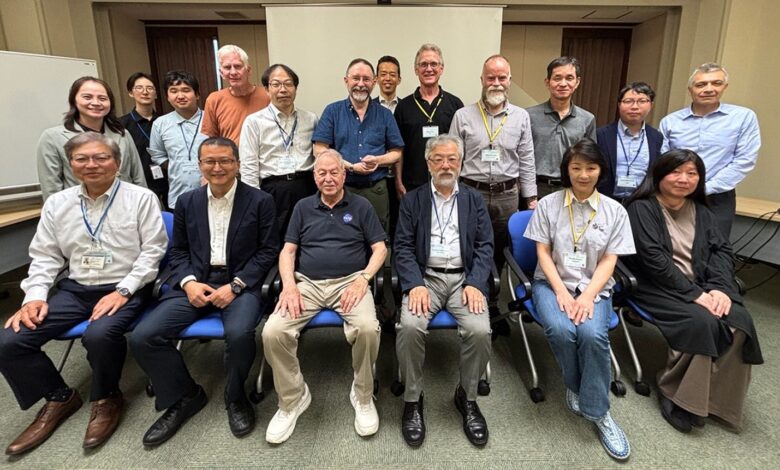
Summary of the 54th U.S.–Japan ASTER Science Team Meeting
Introduction The Advanced Spaceborne Thermal Emission and Reflection Radiometer (ASTER) Science Team (ST) organized a three-day workshop that took place June 9–11, 2025, at the Japan Space System’s (JSS) offices in Tokyo, Japan. About 25 people from Japan and the United States participated during the in-person meeting – see Photo 1. U.S. participants included representatives of NASA/Jet Propulsion Laboratory (JPL); two universities –…
Read More » -
NASA
A Decade of Global Water Cycle Monitoring: NASA Soil Moisture Active Passive Mission
Introduction The NASA Soil Moisture Active Passive (SMAP) mission, launched in 2015, has over 10 years of global L-band radiometry observations. The low frequency [1.4 GHz frequency or 21 cm (8 in) wavelength] measurements provide information on the state of land surfaces in all weather conditions – regardless of solar illumination. A principal objective of the SMAP mission is to…
Read More » -
NASA
Bone Loss Research Launches Aboard NASA’s SpaceX-33 Resupply Mission
The 33rd SpaceX commercial resupply services mission for NASA, scheduled to liftoff from the agency’s Kennedy Space Center in Florida in late August, is heading to the International Space Station with an important investigation for the future of bone health. The experiment will test how microgravity affects bone-forming and bone-degrading cells and explore potential ways to prevent bone loss. This…
Read More » -
NASA

NASA, Army National Guard Partner on Flight Training for Moon Landing
By Corinne BeckingerWhen Artemis astronauts land on the Moon’s South Pole in a commercial human landing system, they will encounter a landscape pockmarked with deep craters, sloped connecting ridges, and harsh lighting conditions. The Moon’s lack of contrast, combined with its rolling terrain, will also pose a challenge, making it difficult for astronauts to overcome visual illusions on the lunar…
Read More » -
NASA
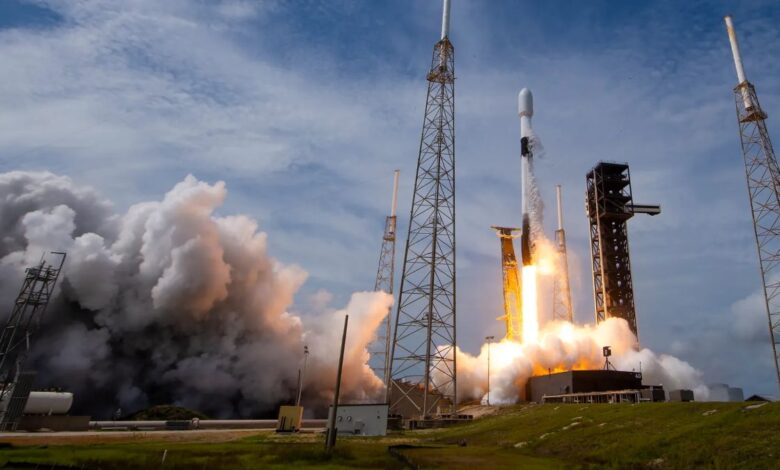
NASA Invites Media to Northrop Grumman CRS-23 Station Resupply Launch
Media accreditation is open for the next launch to deliver NASA science investigations, supplies, and equipment to the International Space Station. A Northrop Grumman Cygnus spacecraft will launch to the orbital laboratory on a SpaceX Falcon 9 rocket for NASA. The mission is known as NASA’s Northrop Grumman Commercial Resupply Services 23, or Northrop Grumman CRS-23. Liftoff is targeted for…
Read More » -
NASA
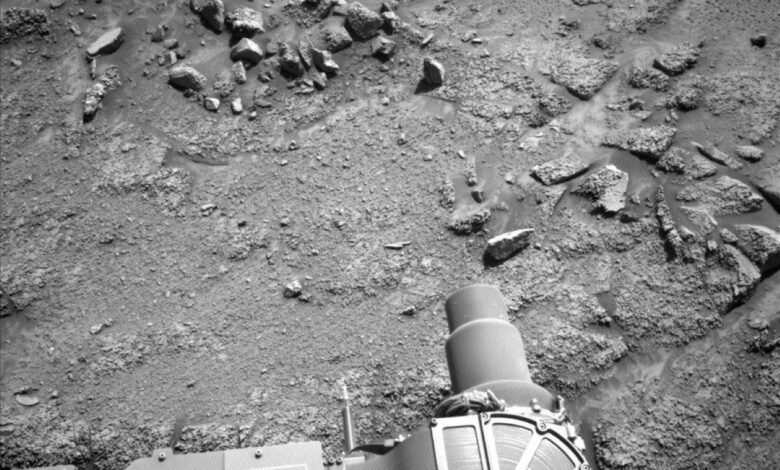
Curiosity Blog, Sols 4629-4630: Feeling Hollow
Written by Elena Amador-French, Science Operations Coordinator at NASA’s Jet Propulsion Laboratory Earth planning date: Wednesday, Aug. 13, 2025 Today’s team investigated the texture and chemistry of the bedrock within a topographic low, or hollow, found within the greater boxwork area. We will place our APXS instrument on the “Asiruqucha” target, some light-toned, small-scale nodular bedrock in the middle of…
Read More » -
NASA
NASA Challenge Winners Cook Up New Industry Developments
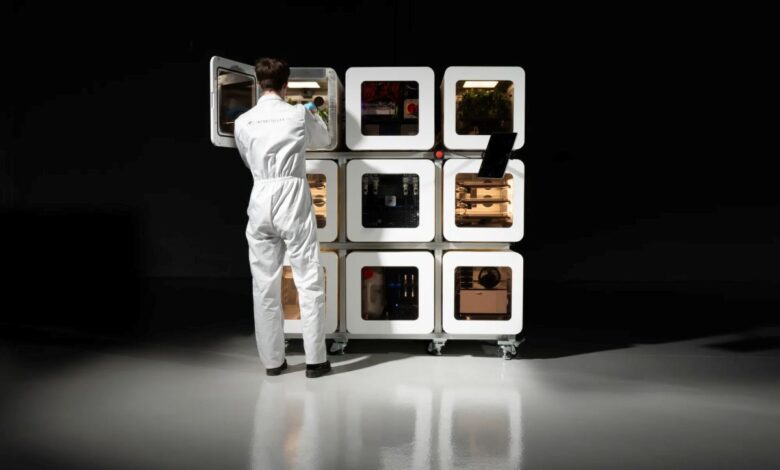
NASA invests in technologies that have the potential to revolutionize space exploration, including the way astronauts live in space. Through the Deep Space Food Challenge, NASA, in partnership with CSA (Canadian Space Agency), sought novel food production systems that could provide long-duration human space exploration missions with safe, nutritious, and tasty food. Three winners selected last summer are now taking…
Read More » -
NASA

NASA-Developed Printable Metal Can Take the Heat
Until now, additive manufacturing, commonly known as 3D printing, of engine components was limited by the lack of affordable metal alloys that could withstand the extreme temperatures of spaceflight. Expensive metal alloys were the only option for 3D printing engine parts until NASA’s Glenn Research Center in Cleveland, Ohio, developed the GRX-810 alloy. The primary metals in the GRX-810 alloy include nickel,…
Read More »