
NASA
-
NASA

The Universe’s Brightest Lights Have Some Dark Origins
Did you know some of the brightest sources of light in the sky come from the regions around black holes in the centers of galaxies? It sounds a little contradictory, but it’s true! They may not look bright to our eyes, but satellites have spotted oodles of them across the universe. One of those satellites is NASA’s Fermi Gamma-ray Space Telescope.…
Read More » -
NASA
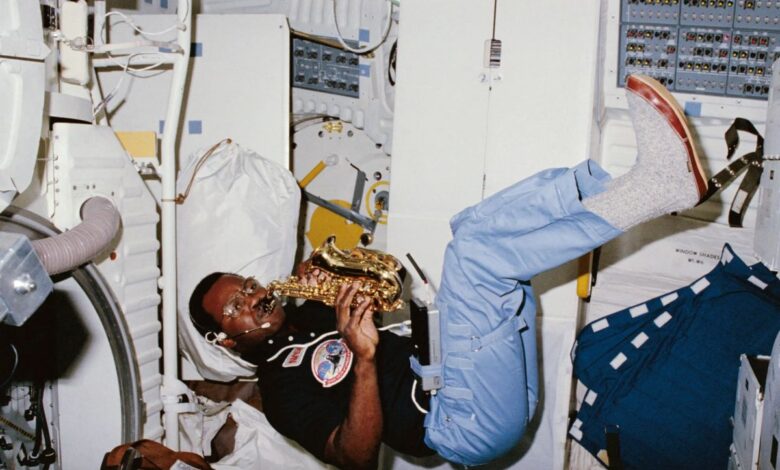
Saxophone in Space
In this photo taken on Feb. 8, 1984, NASA astronaut Ronald E. McNair plays his saxophone while off-duty during the STS-41B mission. He and fellow crew members Vance D. Brand, Robert L. Gibson, Robert L. Stewart, and Bruce McCandless II launched on the space shuttle Challenger from NASA’s Kennedy Space Center in Florida on Feb. 3, 1984. During the mission, McCandless and Stewart…
Read More » -
NASA
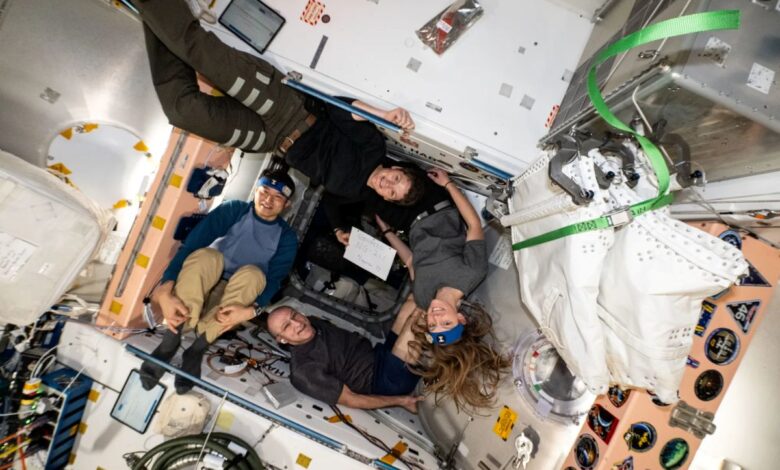
NASA, International Astronauts to Connect with Students in Texas
NASA astronaut Nichole Ayers and JAXA (Japan Aerospace Exploration Agency) astronaut Takuya Onishi will answer prerecorded questions about science, technology, engineering, and mathematics from students in Mansfield, Texas, while aboard the International Space Station. The 20-minute space-to-Earth call will take place at 10:40 a.m. EDT on Monday, May 5, and can be watched on the NASA STEM YouTube Channel. Media interested in…
Read More » -
NASA
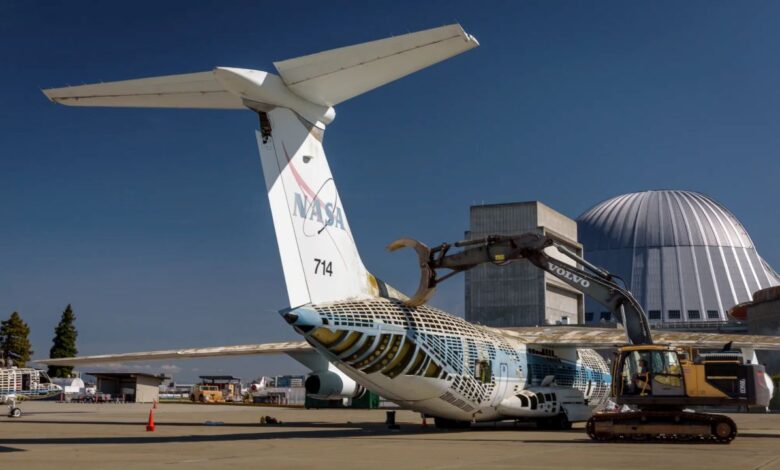
NASA Completes Kuiper Deconstruction, Plans for Display
The planned deconstruction, disposal, and preservation of historic parts of NASA’s decommissioned Kuiper Airborne Observatory is complete. Part of the airborne astronomy legacy of NASA’s Ames Research Center in California’s Silicon Valley, Kuiper conducted more than two decades of astronomical observations from 1975 to 1995. Later this year, the Kuiper cockpit will go on display at the Pima Air & Space Museum in Pima,…
Read More » -
NASA

NASA Kicks Off Biological Research Aboard Space Station
Crew members are kicking off operations for several biological experiments that recently launched to the International Space Station aboard NASA’s 32nd SpaceX commercial resupply services mission. These include examining how microgravity affects production of protein by microalgae, testing a microscope to capture microbial activity, and studying genetic activity in biofilms. Microalgae in microgravity Sophie’s BioNutrients This ice cream is one…
Read More » -
NASA

Sols 4522-4524: Up on the Roof
Written by Deborah Padgett, OPGS Task Lead at NASA’s Jet Propulsion Laboratory Earth planning date: Friday, April 25, 2025 On Sols 4520 and 4521, Curiosity was supposed to study layered rocks in its workspace, then drive on. Unfortunately, a communications pass didn’t go as expected, preventing this plan from being transmitted. Our rover is fine, but it has been metaphorically…
Read More » -
NASA

How to Contribute to Citizen Science with NASA
A cell phone, a computer—and your curiosity—is all you need to become a NASA citizen scientist and contribute to projects about Earth, the solar system, and beyond. Science is built from small grains of sand, and you can contribute yours from any corner of the world. All you need is a cell phone or a computer with an internet connection…
Read More » -
NASA
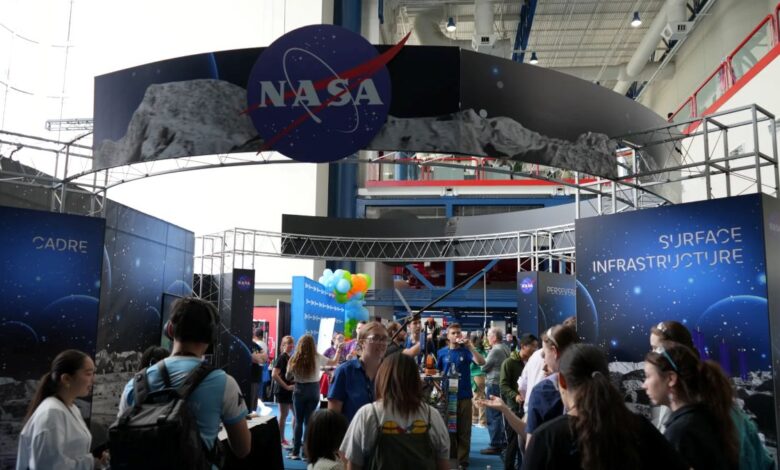
Robots, Rovers, and Regolith: NASA Brings Exploration to FIRST Robotics 2025
What does the future of space exploration look like? At the 2025 FIRST Robotics World Championship in Houston, NASA gave student robotics teams and industry leaders a first-hand look—complete with lunar rovers, robotic arms, and real conversations about shaping the next era of discovery. Students and mentors experience NASA exhibits at the 2025 FIRST Robotics World Championship at the George…
Read More » -
NASA
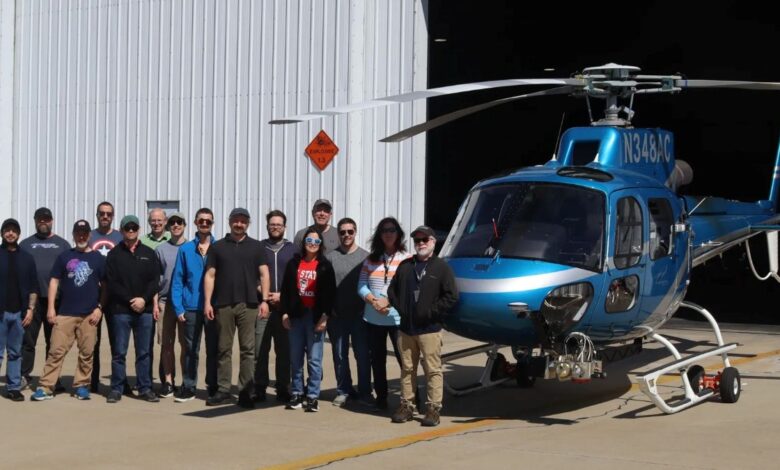
NASA Advances Precision Landing Technology with Field Test at Kennedy
Landing on the Moon is not easy, particularly when a crew or spacecraft must meet exacting requirements. For Artemis missions to the lunar surface, those requirements include an ability to land within an area about as wide as a football field in any lighting condition amid tough terrain. NASA’s official lunar landing requirement is to be able to land within…
Read More » -
NASA
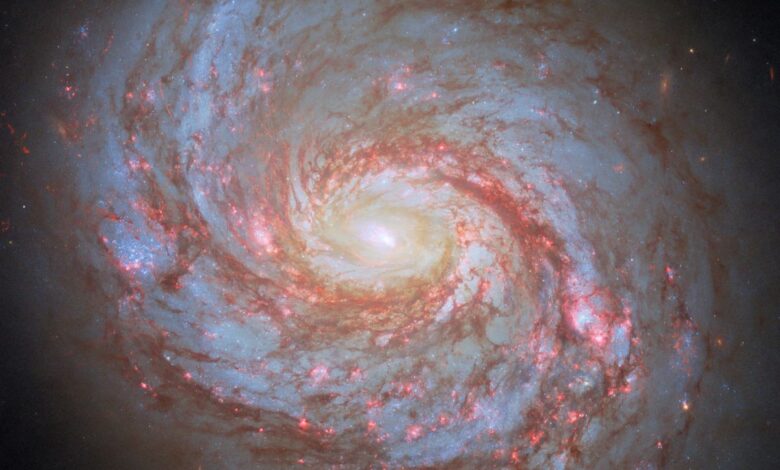
Hubble Spots a Squid in the Whale
Today’s rather aquatic-themed NASA/ESA Hubble Space Telescope image features the spiral galaxy Messier 77, also known as the Squid Galaxy, which sits 45 million light-years away in the constellation Cetus (The Whale). The designation Messier 77 comes from the galaxy’s place in the famous catalog compiled by the French astronomer Charles Messier. Another French astronomer, Pierre Méchain, discovered the galaxy in 1780. Both Messier…
Read More »