



Vehicle LiDAR technology is making waves in the automotive and tech industries, playing a critical role in advancing autonomous driving and enhancing vehicle safety. Standing for “Light Detection and Ranging,” LiDAR is a sensing technology that uses laser beams to create a precise 3D map of a vehicle’s surroundings in real-time. For anyone intrigued by the future of mobility, here are some cool things to know about vehicle LiDAR technology and what’s next for this cutting-edge technology.
LiDAR Is the Brain of Autonomous Driving
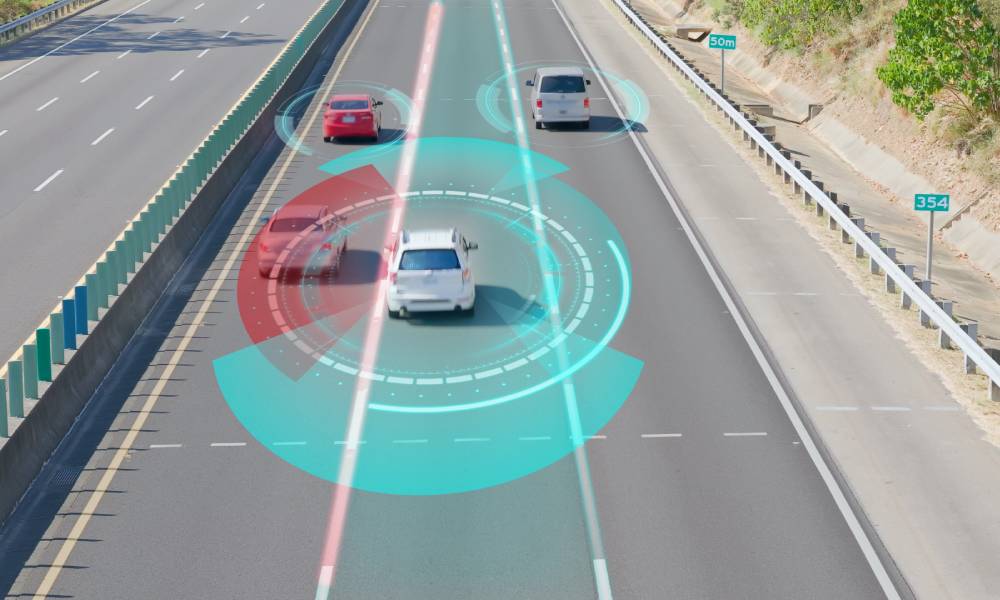
When it comes to autonomous vehicles, LiDAR serves as the central nervous system, enabling self-driving cars to interpret their environment with unrivaled precision. By rapidly emitting laser pulses and measuring how long it takes for the light to bounce back from objects, LiDAR generates high-definition, 360-degree scans. This allows self-driving cars to see their surroundings in varying conditions, whether it’s a sunny highway or a foggy street.
Safety Boost With Environmental Mapping
One of the coolest aspects of LiDAR is its contribution to making roads safer. With its ability to create detailed environmental maps, LiDAR systems significantly enhance collision detection and avoidance. Unlike traditional cameras, which may struggle to differentiate between objects in similar colors, LiDAR maps surroundings based purely on spatial data.
This capability leads to smarter safety features in advanced driver assistance systems (ADAS). Consider lane-keeping and adaptive cruise control—LiDAR ensures precise tracking of lane markings, other vehicles, and even sudden obstacles. This technology can identify potential hazards long before a human driver notices them, allowing cars to initiate emergency braking or steering adjustments autonomously.
Sensors Collaborating for Better Performance
LiDAR isn’t a standalone act; it works seamlessly in collaboration with other smart vehicle components like cameras and radars. This synergy allows for a more comprehensive understanding of the car’s environment by covering gaps in individual sensor technologies. For instance, while cameras provide color imagery and radar measures distance, LiDAR contributes its spatial-resolution mapping to complete the sensory system.
However, achieving this level of integration depends heavily on the vehicle’s internal wiring infrastructure. High-quality connectors, such as 2-cavity connectors in automotive wiring systems, play a vital role in allowing fast and reliable data transmission between the various sensors.
What Comes Next for LiDAR Technology
The future of vehicle LiDAR looks nothing short of revolutionary. Tech experts are already working on miniaturized LiDAR units that can integrate seamlessly into car bodies, reducing their aesthetic impact while maintaining their functionality. Industry leaders are also developing LiDAR systems capable of longer range and higher resolution, which would improve their utility in urban and highway environments.
LiDAR technology represents an exciting frontier in automotive and tech innovation. From boosting the capabilities of self-driving cars to ensuring greater road safety, its contributions are making a meaningful impact on how we experience transportation. It’s clear that LiDAR, paired with strong infrastructure, will continue to be a driving force in the evolution of mobility. Which of these cool things about vehicle LiDAR technology excites you the most?
About The Author

Got a Questions?
Find us on Socials or Contact us and we’ll get back to you as soon as possible.