




New three-dimensional (3D) models of objects in space have been released by NASA’s Chandra X-ray Observatory. These 3D models allow people to explore — and print — examples of stars in the early and end stages of their lives. They also provide scientists with new avenues to investigate scientific questions and find insights about the objects they represent.
These 3D models are based on state-of-the-art theoretical models, computational algorithms, and observations from space-based telescopes like Chandra that give us accurate pictures of these cosmic objects and how they evolve over time.
However, looking at images and animations is not the only way to experience this data. The four new 3D printable models of Cassiopeia A (Cas A), G292.0+1.8 (G292), Cygnus Loop supernova remnants, and the star known as BP Tau let us experience the celestial objects in the form of physical structures that will allow anyone to hold replicas of these stars and their surroundings and examine them from all angles.
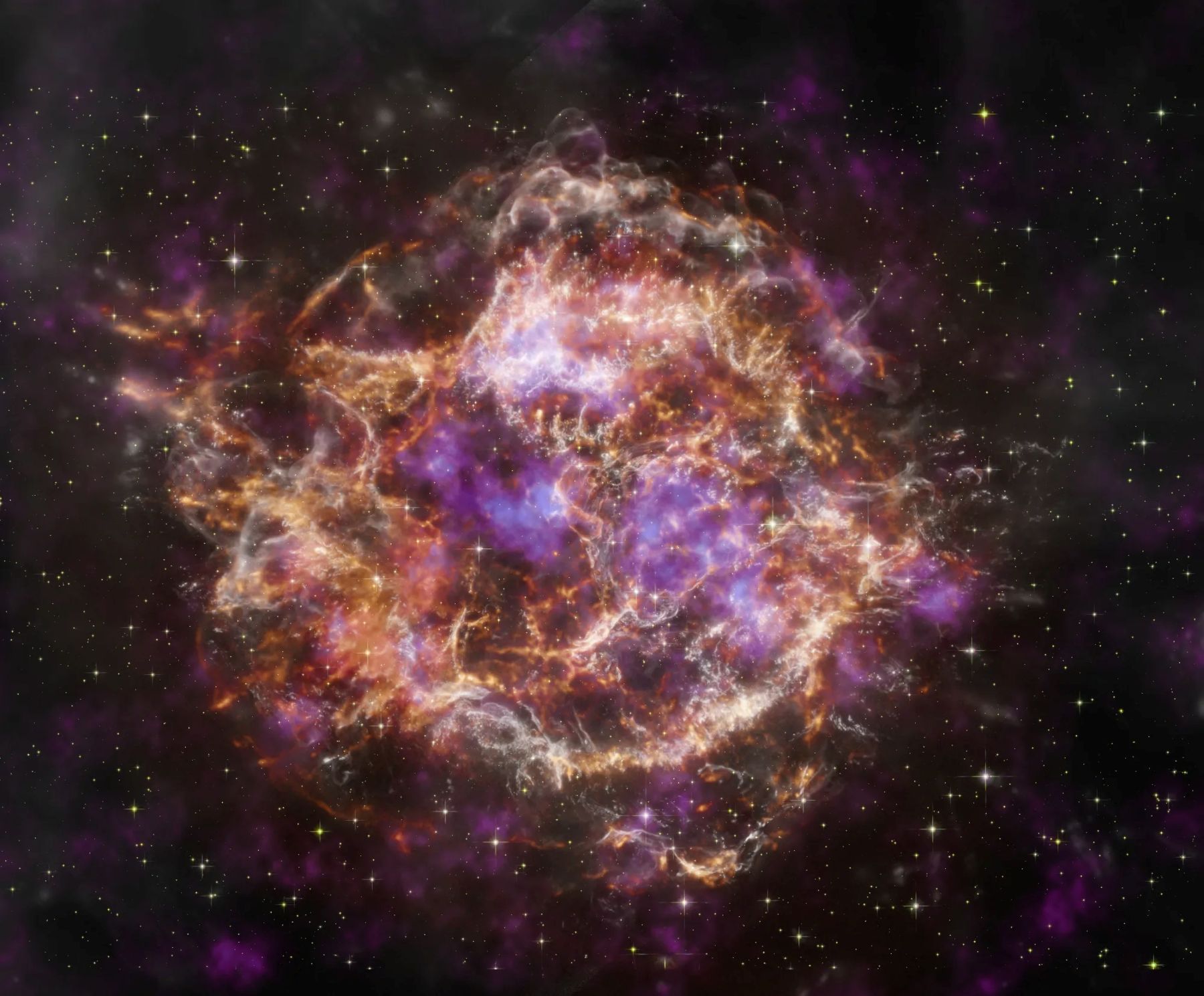
Cassiopeia A (Cas A)

X-ray: NASA/CXC/SAO, NASA/JPL/Caltech/NuStar; Optical: NASA/STScI/HST; IR: NASA/STScI/JWST, NASA/JPL/CalTech/SST; Image Processing: NASA/CXC/SAO/J. Schmidt, N. Wolk, and K. Arcand;
Using NASA’s James Webb Space Telescope, astronomers uncovered a mysterious feature within the remnant, nicknamed the “Green Monster,” alongside a puzzling network of ejecta filaments forming a web of oxygen-rich material. When combined with X-rays from Chandra, the data helped astronomers shed light on the origin of the Green Monster and revealed new insights into the explosion that created Cas A about 340 years ago, from Earth’s perspective.
About The Author


Got a Questions?
Find us on Socials or Contact us and we’ll get back to you as soon as possible.