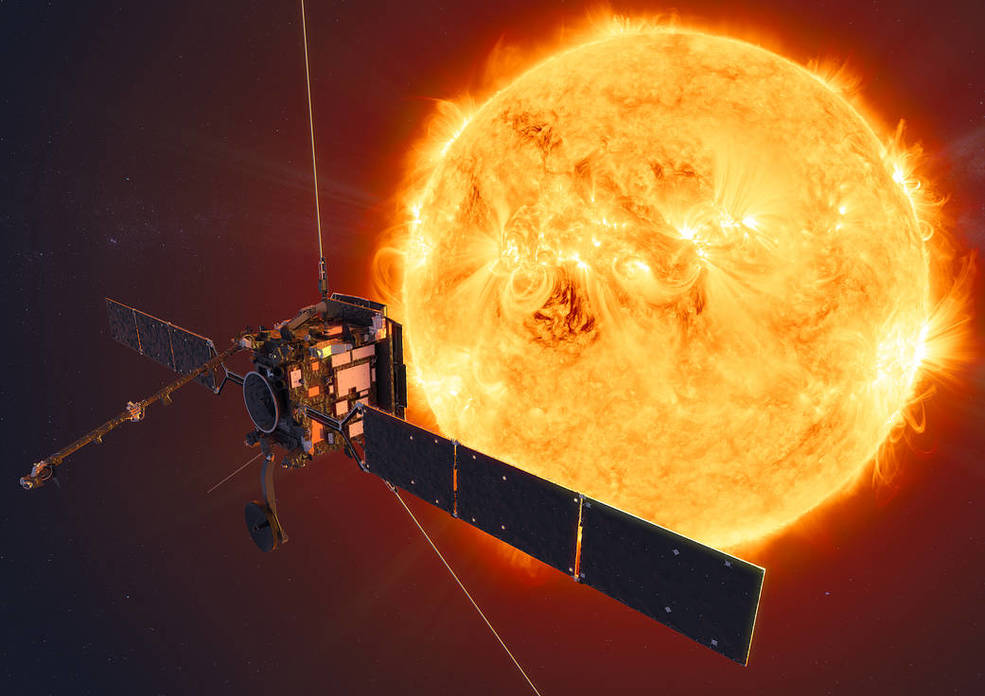
Patches of the Sun’s surface often show strong magnetic fields. These fields can emerge within a matter of hours, and can decay slowly or quickly, sometimes over days, weeks, or even months. Thanks to a new study about these long-lived active regions, we now know much more about the patches where these strong magnetic fields take at least a month to decay.
This study relied on inputs from NASA’s Solar Active Region Spotter citizen science project, which asked volunteers to answer a series of questions about pairs of active region images from NASA’s Solar Dynamics Observatory.
Project leads Emily Mason (Predictive Science Inc.) and Kara Kniezewski (Air Force Institute of Technology) looked at the data and the analysis done by volunteers. They found that the long-lived active regions produce disproportionately more flares than the shorter-lived regions and are 3-6 times more likely than other active regions to be the source of the most intense kinds of solar flares. These results are a strong indication that long-lived active regions are crucial for predicting space weather and could provide critical information on magnetic fields deeper inside the Sun.
The Solar Active Region Spotter project is now complete, but you can learn more about the results here: https://www.zooniverse.org/projects/eimason/solar-active-region-spotter/about/results
Explore NASA Citizen Science projects you can join today to help advance our understanding of space weather: https://go.nasa.gov/3ZK6nvE.

An example of the data citizen scientists categorized for this project.
NASA
Learn More and Get Involved

Solar Active Region Spotter
Help track active regions as they evolve across solar rotations!
About The Author