



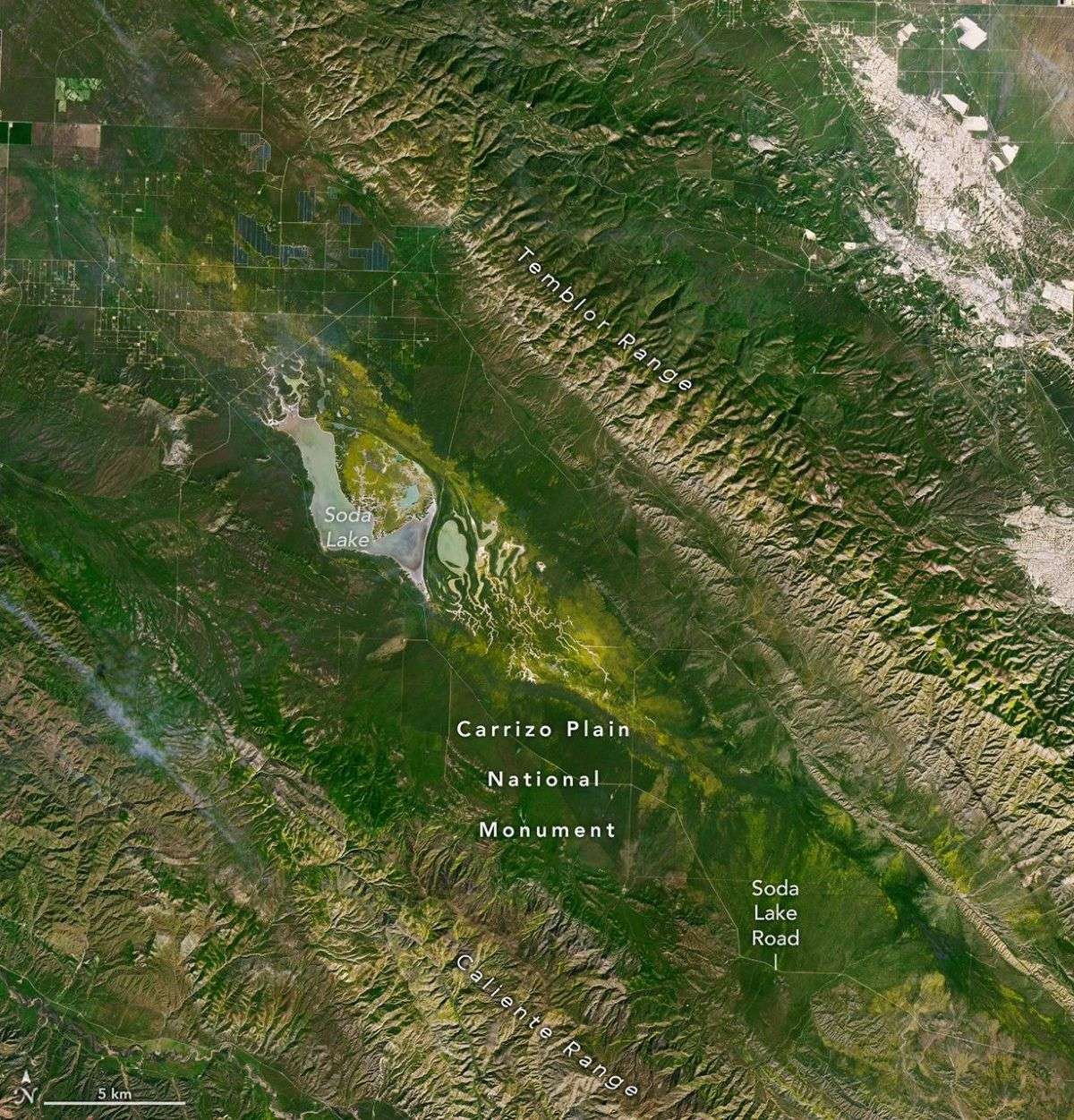
Whether it qualifies as a “superbloom” is in the eye of the beholder, but there is no doubt that California’s Carrizo Plain and the neighboring mountain ranges were awash with color as wildflowers put on their annual show in spring 2026.
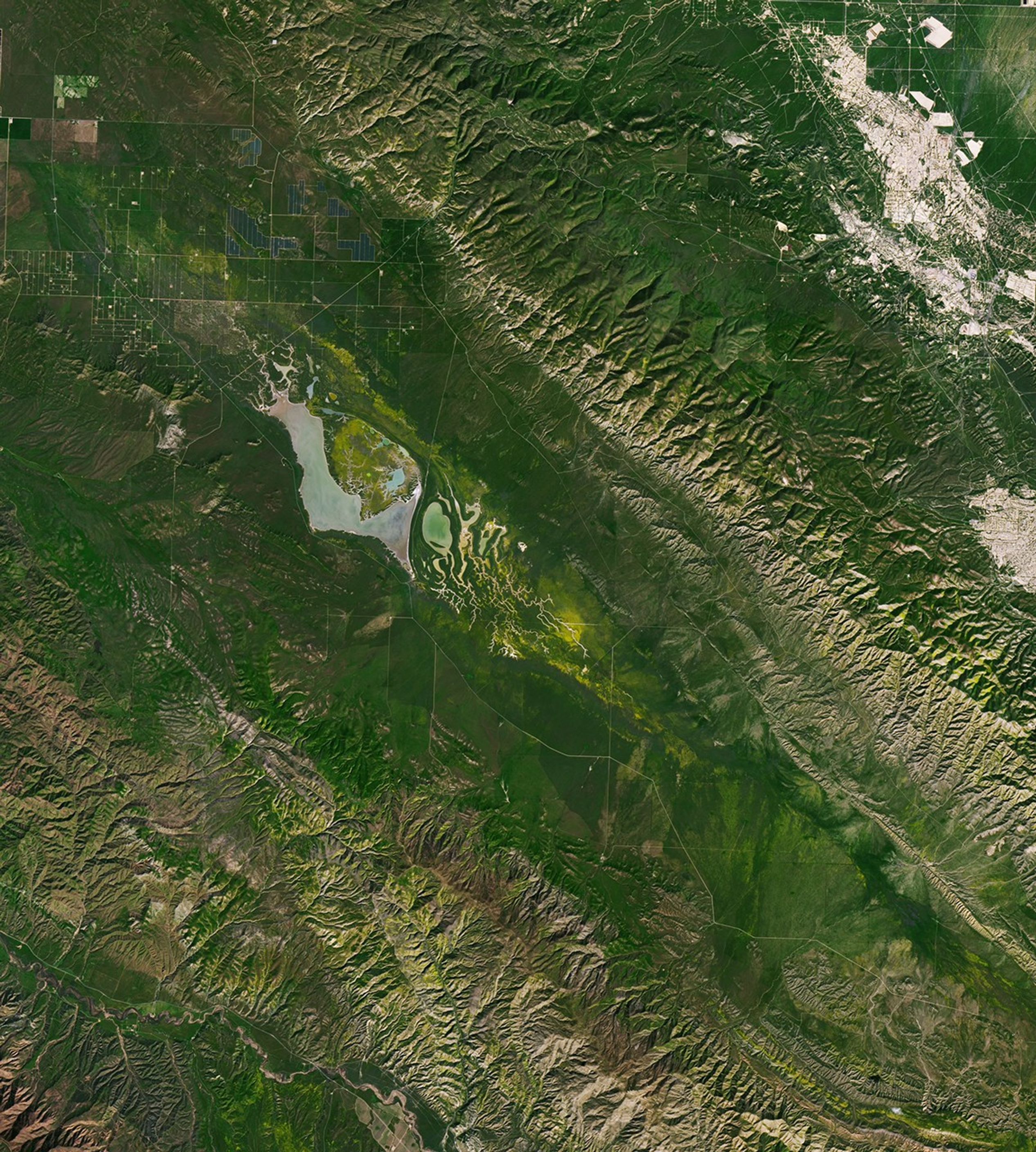
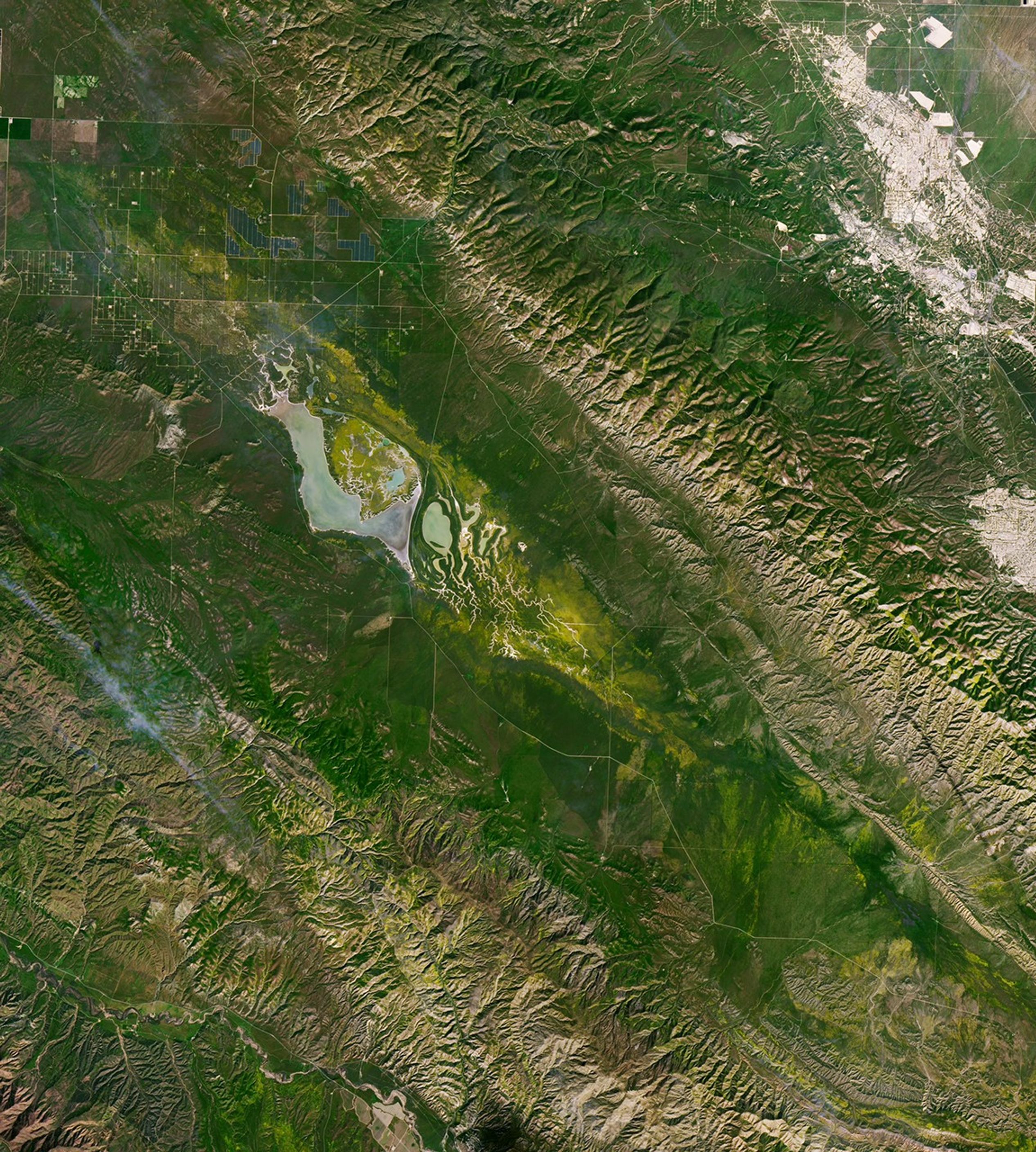
Landsat satellites began to show the early signs of color in February. By early March, flowers had turned areas around Soda Lake a bright shade of yellow, and by mid-month, they had spread even farther. Yellow wildflower blooms are visible amid the dendritic network of streams flanking the alkaline lake, which dries out completely during drought years. Colors were particularly vibrant across the Carrizo Plain National Monument, even decorating meadows along the zipper-shaped San Andreas Fault with splashes of purple due to blooms of Phacelia ciliata.
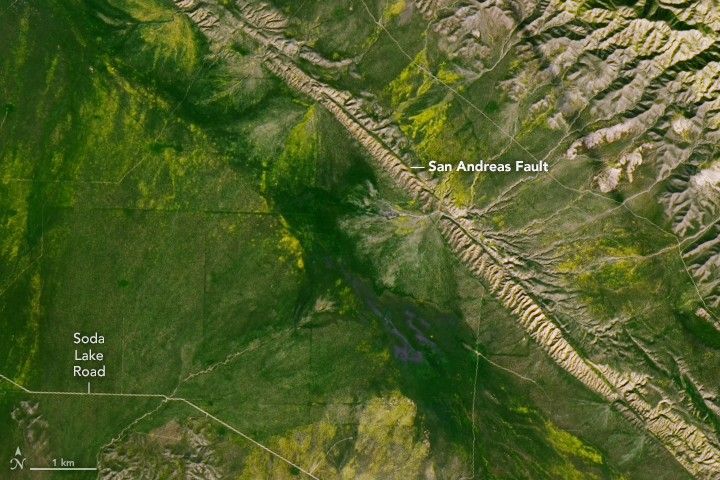
Wildflowers bloom along the San Andreas Fault in this image acquired on March 13, 2026, by the OLI (Operational Land Imager) on Landsat 9.
NASA Earth Observatory / Lauren Dauphin
Winter 2025-2026 brought bouts of rain and variable conditions that benefited wildflowers. Soaking rains saturated soils in November and December, bringing rainfall totals to nearly twice the usual level, according to a report from the California Department of Water Resources. NASA data cited in the report showed soil moisture remained well above average for the month of February.
The pulse of early rains helped kick-start wildflowers because many seeds need at least a half-inch of rain to wash off their protective coating to germinate, according to the National Park Service. The warm, dry periods that followed also helped. Once established, wildflowers benefit from intermittent rainfall rather than constant soaking.
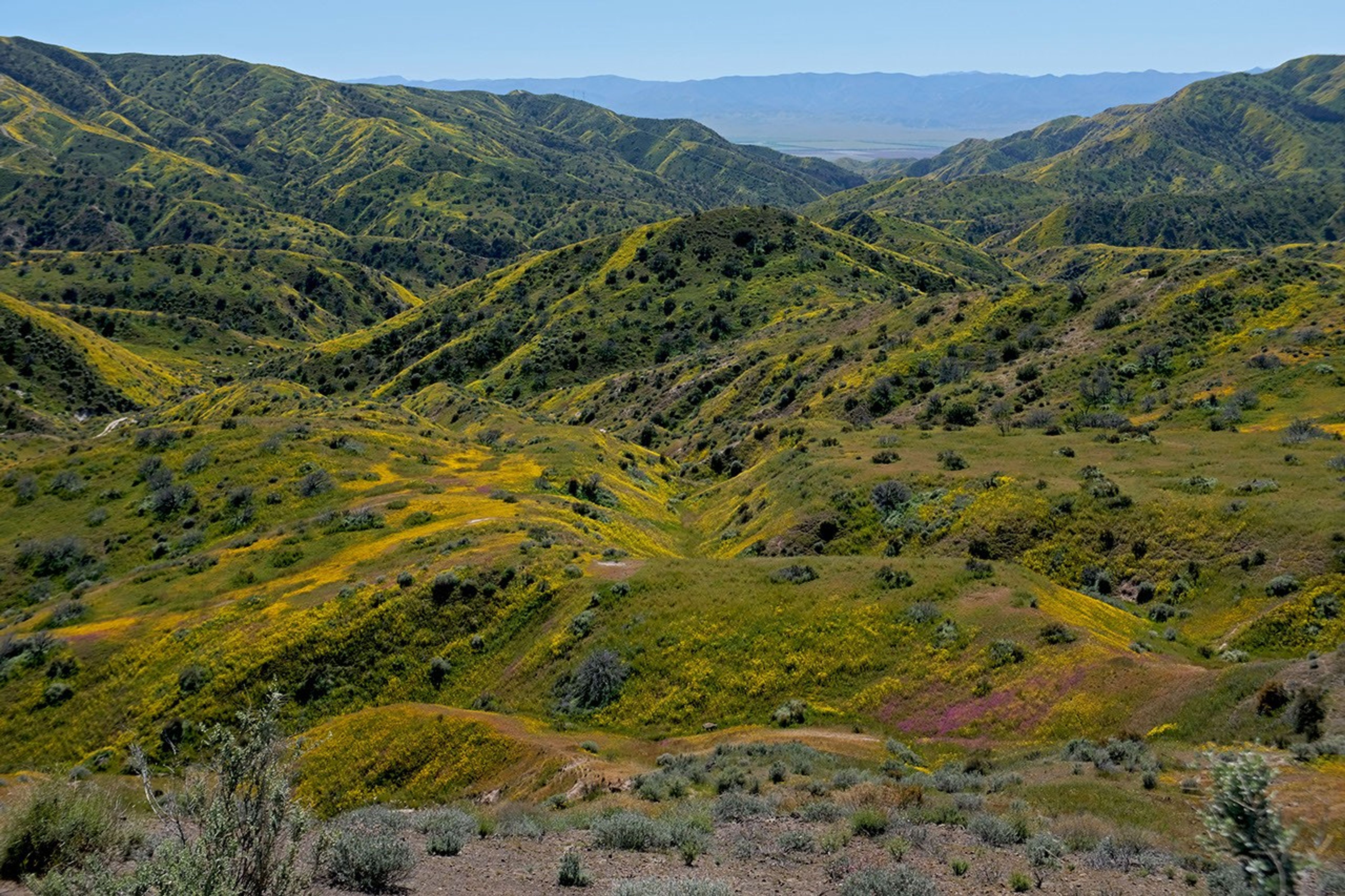
Wildflowers in Carrizo Plain National Monument on March 7, 2026.
Photograph by Erin Berkowitz
The Wild Flower Hotline reported that west-facing slopes of the Temblor Range were the first places to come alive with hillside daisies (Monolopia lanceolata) accompanied by California goldfields (Lasthenia californica) and forked fiddlenecks (Amsinckia furcata) in March. The display in the Caliente Range was enhanced by a lack of grass thatch, which was burned off in the Madre fire in July 2025.
Reports from experts on the ground indicate that common goldfield (Lasthenia gracilis), also called the needle goldfield, is responsible for the expanse of yellow near Soda Lake. Individual plants are small, but they often grow in disturbed areas just centimeters apart and bloom simultaneously, creating expansive blankets of color.
March 5
March 13
March 5, 2026 – March 13, 2026CurtainToggleImage Details
In an article for Flora magazine, Bryce King, lead field botanist for the California Native Plant Society, described the Lasthenia blooms there as one of many “seemingly unending stretches of color” across the valley bottom. Lasthenia is a “staple” of vernal pools and seasonally wet areas, he wrote, but the synchronicity of blooms on the valley floor and surrounding hills during a March visit was “beyond anything” he had expected.
Teams of NASA scientists are using remote sensing to study wildflower blooms and flowering plants, aiming to develop techniques for tracking blooms over broad areas and tools that can support farmers, beekeepers, and resource managers. Fruit, nuts, honey, and cotton are among the many crops and commodities produced by flowering plants.

Yoseline Angel captures the spectral signature of goldfield flowers in grasslands near Soda Lake on March 14, 2026, by measuring the reflectance of yellow petals and green leaves with a field spectrometer.
NASA/Andreas Baresch
“I would certainly consider this a superbloom,” said Yoseline Angel, a scientist at NASA’s Goddard Space Flight Center. “It’s hard to describe how stunning these wildflowers were from the ground.”
Angel and Goddard colleague Andres Baresch were in the field in Carrizo Plain National Monument on March 13 taking spectral measurements of blooming wildflowers as Landsat acquired one of the images shown above. They are in the process of developing a global flower monitoring system that will integrate observations from the ground with those from space-based sensors such as OLI on Landsat 8 and 9 and EMIT (Earth Surface Mineral Dust Source Investigation) on the International Space Station to track the progression of blooms.
“This was the perfect opportunity to test how well our models scale between the ground and satellites,” she said. “We were fortunate to have a huge number of seeds germinate and bloom simultaneously because last year was so dry and this winter was so wet.”
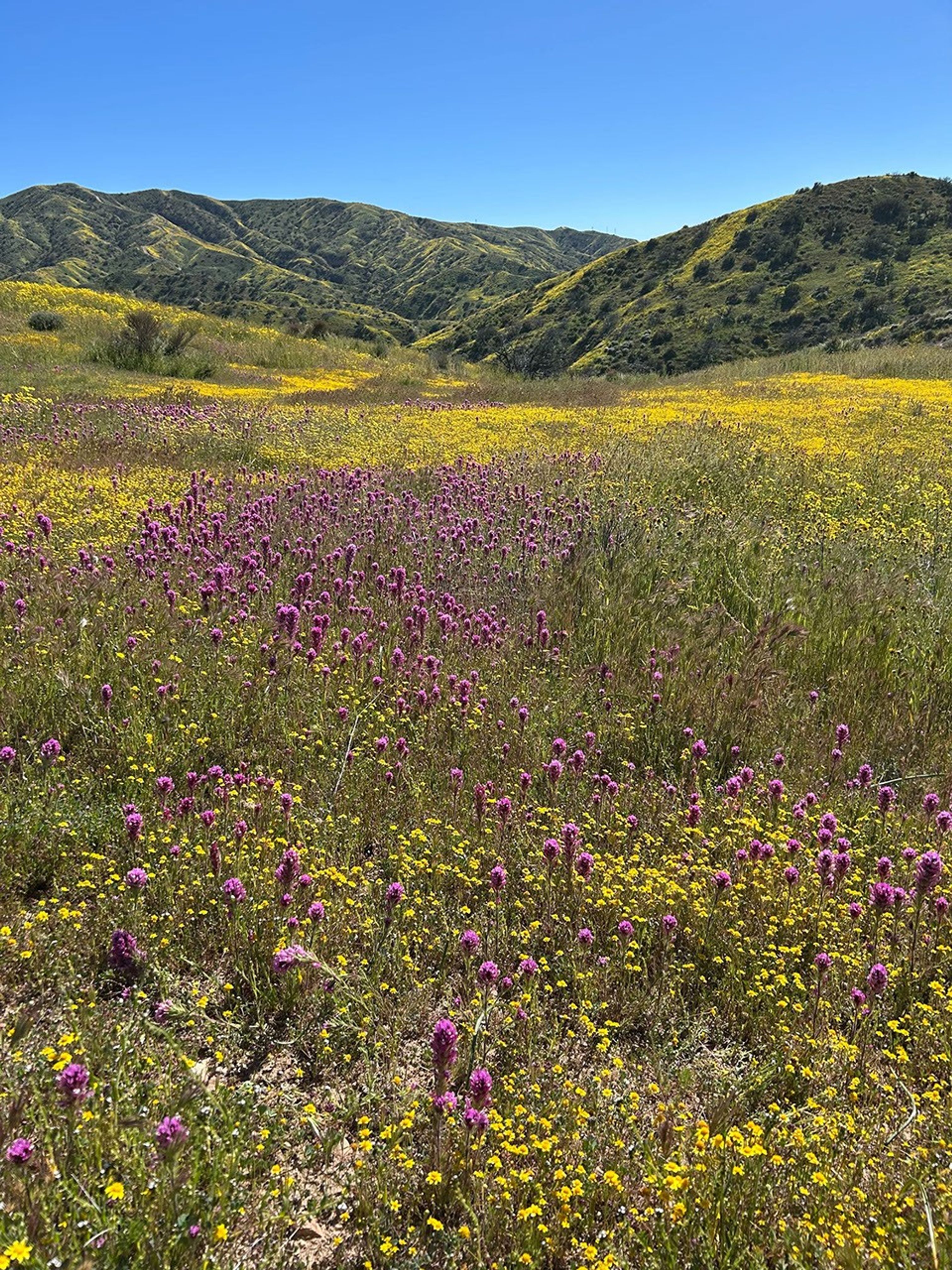
Gold and purple wildflowers bloom in Carrizo Plain National Monument on March 7, 2026.
Photograph by Erin Berkowitz
NASA Earth Observatory images by Lauren Dauphin, using Landsat data from the U.S. Geological Survey. Photos courtesy of Erin Berkowitz and Andres Baresch. Story by Adam Voiland.
Downloads
March 5, 2026
JPEG (7.26 MB)
March 13, 2026
JPEG (7.72 MB)
References & Resources
- Angel, Y., et al. (2025) Deciphering the spectra of flowers to map landscape-scale blooming dynamics. Ecosphere, 16(2), e70127.
- Bureau of Land Management (2026, February 9) Wildflower season arrives at Carrizo Plain National Monument and other BLM-managed public lands. Accessed March 19, 2026.
- California Department of Water Resources (2026, March 16) California Hydrology Update. Accessed March 19, 2026.
- Flora (2026) Plain Beautiful. Accessed March 19, 2026.
- The Globe Program (2025, May 14) Looking for Wildflower Blooms and Flowering Trees with GLOBE. Accessed March 19, 2026.
- KQED (2025, April 8) Can NASA Help Predict Wildflower Super Blooms? Accessed March 19, 2026.
- National Park Service (2026) Wildflowers. Accessed March 19, 2026.
- Rahimi, E. & Jung, C. (2025) A review of remote sensing applications in flower phenology detection. Journal of Ecology and Environment, 49,05.
- The Tribune (2026, March 13) Colorful wildflowers blooming across Carrizo Plain. See photos. Accessed March 19, 2026.
- The Wild Flower Hotline, via Spotify (2026, March 13) Wildflower Hotline. Accessed March 19, 2026.
- Theodore Payne Foundation (2024, March 15) Superbloom Season? Accessed March 19, 2026.
- U.S. Drought Monitor (2025, December 4) Drought Status Update for California-Nevada. Accessed March 19, 2026.
About The Author


Got a Questions?
Find us on Socials or Contact us and we’ll get back to you as soon as possible.