SOUNDPEATS H3 Review: Audiophile Sound That Won’t Evict You

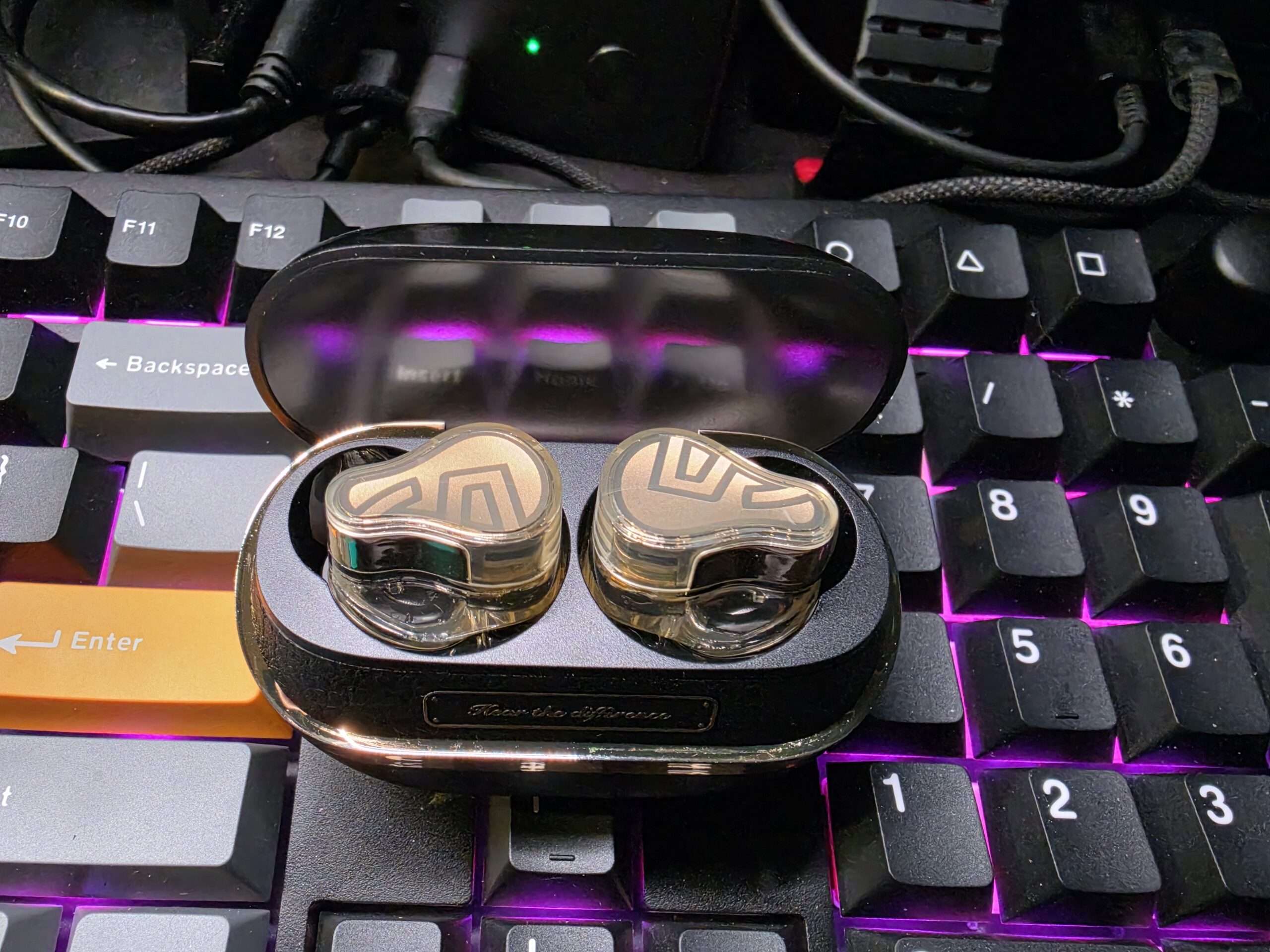
The SOUNDPEATS H3 is the rare pair of earbuds that seems to understand the assignment: sound first, gimmicks second, ego never. At $129.99 / C$152.99, it aims squarely at listeners who care more about codec support, driver design, and tunable sound than about luxury extras like wireless charging or auto-pause sensors.
Overview
The true wireless market usually forces a choice between overpriced flagships and bargain-bin regret. The H3 tries to sneak through the middle with a triple-driver hybrid setup, Qualcomm QCC3091 platform, LDAC, aptX Lossless, adaptive ANC, and a design that looks more boutique IEM than plastic commuter bud.
SOUNDPEATS positions the H3 as a flagship value model, and the supporting brand story is substantial: the company says it was founded in 2010, has more than 16 years of acoustic experience, serves 38 million-plus users in 31-plus countries, and holds more than 285 global patents. The H3 also picked up a VGP 2025 Summer Gold Award, which is a much classier flex than simply yelling “Hi-Res” on the box in oversized font.
Design and Comfort
The H3 avoids the usual stem-heavy clone aesthetic and instead leans into an IEM-inspired shape with a semi-transparent shell, metal mesh grille, and anodized aluminum nozzle. That makes it look more like something a musician might pack for rehearsal and less like something discovered loose at the bottom of a tote bag.
Comfort is one of its best traits. The lightweight fit, combined with five included ear-tip sizes from XS to XL, makes it easier to get both a secure fit and a proper passive seal, which matters for sound quality just as much as comfort. The IPX5 water-resistance rating also gives it enough durability for workouts, rainy commutes, and any spontaneous life decision involving sweat.
The case is functional, compact, and clearly where the accountants were allowed into the room. It is light, portable, and perfectly usable, but it does not deliver the sort of premium heft that makes someone close the lid twice just for the satisfaction.
Sound Quality
The big story is the acoustic hardware. Each earbud uses a triple-driver hybrid system with one 12 mm dynamic driver and two balanced armature drivers, a layout intended to separate bass duties from midrange and treble detail more effectively than a conventional single-driver design.
In practice, the default tuning is competent but slightly cautious. It sounds balanced, mildly warm, and easy to listen to, but it does not fully show off what the hardware can do until the PeatsAudio app EQ gets involved. Once adjusted, the H3 becomes far more engaging, with tighter bass definition, cleaner vocal placement, and better treble energy without crossing into dental-tool brightness.
Its strongest sonic trait is separation. Dense arrangements are easier to unpack than expected at this price, and the H3 does a good job preserving the edge of bass notes while keeping midrange textures intelligible. That does not make it a miracle worker, but it does make it one of the more convincing “value audiophile” tunings in this class.
Specs and Features
| Category | Details |
| Price | $129.99 / C$152.99 |
| Driver system | Triple-driver hybrid: 12 mm dynamic driver + dual balanced armatures |
| Bluetooth platform | Qualcomm QCC3091 with Snapdragon Sound |
| Codecs | SBC, AAC, aptX, aptX Adaptive, aptX Lossless, LDAC |
| ANC | Adaptive hybrid ANC, rated up to 55 dB; Adaptive, Indoor, Outdoor, Traffic modes |
| Calls | Six-mic array with Qualcomm cVc 8.0 noise reduction |
| Battery | Up to 7 hours on earbuds, up to 37 hours total with case |
| Fast charge | 10 minutes for about 2 hours of playback |
| Other features | Dual-device connection, game mode, transparency mode, IPX5 rating |
| Missing extras | No wireless charging, no wear detection sensors |
Connectivity and Daily Use
The codec list is frankly ridiculous for the price, and that is meant as praise. Support for LDAC and aptX Lossless gives the H3 real appeal for Android users and anyone who enjoys seeing Bluetooth menus filled with options that sound like rejected spacecraft names.
There is, however, an important tradeoff: LDAC and multipoint cannot be used simultaneously. That means listeners have to choose between best-case fidelity and best-case convenience, which is annoying but also pretty normal once Bluetooth bandwidth starts acting like a tiny overbooked airline.
The app matters more than it should. PeatsAudio unlocks the EQ, ANC modes, and feature adjustments, but it also requires account registration, which remains one of modern audio’s least romantic subplots.
ANC, Calls, and Battery
The adaptive ANC is solid rather than class-leading. It handles low-frequency sounds such as traffic rumble, HVAC drone, and general commuter noise well, while higher-frequency chatter is reduced less dramatically.
Call quality is stronger than expected for the category. The six-mic setup and cVc 8.0 processing help maintain intelligibility outdoors, and third-party review references note that microphone testing is a regular part of H3 evaluations, reinforcing that voice performance is not just a spec-sheet afterthought.
Battery life is rated at 7 hours per charge and 37 hours total with the case, with a 10-minute top-up adding roughly 2 hours of playback. Real-world endurance will drop with ANC, louder listening, and higher-bitrate codecs, so the H3 rewards sensible expectations more than heroic volume settings.
Testing Methodology
For publication, the cleanest approach is to explain not just what was heard, but how it was evaluated. A repeatable earbud test should cover fit, codec behavior, EQ dependence, ANC effectiveness, call quality, and battery expectations using the same device chain and a familiar music library.
A practical methodology for this review:
- Test fit with at least two ear-tip sizes before judging bass response or ANC, because a bad seal can make excellent earbuds sound like they have given up on life.
- Listen in default mode first, then retest with custom EQ in the SoundPeats Audio app to assess how much of the H3’s performance depends on tuning.
- Compare a standard codec mode against LDAC or aptX Lossless on a compatible source to evaluate whether the higher-bitrate options produce audible gains in detail, staging, and treble texture.
- Check multipoint behavior separately, since LDAC cannot run alongside dual-device connection.
- Evaluate ANC in at least three environments: indoor HVAC noise, street traffic, and café-style voice chatter.
- Run a short call test outdoors in light wind to judge mic stability and noise suppression.
For music selection, the best professional phrasing is to describe the playlist by function rather than claim specific tracks that are not listed in the visible source. The YouTube Music playlist can be framed as a curated reference library covering bass extension, vocal presence, treble smoothness, imaging, and busy layered mixes for separation testing. That keeps the methodology credible, reusable, and clean enough for publication.
A concise methodology line that fits naturally into the article:
Audio testing was conducted using a personal YouTube Music reference playlist spanning bass-heavy tracks, vocal-forward recordings, acoustic arrangements, and layered mixes, with repeated listening in default tuning, custom EQ, ANC on/off, and high-resolution codec modes where supported.
Verdict
The SOUNDPEATS H3 is a focused product, and that focus works in its favor. It spends its budget on the parts that most directly affect listening quality—driver design, codec support, tuning flexibility, and fit—while trimming luxury extras that some buyers will miss and others will happily trade away for better sound.
For listeners who want the best possible convenience package, there are more fully featured options. For listeners who want strong technical audio performance at a sane price, the H3 is easy to take seriously and even easier to enjoy once the EQ is dialled in.
Pros and Cons
Pros
- Detailed, well-separated sound with especially strong results after EQ tuning.
- Excellent codec support, including LDAC and aptX Lossless.
- Comfortable IEM-style fit with five included tip sizes.
- Strong value at $129.99
Cons
- No wireless charging or wear-detection sensors.
- LDAC and multipoint cannot be used together.
- App registration adds unnecessary friction.
- ANC is competent, but not category-defining.
Get yours here: H3