
NASA
-

Lettuce Find Healthy Space Food! Citizen Scientists Study Space Salads
Missions to the Moon and Mars pose nutritional challenges for astronauts. Now, a new paper on space-grown food iMissions to the Moon and Mars pose nutritional challenges for astronauts, but volunteers from NASA’s Open Science Data Repository Analysis Working Groups (OSDR-AWG) are working together to analyze data on astronaut health. The Analysis Working Groups examine biomedical data from NASA missions…
Read More » -
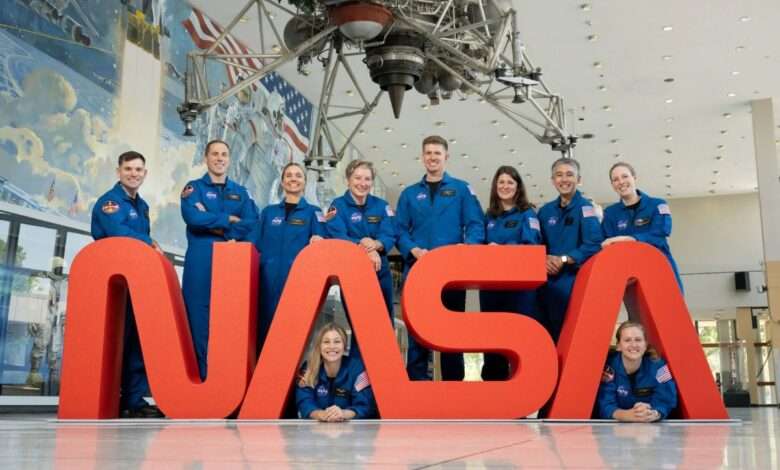
NASA Selects All-American 2025 Class of Astronaut Candidates
Lee este comunicado de prensa en español aquí. NASA’s 10 new astronaut candidates were introduced Monday following a competitive selection process of more than 8,000 applicants from across the United States. The class now will complete nearly two years of training before becoming eligible for flight assignments supporting future science and exploration missions to low Earth orbit, the Moon, and Mars.…
Read More » -
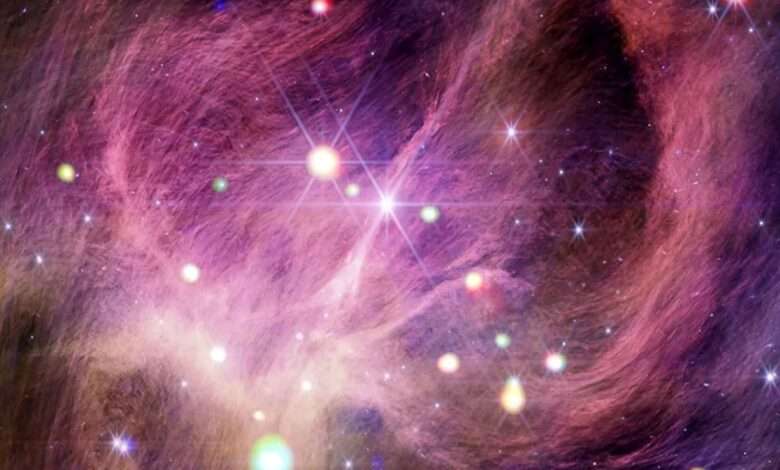
IC Stars
Data from NASA’s Chandra X-ray Observatory and NASA’s James Webb Space Telescope combine to reveal an otherworldly view of the star-forming region IC 348. In this image released on July 23, 2025, X-rays from Chandra are red, green, and blue, while infrared data from Webb are pink, orange, and purple. The wispy structures that dominate the image are interstellar material that reflect…
Read More » -
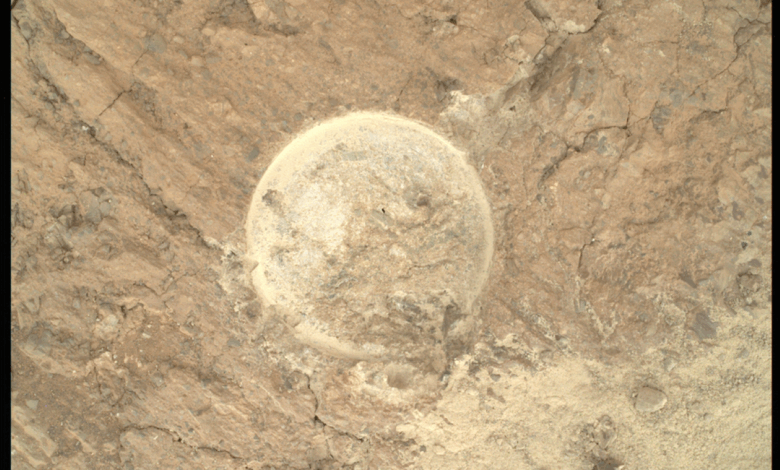
The Ancient Mars Variety Show
Written by Melissa Rice, Professor of Planetary Science at Western Washington University Perseverance accomplished something unusual this week: abrading two dramatically different rocks within the span of a few days. While exploring the Vernodden area along Jezero crater’s rim, the rover has been studying what might be “megablocks,” a variety of ancient crustal materials with clues to Mars’ early geological…
Read More » -

NASA Selects Blue Origin to Deliver VIPER Rover to Moon’s South Pole
As part of the agency’s Artemis campaign, NASA has awarded Blue Origin of Kent, Washington, a CLPS (Commercial Lunar Payload Services) task order with an option to deliver a rover to the Moon’s South Pole region. NASA’s VIPER (Volatiles Investigating Polar Exploration Rover) will search for volatile resources, such as ice, on the lunar surface and collect science data to…
Read More » -

NASA’s Orion Spacecraft Secures Critical Abort System Hardware for Artemis II
All the pieces are stacking up – literally – for NASA’s first crewed mission of the Artemis program coming in 2026. Teams are finishing integration of the Orion spacecraft for the Artemis II test flight with its launch abort system on Sept. 17 inside the Launch Abort System Facility at NASA’s Kennedy Space Center in Florida. The 44-foot-tall tower-like abort structure would…
Read More » -
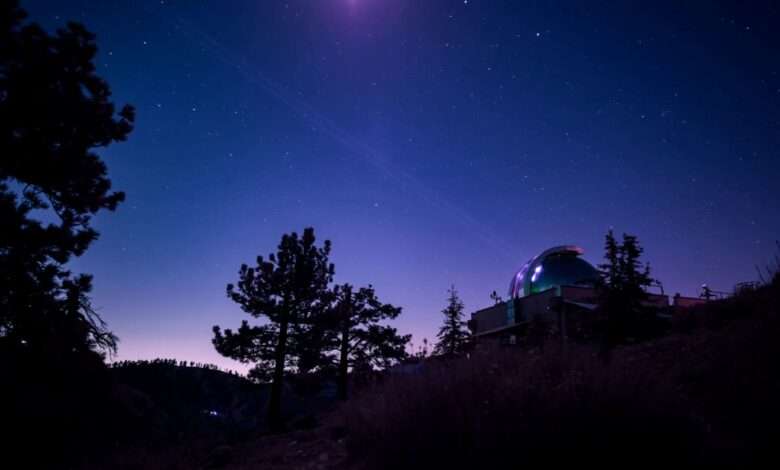
A Beacon to Space
In this infrared photograph taken on June 2, 2025, the Optical Communications Telescope Laboratory at NASA’s Jet Propulsion Laboratory’s Table Mountain Facility near Wrightwood, California, beams its eight-laser beacon to the Deep Space Optical Communications (DSOC) flight laser transceiver aboard NASA’s Psyche spacecraft. At the time, when Psyche was about 143 million miles (230 million kilometers) from Earth. Managed by JPL, DSOC successfully demonstrated that data…
Read More » -
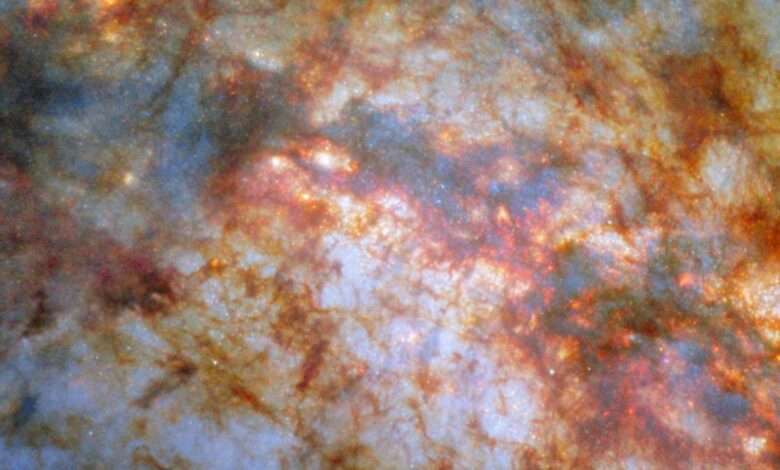
Hubble Images Celestial Cigar’s Smoldering Heart
This NASA/ESA Hubble Space Telescope image reveals new details in Messier 82 (M82), home to brilliant stars whose light is shaded by sculptural clouds made of clumps and streaks of dust and gas. This image features the star-powered heart of the galaxy, located just 12 million light-years away in the constellation Ursa Major (the Great Bear). Popularly known as the Cigar Galaxy, M82…
Read More » -

From Supercomputers to Wind Tunnels: NASA’s Road to Artemis II
By Jill Dunbar Of the many roads leading to successful Artemis missions, one is paved with high-tech computing chips called superchips. Along the way, a partnership between NASA wind tunnel engineers, data visualization scientists, and software developers verified a quick, cost-effective solution to improve NASA’s SLS (Space Launch System) rocket for the upcoming Artemis II mission. This will be the…
Read More » -
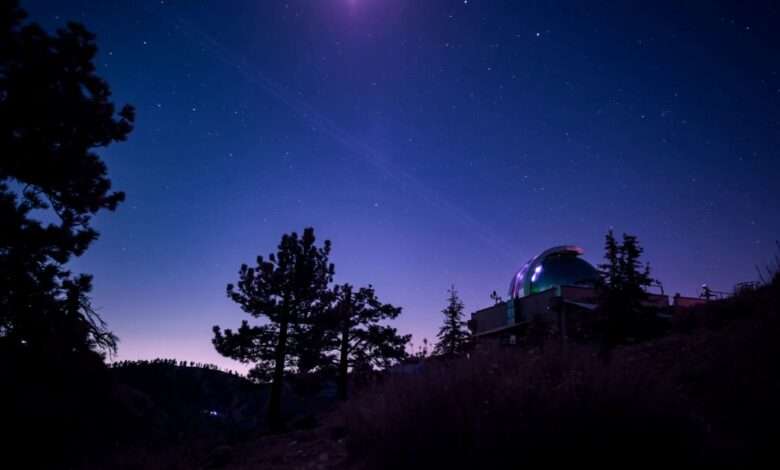
NASA’s Deep Space Communications Demo Exceeds Project Expectations
The project has exceeded all of its technical goals after two years, setting up the foundations of high-speed communications for NASA’s future human missions to Mars. NASA’s Deep Space Optical Communications technology successfully showed that data encoded in lasers could be reliably transmitted, received, and decoded after traveling millions of miles from Earth at distances comparable to Mars. Nearly two…
Read More »