
NASA
-

NASA Gateways to Blue Skies 2026 Competition
The commercial aviation industry is a crucial component of the U.S. economy, playing a vital role in transporting people, intermediate/final goods, and driving demand for various goods and services nationwide. This network enhances the quality of life for the whole country and facilitates business interactions within and globally, boosting productivity and prosperity. However, the industry faces numerous challenges, particularly the…
Read More » -
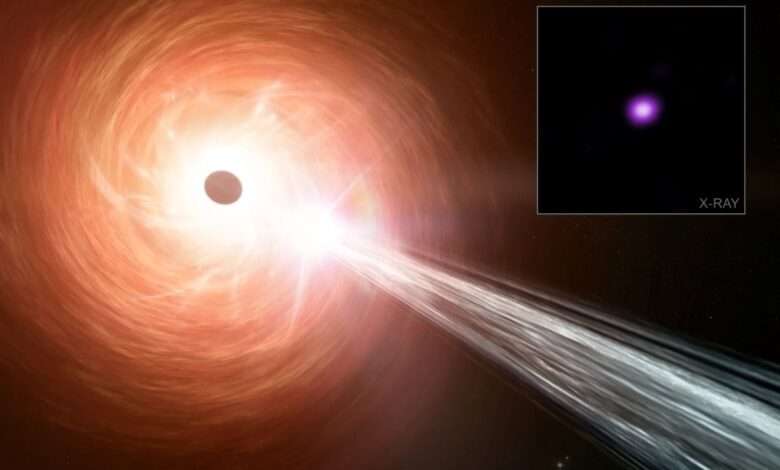
NASA’s Chandra Finds Black Hole With Tremendous Growth
A black hole is growing at one of the fastest rates ever recorded, according to a team of astronomers. This discovery from NASA’s Chandra X-ray Observatory may help explain how some black holes can reach enormous masses relatively quickly after the big bang. The black hole weighs about a billion times the mass of the Sun and is located about…
Read More » -
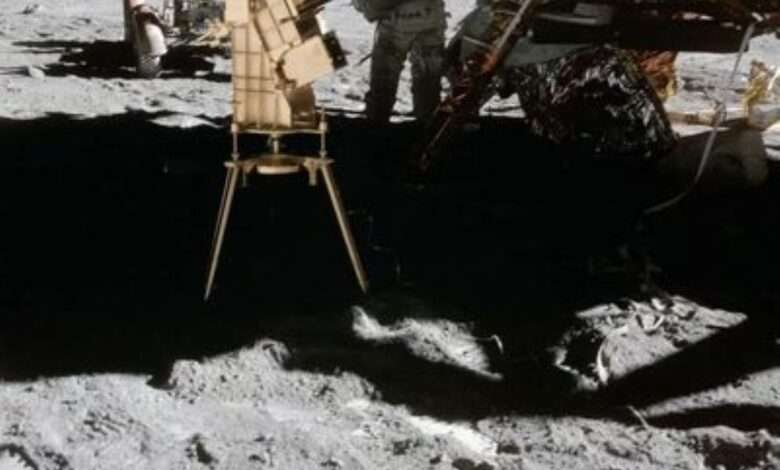
New NASA Mission to Reveal Earth’s Invisible ‘Halo’
This story is also available in Spanish. A new NASA mission will capture images of Earth’s invisible “halo,” the faint light given off by our planet’s outermost atmospheric layer, the exosphere, as it morphs and changes in response to the Sun. Understanding the physics of the exosphere is a key step toward forecasting dangerous conditions in near-Earth space, a requirement for…
Read More » -
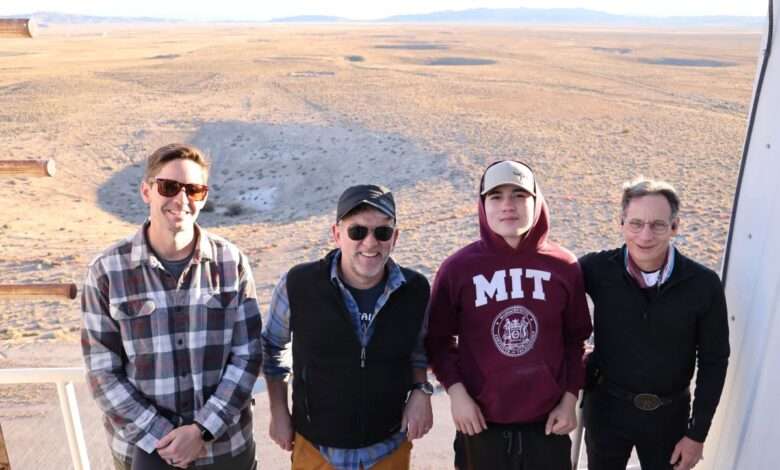
Building a Lunar Network: Johnson Tests Wireless Technologies for the Moon
NASA engineers are strapping on backpacks loaded with radios, cameras, and antennas to test technology that might someday keep explorers connected on the lunar surface. Their mission: test how astronauts on the Moon will stay connected during Artemis spacewalks using 3GPP (LTE/4G and 5G) and Wi-Fi technologies. It’s exciting to bring lunar spacewalks into the 21st century with the immersive,…
Read More » -
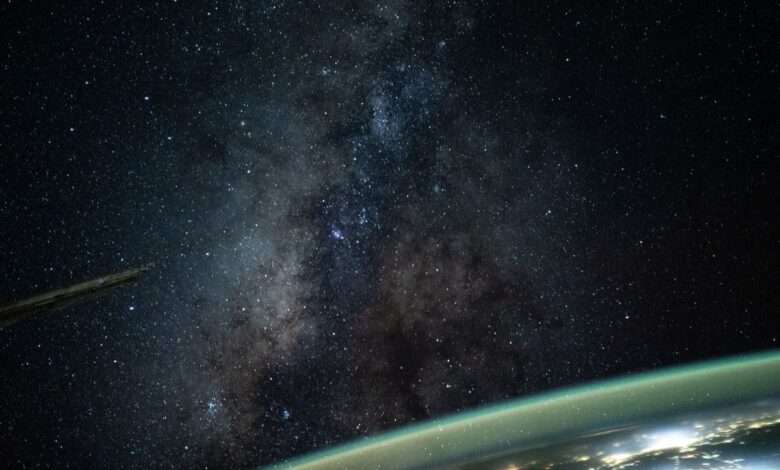
Milky Way Views
The Milky Way appears above Earth’s bright atmospheric glow in this Aug. 23, 2025, photograph from the International Space Station as it soared 261 miles above southern Iran at approximately 12:54 a.m. local time. The camera was configured for low light and long duration settings. Our home galaxy has hundreds of billions of stars, enough gas and dust to make billions more…
Read More » -
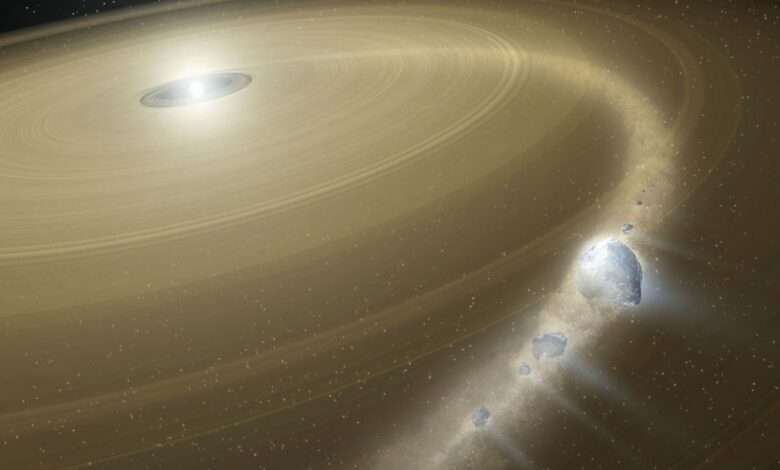
NASA’s Hubble Sees White Dwarf Eating Piece of Pluto-Like Object
In our nearby stellar neighborhood, a burned-out star is snacking on a fragment of a Pluto-like object. With its unique ultraviolet capability, only NASA’s Hubble Space Telescope could identify that this meal is taking place. The stellar remnant is a white dwarf about half the mass of our Sun, but that is densely packed into a body about the size of Earth. Scientists think…
Read More » -
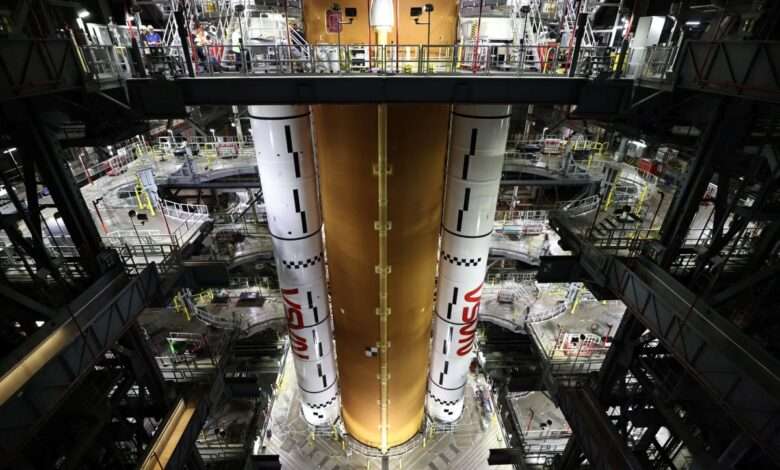
NASA Artemis II Moon Rocket Ready to Fly Crew
NASA’s Artemis II SLS (Space Launch System) rocket poised to send four astronauts from Earth on a journey around the Moon next year may appear identical to the Artemis I SLS rocket. On closer inspection, though, engineers have upgraded the agency’s Moon rocket inside and out to improve performance, reliability, and safety. SLS flew a picture perfect first mission on the Artemis…
Read More » -
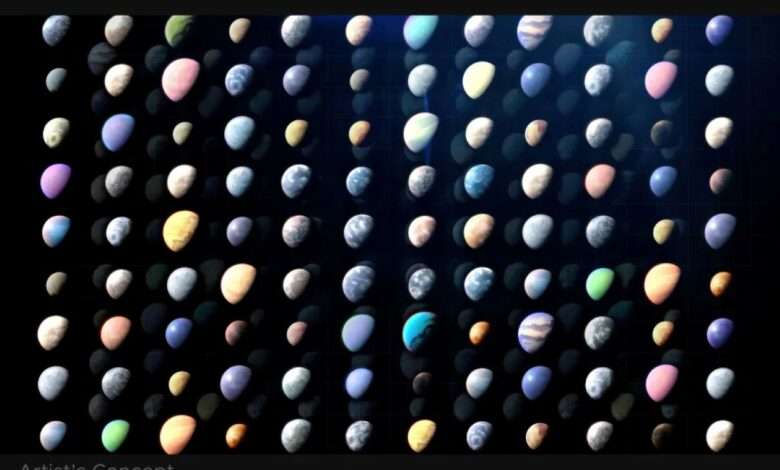
NASA’s Tally of Planets Outside Our Solar System Reaches 6,000
The milestone highlights the accelerating rate of discoveries, just over three decades since the first exoplanets were found. The official number of exoplanets — planets outside our solar system — tracked by NASA has reached 6,000. Confirmed planets are added to the count on a rolling basis by scientists from around the world, so no single planet is considered the…
Read More » -

Arctic Sea Ice Reaches Annual Low
With the end of summer approaching in the Northern Hemisphere, the extent of sea ice in the Arctic shrank to its annual minimum on Sept. 10, according to NASA and the National Snow and Ice Data Center. The total sea ice coverage was tied with 2008 for the 10th-lowest on record at 1.78 million square miles (4.60 million square kilometers).…
Read More » -

NASA Rideshares Integrated Ahead of Launch
Technicians completed integrating NASA’s Carruthers Geocorona Observatory and the National Oceanic and Atmospheric Administration’s (NOAA) Space Weather Follow-On Lagrange 1 (SWFO-L1) satellite to an Evolved Expendable Launch Vehicle Secondary Payload Adapter ring at the Astrotech Space Operations Facility near NASA’s Kennedy Space Center in Florida on Sept. 4. Integrating the rideshares to the ring precedes the next prelaunch launch milestone: attaching…
Read More »