
NASA
-
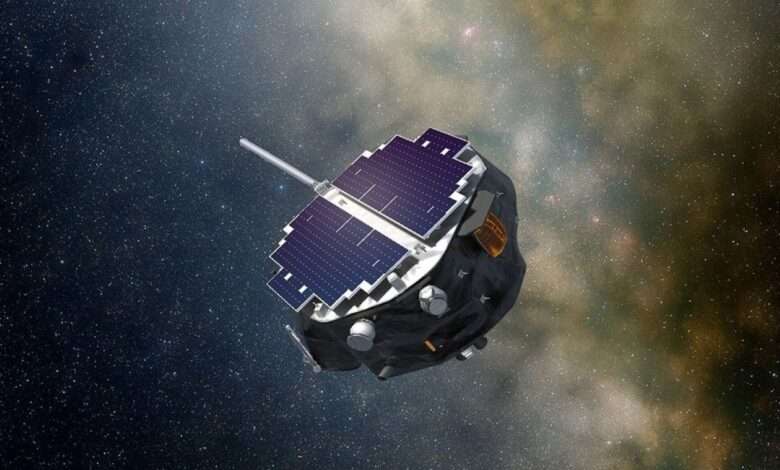
NASA’s IMAP Mission to Study Boundaries of Our Home in Space
NASA’s new Interstellar Mapping and Acceleration Probe, or IMAP, will launch no earlier than Tuesday, Sept. 23 to study the heliosphere, a giant shield created by the Sun. The mission will chart the heliosphere’s boundaries to help us better understand the protection it offers life on Earth and how it changes with the Sun’s activity. The IMAP mission will also provide near…
Read More » -
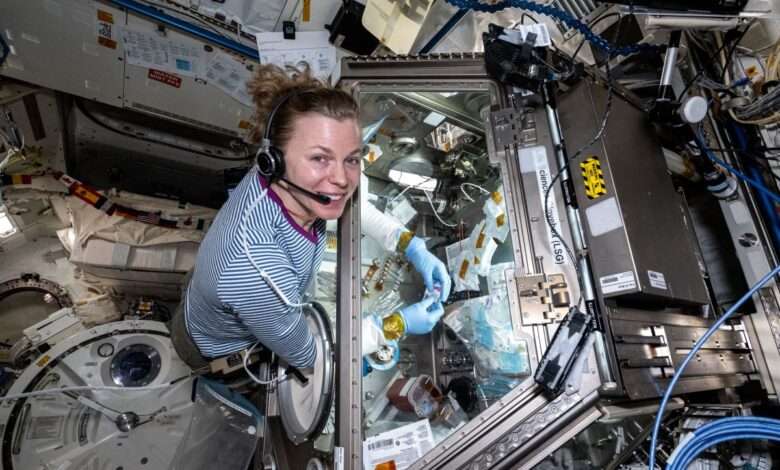
Space Station Science
NASA astronaut Zena Cardman processes bone cell samples inside the Kibo laboratory module’s Life Science Glovebox on Aug. 28, 2025, as part of an experiment that tests how microgravity affects bone-forming and bone-degrading cells and explore potential ways to prevent bone loss. This research could help protect astronauts on future long-duration missions to the Moon and Mars, while also advancing treatments for…
Read More » -
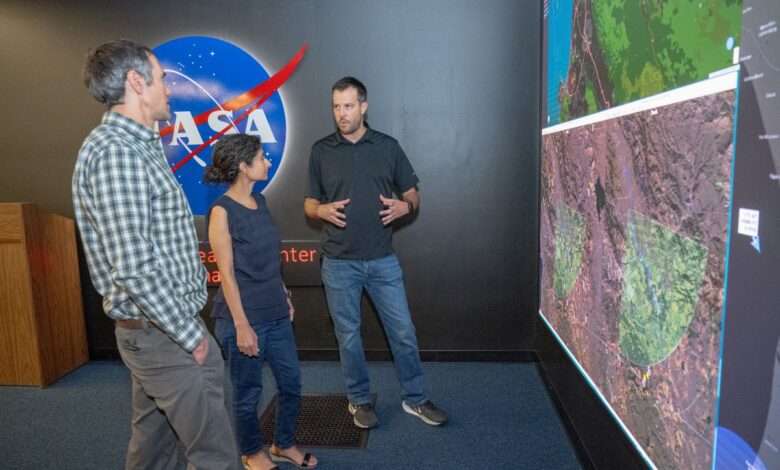
NASA, Partners Push Forward with Remotely Piloted Airspace Integration
NASA and its partners recently tested a tool for remotely piloted operations that could enable operators to transport people and goods more efficiently within urban areas. The team’s goal is to ensure that when these remotely piloted aircraft – including electric vertical takeoff and landing vehicles (eVTOLs) – take to the skies, air traffic controllers won’t be overburdened by increased…
Read More » -

Webinar Series: Teaching with EMERGE & GLOBE Mission Mosquito
Educators, join our free two-part webinar, and learn about bringing coding and citizen science to your learners! The Global Learning and Observation to Benefit the Environment (GLOBE) program is a science and education program that focuses on advancing Earth systems science through data collection and analysis by citizen scientists. These webinars introduce GLOBE Mission Mosquito—a global program where students and community members collect…
Read More » -

An Eye-catching Star Cluster
Westerlund 1, the biggest and closest “super” star cluster to Earth, dazzles in this image released on July 23, 2025. This view combines x-ray data from NASA’s Chandra X-ray Observatory (in pink, blue, purple, and orange), infrared data from NASA’s James Webb Space Telescope (in yellow, gold, and blue), and optical data from NASA’s Hubble Space Telescope (in cyan, grey, and light…
Read More » -
How NASA’s Roman Mission Will Unveil Our Home Galaxy Using Cosmic Dust
NASA’s Nancy Grace Roman Space Telescope will help scientists better understand our Milky Way galaxy’s less sparkly components — gas and dust strewn between stars, known as the interstellar medium. One of Roman’s major observing programs, called the Galactic Plane Survey, will peer through our galaxy to its most distant edge, mapping roughly 20 billion stars—about four times more than have currently…
Read More » -
Regions on Asteroid Explored by NASA’s Lucy Mission Get Official Names
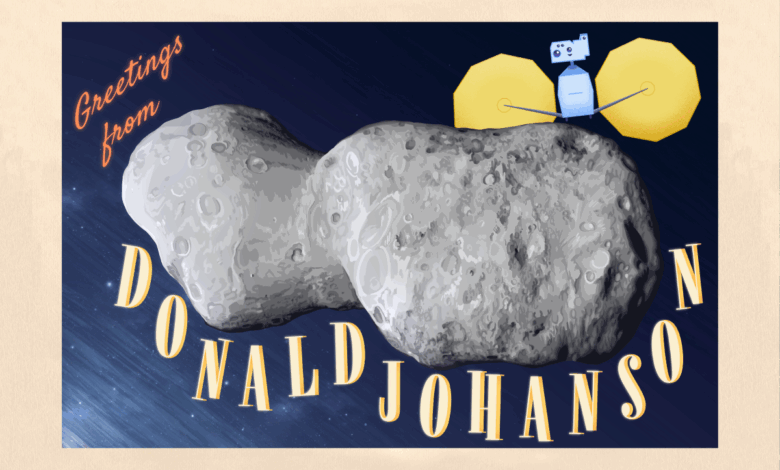
The IAU (International Astronomical Union), an international non-governmental research organization and global naming authority for celestial objects, has approved official names for features on Donaldjohanson, an asteroid NASA’s Lucy spacecraft visited on April 20. In a nod to the fossilized inspiration for the names of the asteroid and spacecraft, the IAU’s selections recognize significant sites and discoveries on Earth that…
Read More » -

NASA Makes Webby 30s List of Most Iconic, Influential on Internet
NASA has earned a spot on The Webby 30, a curated list celebrating 30 companies and organizations that have shaped the digital landscape. “This honor reflects the talent of NASA’s communications professionals who bring our story to life,” said Will Boyington, associate administrator for the Office of Communications at NASA Headquarters in Washington. “Being recognized shows that America’s leadership in space…
Read More » -
NASA Sets Launch Coverage for Space Weather Missions
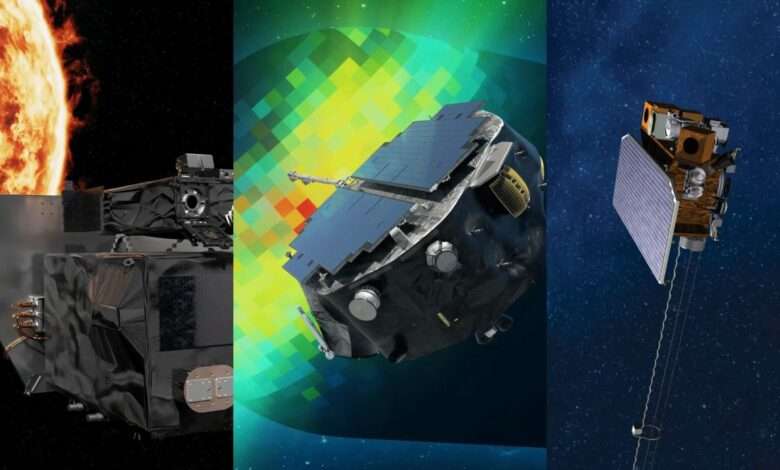
NASA will provide live coverage of prelaunch and launch activities for an observatory designed to study space weather and explore and map the boundaries of our solar neighborhood. Launching with IMAP (Interstellar Mapping and Acceleration Probe) are two rideshare missions, NASA’s Carruthers Geocorona Observatory and the National Oceanic and Atmospheric Administration’s (NOAA) Space Weather Follow On-Lagrange 1 (SWFO-L1), both of…
Read More » -
NASA Analysis Shows Sun’s Activity Ramping Up
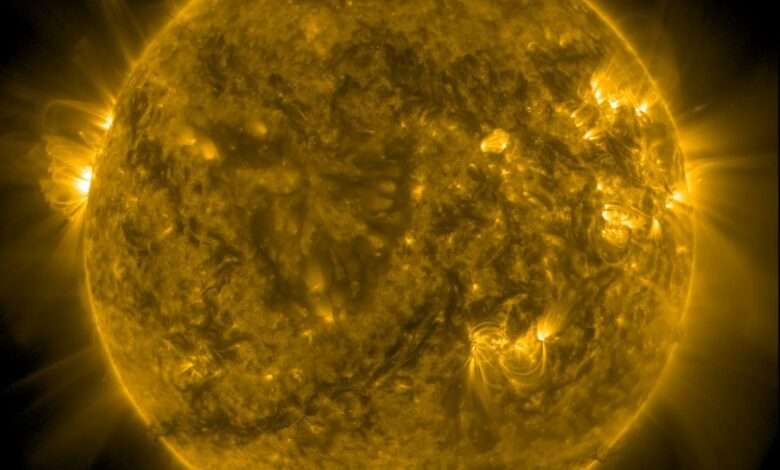
It looked like the Sun was heading toward a historic lull in activity. That trend flipped in 2008, according to new research. The Sun has become increasingly active since 2008, a new NASA study shows. Solar activity is known to fluctuate in cycles of 11 years, but there are longer-term variations that can last decades. Case in point: Since the…
Read More »