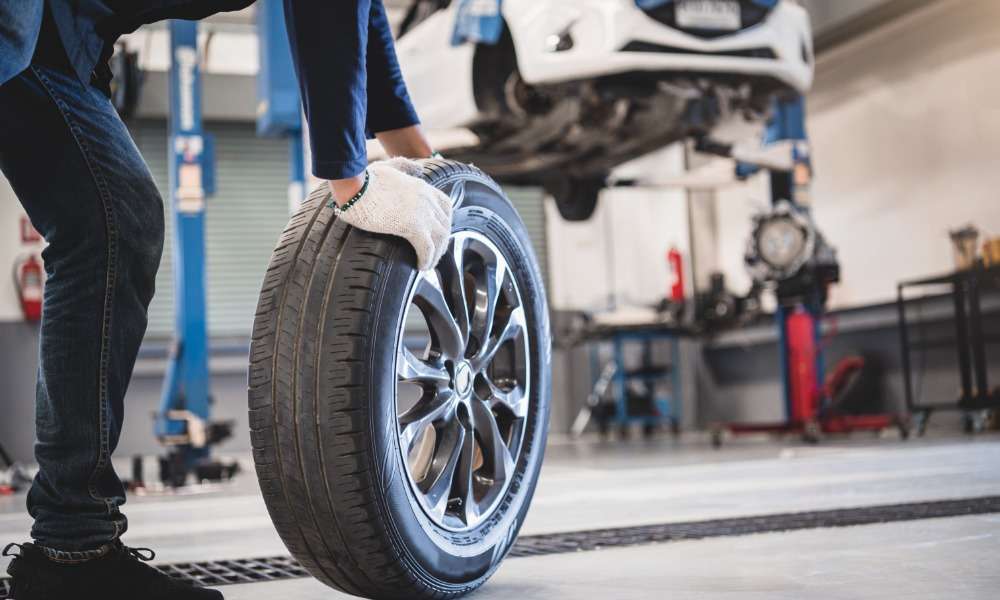
A nail, pothole, or rogue piece of highway debris can ruin one tire while leaving the other three looking perfectly healthy. In this situation, replacing a single tire seems like the obvious solution. Buy one tire, bolt it on, and return to avoiding dashboard warning lights.
Unfortunately, tires work as a team. Differences in size, tread depth, construction, and grip can change how a vehicle accelerates, brakes, and corners. In our guide, we’ll explain what to know about replacing a single tire on your car.
Match More Than the Number on the Sidewall
The replacement tire must use a size that’s approved by the vehicle manufacturer. Drivers can find that information on the tire placard inside the driver’s door or in the owner’s manual.
Size alone does not guarantee a proper match. The new tire should also align with the vehicle’s required load index, speed rating, tire type, and construction. Even two correctly sized tires can respond differently when their tread patterns, compounds, or sidewall designs do not match.
Compare the Tread Depth
Brand-new tires feature deeper treads and larger overall diameters than worn tires. As the wheels rotate, that difference can make one tire travel farther than another during each revolution.
Small variations may not create immediate drama, but a large tread-depth gap can affect handling, braking, traction-control systems, and drivetrain components. Some manufacturer guidance warns against unevenly worn tires on the same axle and recommends replacing tires in pairs or complete sets. A tire technician can measure the remaining tread and determine whether one replacement sits close enough to the existing tires.
Take Extra Care With AWD
When replacing a single tire on your car, it’s important to know whether your vehicle is an all-wheel-drive (AWD) model. AWD vehicles continuously manage power across multiple wheels. A tire with a different rolling circumference can force the system to compensate, even while the vehicle travels in a straight line.
The acceptable difference varies by manufacturer, so the owner’s manual should settle the argument. Some AWD vehicles may require two or four replacements, while others may accept a closely matched tire. A specialty shop may also shave a new tire’s tread to match the remaining set, although availability varies.
Avoid a Random Tire Mix
Matching the same brand, model, size, and specifications provides the most predictable performance. When an identical model is unavailable, drivers should review guidance on mixing different tire brands on the same car before choosing a substitute. A different brand may work when its essential specifications match, but placing noticeably different tires on the same axle can produce inconsistent grip and steering response.
When replacing two tires, many manufacturers recommend installing the newer pair on the rear axle to support stability on wet roads. The final placement should follow the vehicle manufacturer’s instructions and a qualified technician’s assessment.
Let the Whole Set Make the Decision
Replacing a single tire can make sense when the other tires remain relatively new, the tread depths closely match, and the replacement meets every specification. It becomes a riskier shortcut when the remaining tires show substantial wear, or the vehicle uses a sensitive AWD system.
One damaged tire does not automatically mean buying four. It does mean checking the complete set before treating the repair like a one-wheel problem.