
NASA
-
Press Releases
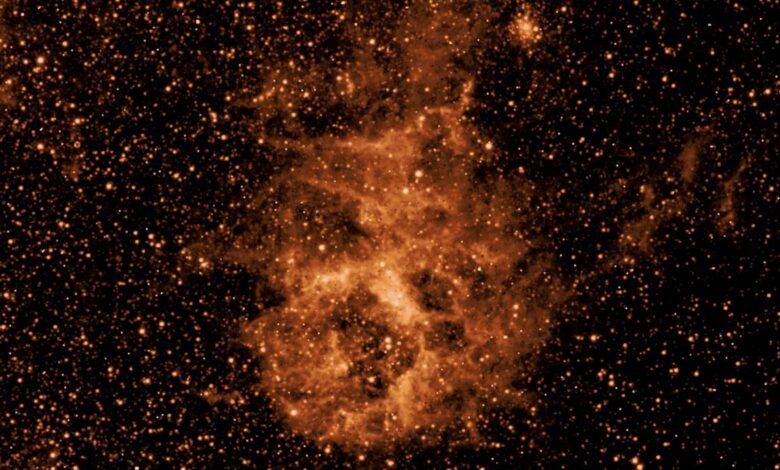
SPHEREx Starts Scanning Entire Sky
A soot-like cloud is revealed in a section of the sky in this May 1, 2025, image from NASA’S SPHEREx space observatory. On May 1, SPHEREx began regular science operations, which consist of taking about 3,600 images per day for the next two years to provide new insights about the origins of the universe, galaxies, and the ingredients for life in…
Read More » -
NASA
NASA’s NICER Maps Debris From Recurring Cosmic Crashes
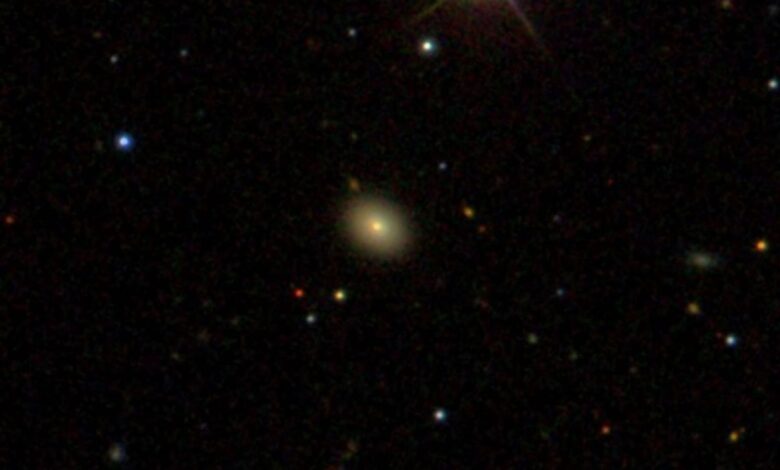
Lee esta nota de prensa en español aquí. For the first time, astronomers have probed the physical environment of repeating X-ray outbursts near monster black holes thanks to data from NASA’s NICER (Neutron star Interior Composition Explorer) and other missions. Scientists have only recently encountered this class of X-ray flares, called QPEs, or quasi-periodic eruptions. A system astronomers have nicknamed Ansky…
Read More » -
NASA
Quantum Sensing via Matter-Wave Interferometry Aboard the International Space Station
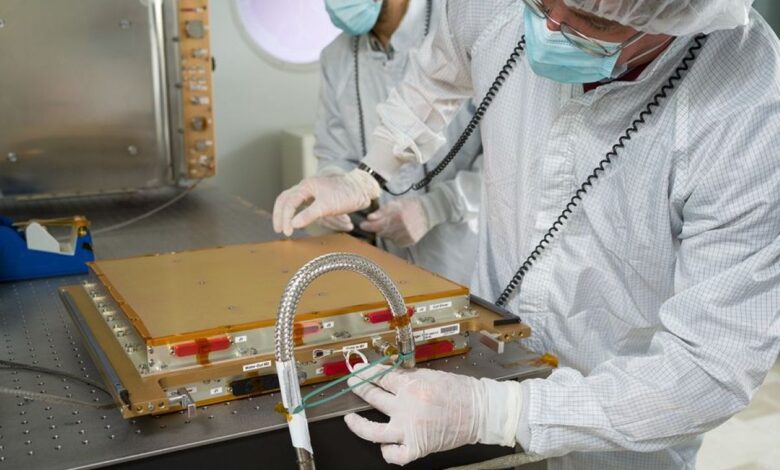
Future space missions could use quantum technologies to help us understand the physical laws that govern the universe, explore the composition of other planets and their moons, gain insights into unexplained cosmological phenomena, or monitor ice sheet thickness and the amount of water in underground aquafers on Earth. Upgraded hardware being prepared at Jet Propulsion Lab for launch and install…
Read More » -
NASA

Spot the Station Frequently Asked Questions
1. Why is the International Space Station up there? The International Space Station is a convergence of science, technology, and human innovation that enables research not possible on Earth for the benefit of humanity. For more than 25 years, NASA has supported a continuous U.S. human presence aboard the station, through which astronauts have learned to live and work in…
Read More » -
NASA
NASA Enables SPHEREx Data Return Through Commercial Partnership
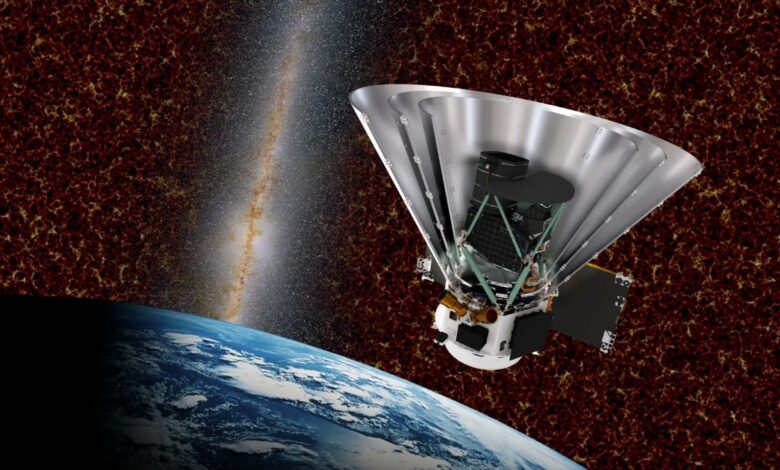
NASA is partnering with commercial industry to expand our knowledge of Earth, our solar system, and beyond. Recently, NASA collaborated with Kongsberg Satellite Services (KSAT) to support data transfer for the agency’s SPHEREx (Spectro-Photometer for the History of the Universe, Epoch of Reionization and Ices Explorer) mission to explore the origins of the universe. “Not only is NASA moving toward…
Read More » -
NASA

Nilufar Ramji: Shaping Johnson’s Giant Leaps Forward
A first-generation college graduate, Nilufar Ramji was blazing trails long before arriving at NASA. With her multifaceted expertise, she is helping shape the messaging behind humanity’s return to the Moon, Mars, and beyond. Ramji is currently on detail as the co-executive producer for NASA’s live broadcasts, ensuring the agency’s missions and discoveries are clearly and effectively communicated to the public.…
Read More » -
NASA

Sols 4529-4531: Honeycombs and Waffles… on Mars!
Written by Catherine O’Connell-Cooper, Planetary Geologist at University of New Brunswick Earth planning date: Friday, May 2, 2025 From our Wednesday stopping spot, the drive direction ahead (looking along the path we would follow in the Wednesday drive) appeared to be full of rough, gnarly material, which can be tricky targets for contact science instruments like APXS. However, coming into…
Read More » -
NASA
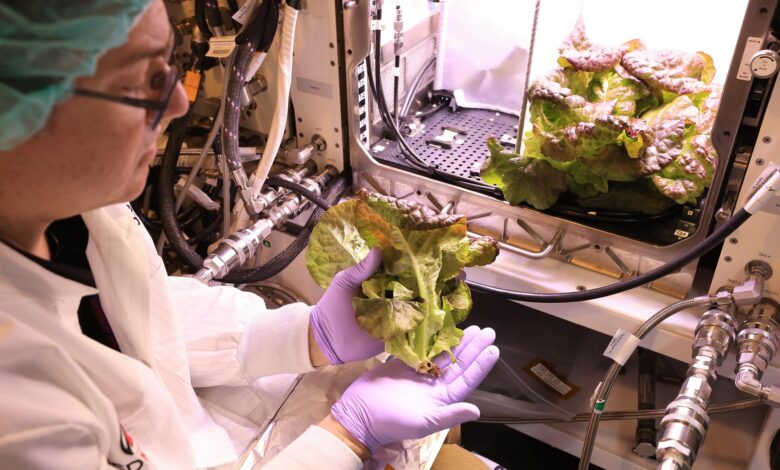
NASA Harvests Lettuce for Space Station Study
Inside a laboratory in the Space Systems Processing Facility at NASA’s Kennedy Space Center in Florida, a payload implementation team member harvests ‘Outredgeous’ romaine lettuce growing in the Advanced Plant Habitat ground unit on Thursday, April 24, 2025. The harvest is part of the ground control work supporting Plant Habitat-07, which launched to the International Space Station aboard NASA’s SpaceX…
Read More » -
NASA
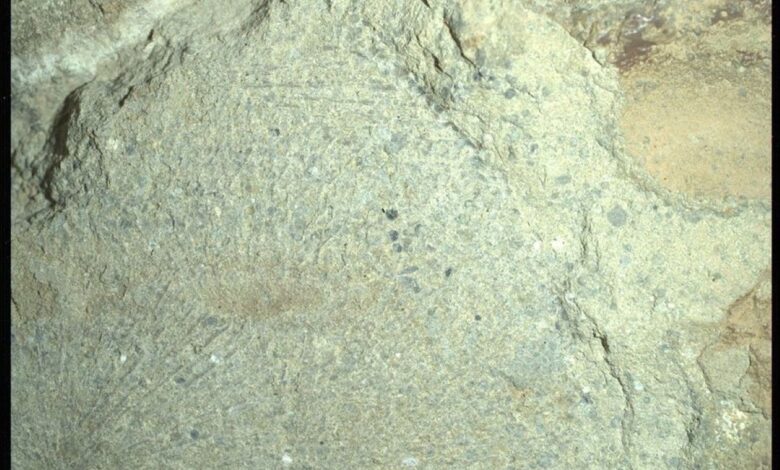
Searching for Spherules to Sample
Written by Denise Buckner, Postdoctoral Fellow at NASA’s Goddard Space Flight Center Over the past few weeks, Perseverance has been investigating some curious spherules peppered across the “Witch Hazel Hill” region along the rim of Jezero crater. A striking cluster of the small bubble-shaped stones were first spotted by the Mastcam-Z instrument on Sol 1442 (March 11, 2025) at “Broom Point,” in a…
Read More » -
NASA
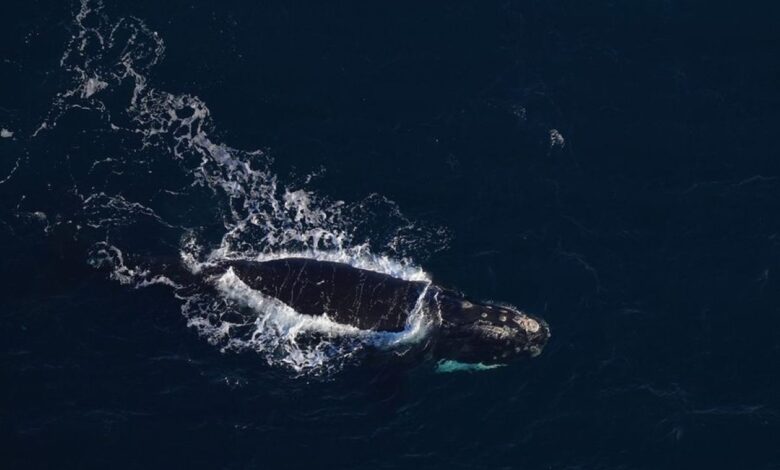
NASA Data Helps Map Tiny Plankton That Feed Giant Right Whales
In the waters off New England, one of Earth’s rarest mammals swims slowly, mouth agape. The North Atlantic right whale filters clouds of tiny reddish zooplankton — called Calanus finmarchicus — from the sea. These zooplankton, no bigger than grains of rice, are the whale’s lifeline. Only about 370 of these massive creatures remain. For decades, tracking the tiny plankton meant sending…
Read More »