
NASA
-
NASA
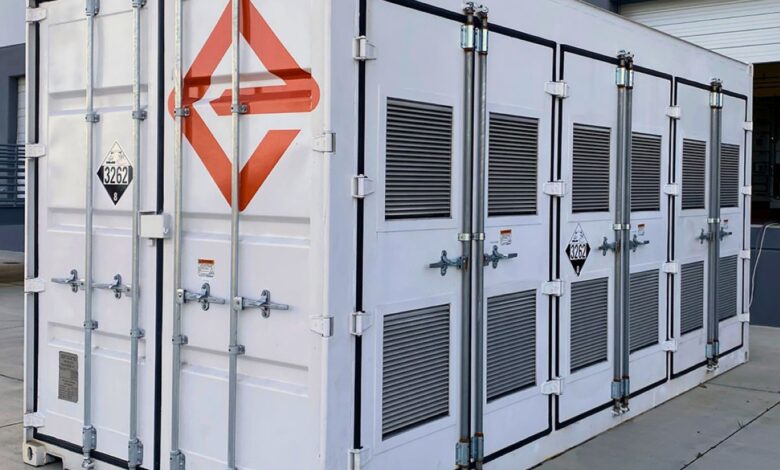
NASA Engineering Sparks Innovative New Battery
Nickel-hydrogen technology is safe, durable, and long-lasting – now it’s affordable too. EnerVenue’s batteries don’t require energy-consuming temperature control or maintenance and can be stored anywhere, including in the company’s “EnerStation” battery station, pictured here. Credit: EnerVenue, Inc. Battery technology that has powered the International Space Station, the Hubble Space Telescope, and numerous satellites is now storing energy on Earth,…
Read More » -
NASA

NASA Astronaut to Answer Questions from Students in California
Students from Santa Monica, California, will connect with NASA astronaut Jonny Kim as he answers prerecorded science, technology, engineering, and mathematics-related questions aboard the International Space Station. Watch the 20-minute space-to-Earth call at 12:10 p.m. EDT on Tuesday, April 29, on the NASA STEM YouTube Channel. Media interested in covering the event must RSVP by 5 p.m., Friday, April 25, to Esmi…
Read More » -
NASA

Sols 4518-4519: Thumbs up from Mars
Written by Susanne Schwenzer, Planetary Geologist at The Open University Earth planning date: Monday, 21st April 2025 It is Easter Monday, a bank holiday here in the United Kingdom. I am Science Operations Working Group Chair today, a role that is mainly focused on coordinating all the different planning activities on a given day, and ensuring all the numbers are…
Read More » -
NASA
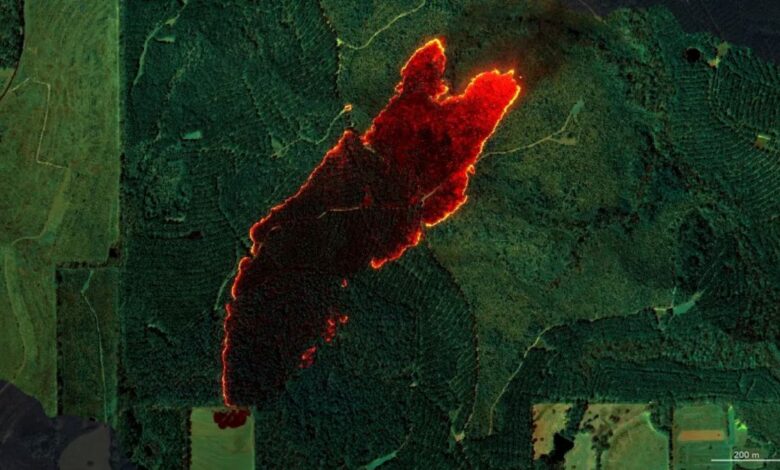
NASA Airborne Sensor’s Wildfire Data Helps Firefighters Take Action
Data from the AVIRIS-3 sensor was recently used to create detailed fire maps in minutes, enabling firefighters in Alabama to limit the spread of wildfires and save buildings. A NASA sensor recently brought a new approach to battling wildfire, providing real-time data that helped firefighters in the field contain a blaze in Alabama. Called AVIRIS-3, which is short for Airborne…
Read More » -
NASA

Eye on Infinity: NASA Celebrates Hubble’s 35th Year in Orbit
In celebration of the Hubble Space Telescope’s 35 years in Earth orbit, NASA is releasing an assortment of compelling images recently taken by Hubble, stretching from the planet Mars to star-forming regions, and a neighboring galaxy. After more than three decades of perusing the universe, Hubble remains a household name — the most well-recognized and scientifically productive telescope in history. The…
Read More » -
NASA
NASA Collaborates to Enable Spectrum-Dependent Science, Exploration, and Innovation
In our modern wireless world, almost all radio frequency (RF) spectrum bands are shared among multiple users. In some domains, similar users technically coordinate to avoid interference. The spectrum management team, part of NASA’s SCaN (Space Communications and Navigation) Program, represents the collaborative efforts across U.S. agencies and the international community to protect and enable NASA’s current and future spectrum-dependent…
Read More » -
NASA
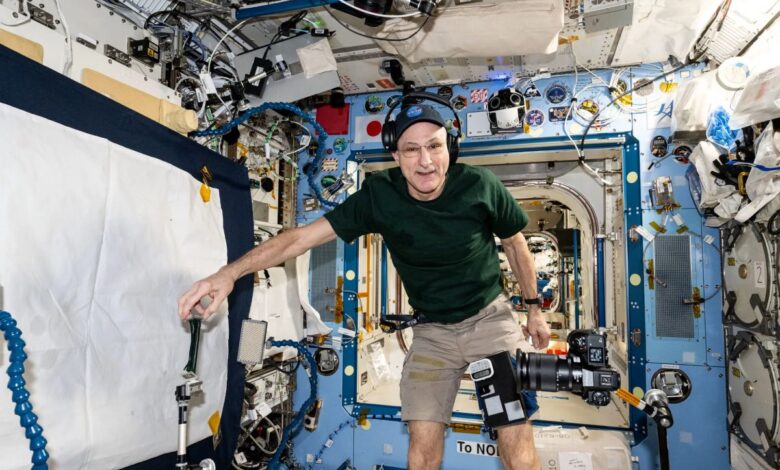
NASA Astronaut Don Pettit to Discuss Seven-Month Space Mission
Media are invited to a news conference at 2 p.m. EDT Monday, April 28, at NASA’s Johnson Space Center in Houston where astronaut Don Pettit will share details of his recent mission aboard the International Space Station. The news conference will stream live on NASA’s website. Learn how to stream NASA content through a variety of platforms. To participate in person, U.S. media…
Read More » -
NASA
NASA’s Use of the Radio Frequency Spectrum
As associate administrator for NASA’s Space Operations Mission Directorate Ken Bowersox puts it, “nothing happens without communications.” And effective communications require the use of radio waves. None of NASA’s exciting science and engineering endeavors would be possible without the use of radio waves to send data, communications, and commands between researchers or flight controllers and their flight platforms or instruments. Reflecting…
Read More » -
NASA
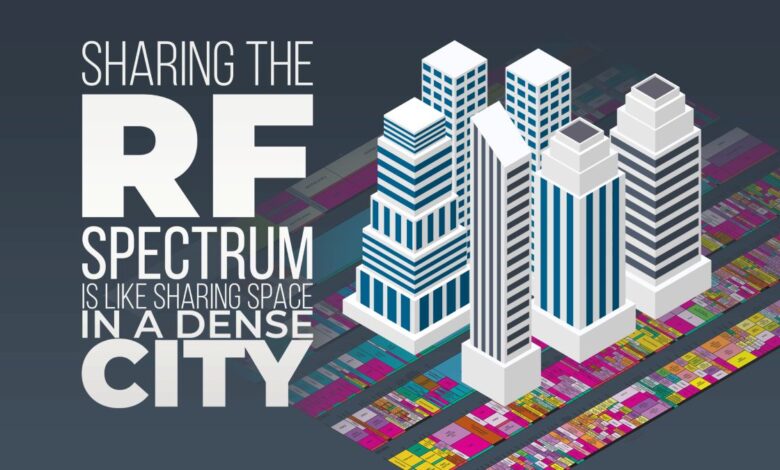
Management and Regulation Ensure Effective Spectrum Sharing
Spectrum is a shared resource. Since the discovery of radio waves and the invention of the telegraph, humanity has exponentially increased its use of the radio frequency (RF) spectrum. Consider how many wireless devices are around you right now. You’re probably reading this on a smartphone or laptop connected to the internet through Wi-Fi or 5G. You might be listening…
Read More » -
NASA
Nine Finalists Advance in NASA’s Power to Explore Challenge
NASA has named nine finalists out of the 45 semifinalist student essays in the Power to Explore Challenge, a national writing competition for K-12 students featuring the enabling power of radioisotopes. Contestants were challenged to explore how NASA has powered some of its most famous science missions, and to dream up how their personal “superpowers” would energize their success on their…
Read More »