
NASA
-
NASA
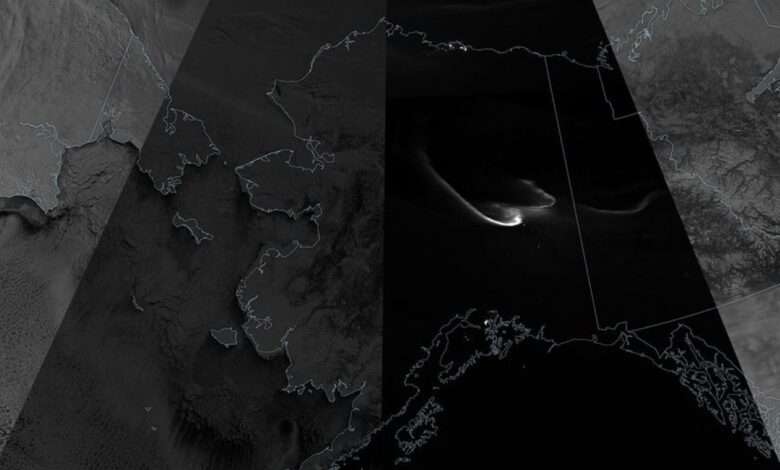
Shades of a Lunar Eclipse
On March 3, 2026, Earth lined up directly between the Moon and the Sun, casting its shadow on the full Moon. The total lunar eclipse was visible throughout the Americas, East Asia, Australia, and the Pacific. Skygazers in those parts of the world may have witnessed a “Blood Moon,” when the dimmed lunar surface temporarily turned an orange-red color. Meanwhile, satellites observed…
Read More » -
NASA

About Subsonic Flight Demonstrator (SFD) Project
The purpose of the Subsonic Flight Demonstrator (SFD) project is to engage with industry and other government organizations to identify, select, and mature key airframe technologies, such as new wing designs, that have a high probability of transition to the next generation single-aisle seat class airliner. Moving technologies from a research environment to a production environment can be a real challenge for industry…
Read More » -
NASA

NASA’s Van Allen Probe A to Re-Enter Atmosphere
NASA’s Van Allen Probe A is expected to re-enter Earth’s atmosphere almost 14 years after launch. From 2012 to 2019, the spacecraft and its twin, Van Allen Probe B, flew through the Van Allen belts, rings of charged particles trapped by Earth’s magnetic field, to understand how particles were gained and lost. The belts shield Earth from cosmic radiation, solar storms, and the constantly streaming solar wind that are harmful…
Read More » -
NASA
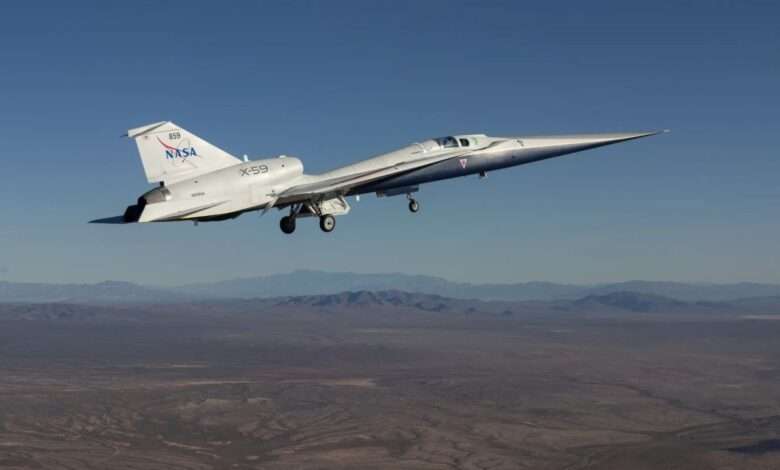
About Flight Demonstrations and Capabilities (FDC) Project
The FDC project conducts complex integrated small-scale flight research to validate the benefits of new technologies. By modifying aircraft from FDC’s support fleet, the project enables aggressive, success-oriented flight campaign schedules. While many technologies are at mid-levels of technology readiness, the FDC project supports all phases of technology maturation. FDC’s support aircraft fleet enables safety chase and in-flight experimental measurements for a variety of NASA missions. The project collaborates…
Read More » -
NASA

Lake Coatepeque
Just inland from the Pacific coast of El Salvador, the striking blue waters of Lake Coatepeque fill part of a caldera of the same name. An astronaut aboard the International Space Station took this photo of the lake and surrounding terrain on February 10, 2026, as the station passed over Central America. The caldera formed during a series of explosive…
Read More » -
NASA
NASA Invites Media to 63rd Annual Goddard Space Science Symposium
Media are invited to attend the 63rd annual Goddard Space Science Symposium, taking place Thursday, March 12, and Friday, March 13, at the National Housing Center in Washington. The event also will be streamed online. Organized by the American Astronautical Society (AAS) in conjunction with NASA’s Goddard Space Flight Center in Greenbelt, Maryland, the symposium gathers experts across NASA, other…
Read More » -
NASA
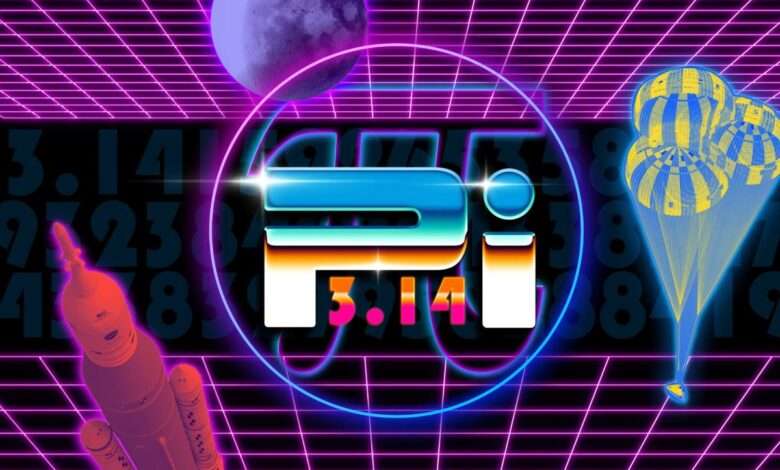
What Is Pi? (Grades 5-8)
This article is for students grades 5-8. What is Pi? Pi is a number. You might know it as 3.14 or the symbol π. But it’s way more than that! What Makes Pi Special? Pi is an irrational number. That means it goes on forever and it never repeats its sequence of numbers. Pi has been calculated to more than one…
Read More » -
NASA

NASA Armstrong Director Brad Flick to Retire After 40 Years of Service
On Monday, NASA announced Bradley Flick, director of NASA’s Armstrong Flight Research Center in Edwards, California, will retire Thursday, March 19, after a nearly 40-year career advancing aeronautics and flight research. Flick began his NASA journey in 1986 as a flight systems engineer and rose through the ranks to lead the center. His career spanned historic achievements by NASA, bookended…
Read More » -
NASA
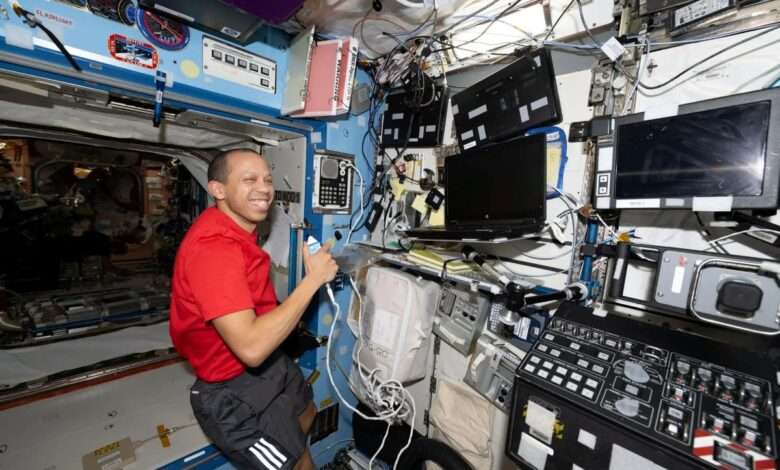
NASA Astronauts to Answer Questions from Students in New York
Students in New York will hear from NASA astronauts Jack Hathaway and Chris Williams as they answer prerecorded science, technology, engineering, and mathematics (STEM) questions while aboard the International Space Station. The Earth-to-space call will begin at 12:05 p.m. EDT Wednesday, March 11, and will stream live on the agency’s Learn With NASA YouTube channel. This event is hosted by the Queens Borough…
Read More » -
NASA
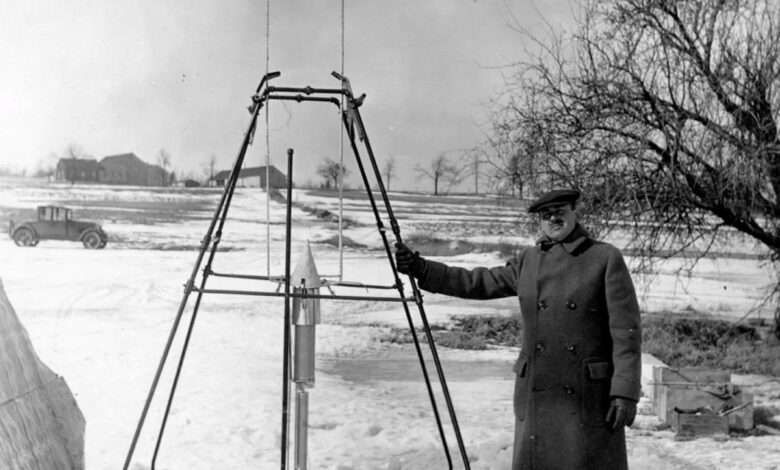
From Cabbages to Countdowns: NASA Marks 100 Years of Modern Rocketry
Snow covered the ground that Tuesday morning 100 years ago, when a college professor and his wife took a morning drive to the family farm a few miles south in Auburn, Massachusetts. Along for the ride, the couple brought two work colleagues — and “Nell.” They may not have known it at the time, but thanks to Nell, the four…
Read More »