
Webb
-
NASA
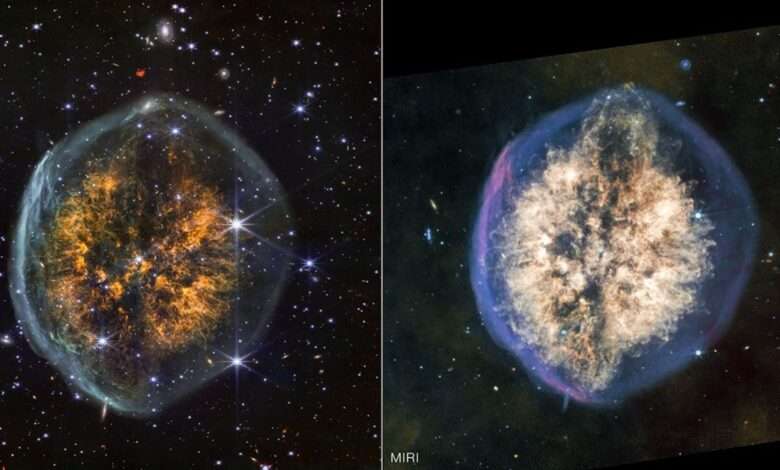
NASA’s Webb Examines Cranium Nebula
Two heads are better than one in the latest images from NASA’s James Webb Space Telescope, which reveal new detail in a mysterious, little-studied nebula surrounding a dying star. Nebula PMR 1 is a cloud of gas and dust that bears an uncanny resemblance to a brain in a transparent skull, inspiring its nickname, the “Exposed Cranium” nebula. Webb captured…
Read More » -
Press Releases

Webb Maps Uranus’ Upper Atmosphere
NASA’s James Webb Space Telescope provided the first vertical view of Uranus’s ionosphere in this image released on Feb. 19, 2026, revealing auroras shaped by its tilted magnetic field. Getting a look at the structure of the region where the atmosphere interacts strongly with the planet’s magnetic field is giving us the most detailed portrait yet of where its auroras…
Read More » -
NASA
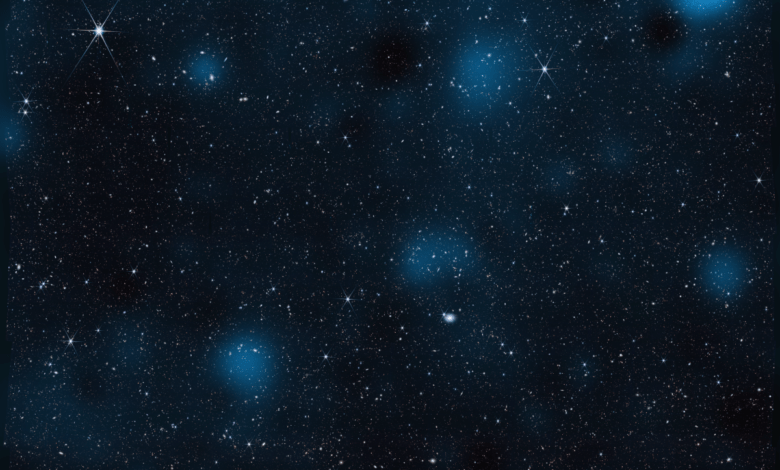
Webb Data Reveals Dark Matter
This image from NASA’s James Webb Space Telescope, containing nearly 800,000 galaxies, is overlaid with a map of dark matter, represented in blue. Brighter blue areas indicate a higher density of dark matter. Researchers used Webb data to find the dark matter — which is invisible — via its gravitational influence on regular matter. The area of sky shown here…
Read More » -
NASA
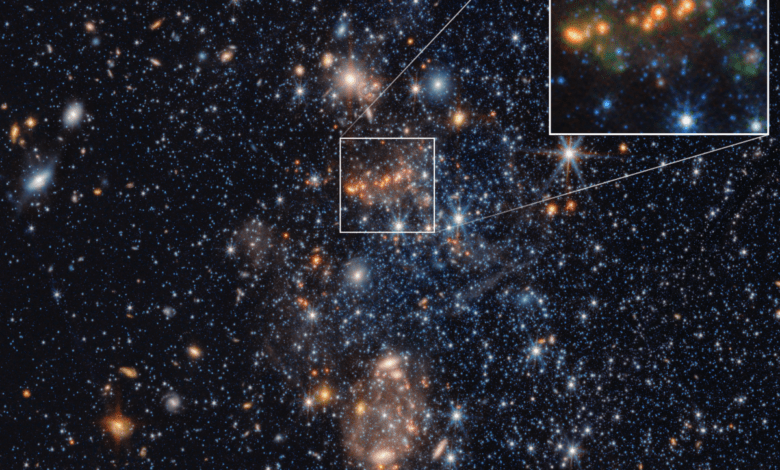
NASA Webb Finds Early-Universe Analog’s Unexpected Talent for Making Dust
Using NASA’s James Webb Space Telescope, astronomers have spotted two rare kinds of dust in the dwarf galaxy Sextans A, one of the most chemically primitive galaxies near the Milky Way. The finding of metallic iron dust and silicon carbide (SiC) produced by aging stars, along with tiny clumps of carbon-based molecules, shows that even when the universe had only…
Read More » -
NASA
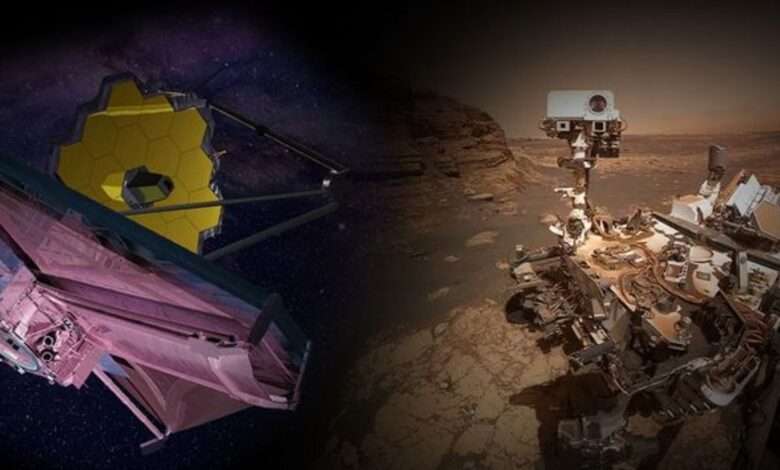
NASA’s Webb, Curiosity Named in TIME’s Best Inventions Hall of Fame
Two icons of discovery, NASA’s James Webb Space Telescope and NASA’s Curiosity rover, have earned places in TIME’s “Best Inventions Hall of Fame,” which recognizes the 25 groundbreaking inventions of the past quarter century that have had the most global impact, since TIME began its annual Best Inventions list in 2000. The inventions are celebrated in TIME’s December print issue.…
Read More » -
NASA
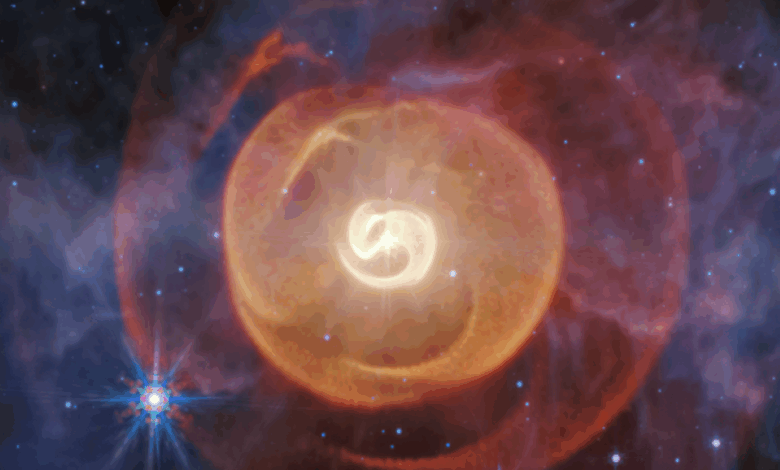
Webb First to Show 4 Dust Shells ‘Spiraling’ Apep, Limits Long Orbit
NASA’s James Webb Space Telescope has delivered a first of its kind: a crisp mid-infrared image of a system of four serpentine spirals of dust, one expanding beyond the next in precisely the same pattern. (The fourth is almost transparent, at the edges of Webb’s image.) Observations taken prior to Webb only detected one shell, and while the existence of…
Read More » -
NASA

NASA’s Webb Explores Largest Star-Forming Cloud in Milky Way
NASA’s James Webb Space Telescope has revealed a colorful array of massive stars and glowing cosmic dust in the Sagittarius B2 molecular cloud, the most massive and active star-forming region in our Milky Way galaxy. “Webb’s powerful infrared instruments provide detail we’ve never been able to see before, which will help us to understand some of the still-elusive mysteries of…
Read More » -
NASA
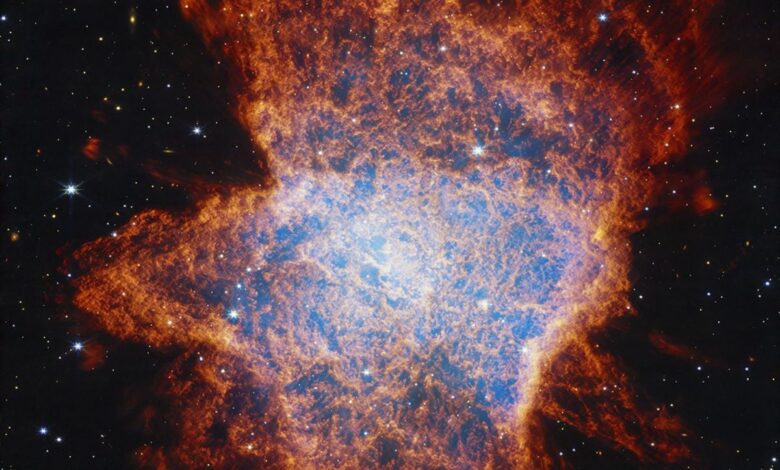
NASA’s Webb Traces Details of Complex Planetary Nebula
Since their discovery in the late 1700s, astronomers have learned that planetary nebulae, or the expanding shell of glowing gas expelled by a low-intermediate mass star late in its life, can come in all shapes and sizes. Most planetary nebula present as circular, elliptical, or bi-polar, but some stray from the norm, as seen in new high-resolution images of planetary…
Read More » -
NASA

3 Years of Science: 10 Cosmic Surprises from NASA’s Webb Telescope
Since July 2022, NASA’s James Webb Space Telescope has been unwaveringly focused on our universe. With its unprecedented power to detect and analyze otherwise invisible infrared light, Webb is making observations that were once impossible, changing our view of the cosmos from the most distant galaxies to our own solar system. Webb was built with the promise of revolutionizing astronomy, of…
Read More » -
Press Releases
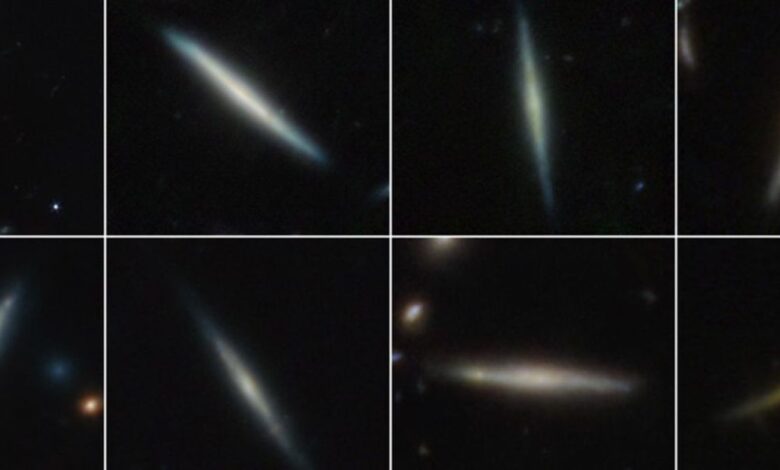
NASA’s Webb Digs into Structural Origins of Disk Galaxies
Present-day disk galaxies often contain a thick, star-filled outer disk and an embedded thin disk of stars. For instance, our own Milky Way galaxy’s thick disk is approximately 3,000 light-years in height, and its thin disk is roughly 1,000 light-years thick. How and why does this dual disk structure form? By analyzing archival data from multiple observational programs by NASA’s James Webb…
Read More »