
Webb
-
NASA

Webb Sees Sombrero Galaxy in Near-Infrared
NASA’s James Webb Space Telescope recently imaged the Sombrero Galaxy with its NIRCam (Near-Infrared Camera), which shows dust from the galaxy’s outer ring blocking stellar light from stars within the galaxy. In the central region of the galaxy, the roughly 2,000 globular clusters, or collections of hundreds of thousands of old stars held together by gravity, glow in the near-infrared.…
Read More » -
NASA
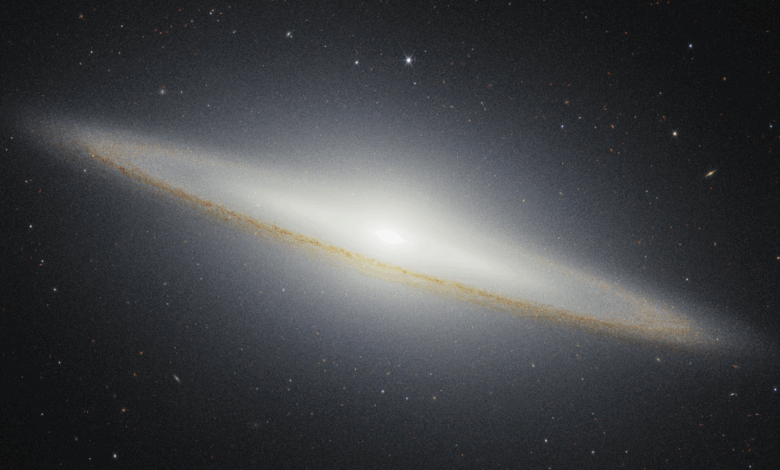
NASA’s Webb Rounds Out Picture of Sombrero Galaxy’s Disk
After capturing an image of the iconic Sombrero galaxy at mid-infrared wavelengths in late 2024, NASA’s James Webb Space Telescope has now followed up with an observation in the near-infrared. In the newest image, the Sombrero galaxy’s huge bulge, the tightly packed group of stars at the galaxy’s center, is illuminated, while the dust in the outer edges of the disk blocks…
Read More » -
NASA
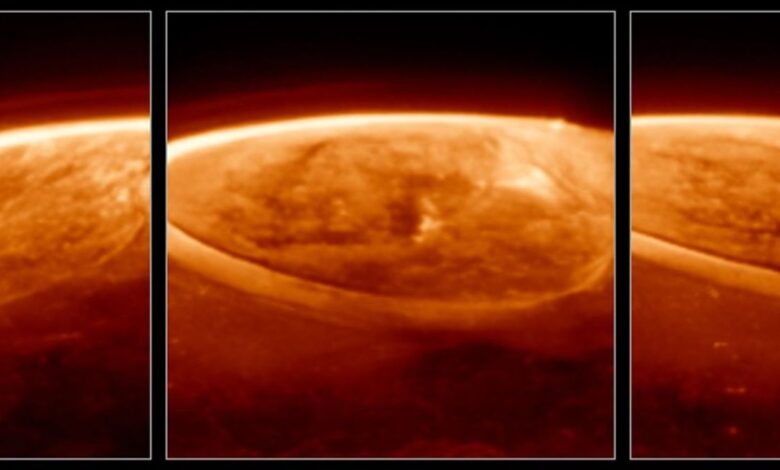
NASA’s Webb Reveals New Details, Mysteries in Jupiter’s Aurora
NASA’s James Webb Space Telescope has captured new details of the auroras on our solar system’s largest planet. The dancing lights observed on Jupiter are hundreds of times brighter than those seen on Earth. With Webb’s advanced sensitivity, astronomers have studied the phenomena to better understand Jupiter’s magnetosphere. Auroras are created when high-energy particles enter a planet’s atmosphere near its magnetic…
Read More » -
NASA
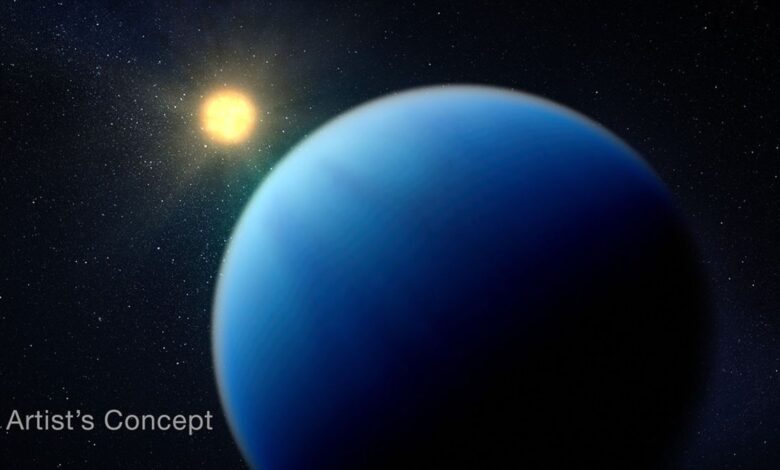
NASA’s Webb Lifts Veil on Common but Mysterious Type of Exoplanet
Though they don’t orbit around our Sun, sub-Neptunes are the most common type of exoplanet, or planet outside our solar system, that have been observed in our galaxy. These small, gassy planets are shrouded in mystery…and often, a lot of haze. Now, by observing exoplanet TOI-421 b, NASA’s James Webb Space Telescope is helping scientists understand sub-Neptunes in a way that…
Read More » -
NASA
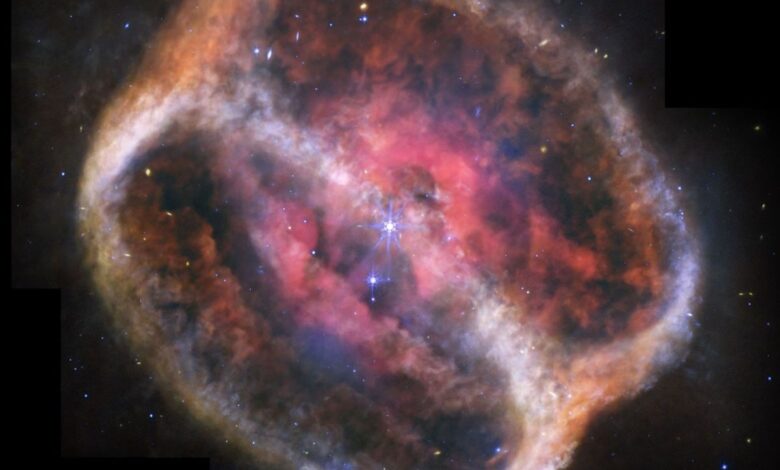
With NASA’s Webb, Dying Star’s Energetic Display Comes Into Full Focus
Gas and dust ejected by a dying star at the heart of NGC 1514 came into complete focus thanks to mid-infrared data from NASA’s James Webb Space Telescope. Its rings, which are only detected in infrared light, now look like “fuzzy” clumps arranged in tangled patterns, and a network of clearer holes close to the central stars shows where faster…
Read More » -
NASA
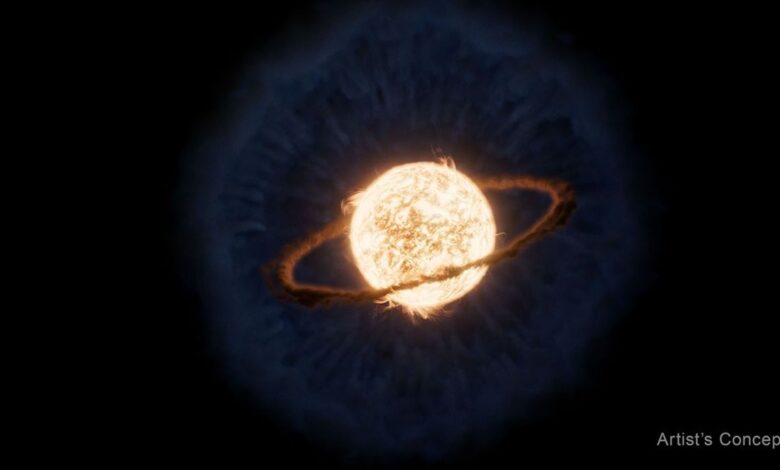
NASA Webb’s Autopsy of Planet Swallowed by Star Yields Surprise
Observations from NASA’s James Webb Space Telescope have provided a surprising twist in the narrative surrounding what is believed to be the first star observed in the act of swallowing a planet. The new findings suggest that the star actually did not swell to envelop a planet as previously hypothesized. Instead, Webb’s observations show the planet’s orbit shrank over time,…
Read More » -
NASA

NASA Webb Explores Effect of Strong Magnetic Fields on Star Formation
Follow-up research on a 2023 image of the Sagittarius C stellar nursery in the heart of our Milky Way galaxy, captured by NASA’s James Webb Space Telescope, has revealed ejections from still-forming protostars and insights into the impact of strong magnetic fields on interstellar gas and the life cycle of stars. “A big question in the Central Molecular Zone of our…
Read More » -
NASA

NASA’s Webb Sees Galaxy Mysteriously Clearing Fog of Early Universe
Using the unique infrared sensitivity of NASA’s James Webb Space Telescope, researchers can examine ancient galaxies to probe secrets of the early universe. Now, an international team of astronomers has identified bright hydrogen emission from a galaxy in an unexpectedly early time in the universe’s history. The surprise finding is challenging researchers to explain how this light could have pierced…
Read More » -
NASA
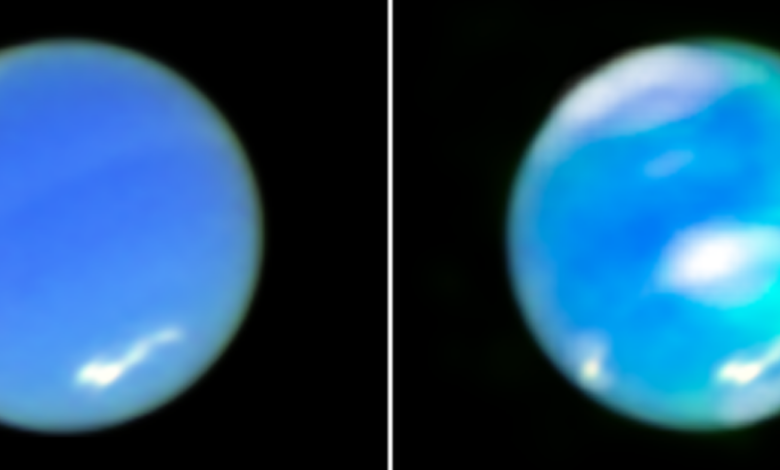
NASA’s Webb Captures Neptune’s Auroras For First Time
Long-sought auroral glow finally emerges under Webb’s powerful gaze For the first time, NASA’s James Webb Space Telescope has captured bright auroral activity on Neptune. Auroras occur when energetic particles, often originating from the Sun, become trapped in a planet’s magnetic field and eventually strike the upper atmosphere. The energy released during these collisions creates the signature glow. In the…
Read More » -
NASA
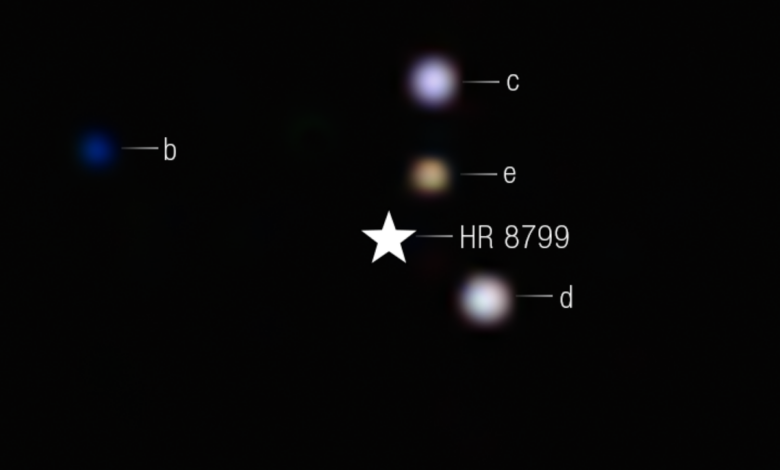
NASA’s Webb Images Young, Giant Exoplanets, Detects Carbon Dioxide
NASA’s James Webb Space Telescope has captured direct images of multiple gas giant planets within an iconic planetary system. HR 8799, a young system 130 light-years away, has long been a key target for planet formation studies. The observations indicate that the well-studied planets of HR 8799 are rich in carbon dioxide gas. This provides strong evidence that the system’s…
Read More »