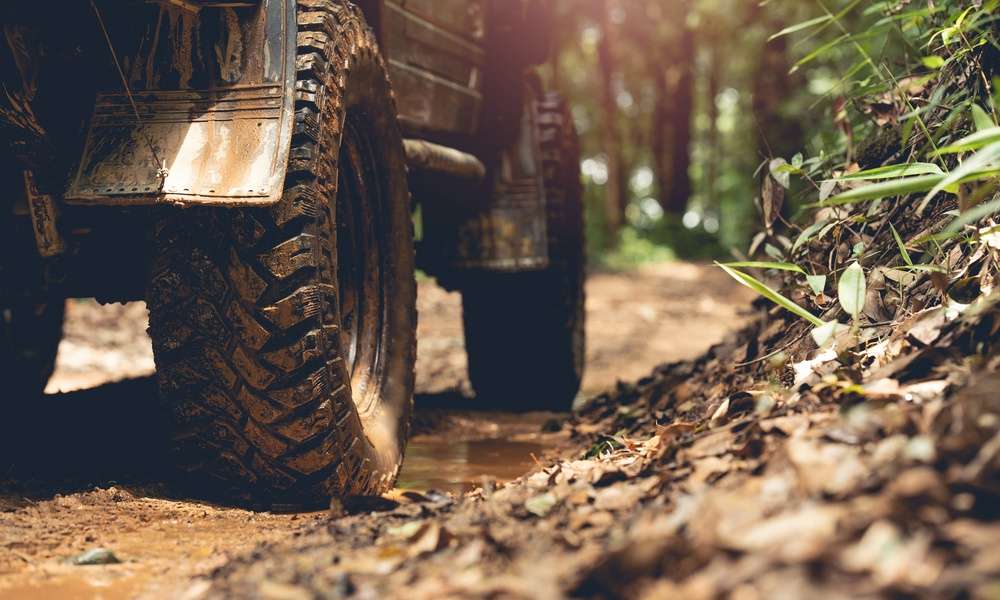
You pull up to a trail, spot what looks like a gentle dirt path, and think, “Yeah, I got this.” Two hours later, you’re watching your bumper flap in the wind like a sad goodbye wave. Trail obstacles that look harmless but cause serious damage are everywhere, and overconfident drivers fall for them every weekend. The trail doesn’t care how capable your rig looks in the parking lot.
The Sneaky Ruts That Eat Your Undercarriage Alive
Ruts look like shallow grooves until your frame high-centers, and you realize you’ve been sitting on packed dirt for the last 30 seconds. Water ruts that appear dry can still hide soft spots deep enough to swallow a rock slider whole. Drivers who skip the approach angle check almost always regret it the same afternoon.
Loose Gravel That Feels Fine Until It Isn’t
Loose gravel gives you a false sense of confidence because the first 50 feet feel totally manageable. Then the trail tilts sideways, and your tires decide to write their own itinerary. This surface type causes a shocking number of sidewall punctures because the sharp edges underneath the top layer stay hidden until you’re already committed to the line. Slow, deliberate throttle control beats aggressive acceleration every single time on this stuff.
Brush and Low-Hanging Branches: Nature’s Sandpaper
Brush and low-hanging branches might seem like minor annoyances on the trail, but they can quickly become a serious threat to your vehicle’s exterior and vital components. Here’s what brush can do to your rig:
- Scratches paint down to bare metal in a single pass.
- Snaps the side mirrors with zero warning.
- Forces flexible branches under the vehicle, which can snag brake lines.
- Deposits moisture against metal panels and begins rusting within weeks.
You can add armor plating and still walk away with a destroyed mirror because you underestimated a seven-foot shrub. Bronco rock sliders are a no-brainer upgrade, but brush damage lives higher up on the vehicle where sliders can’t reach.
Water Crossings That Betray You Completely
Standing water that hits your knee is somehow still surprising when it starts pouring into the cab. A current reads differently from the bank than it does under your tires, and river bottoms hide submerged rocks that redirect your front wheels with zero input from you. A recovery rope and a spotter on the bank should be standard procedure before any crossing, regardless of how chill the water looks.
Trail obstacles that look harmless but cause serious damage have a well-established strategy: they wait for the moment you drop your guard. Respect the terrain, gear up properly, and scout before you commit to any line that looks a little too easy. The trail rewards the prepared driver and absolutely destroys the overconfident one.