




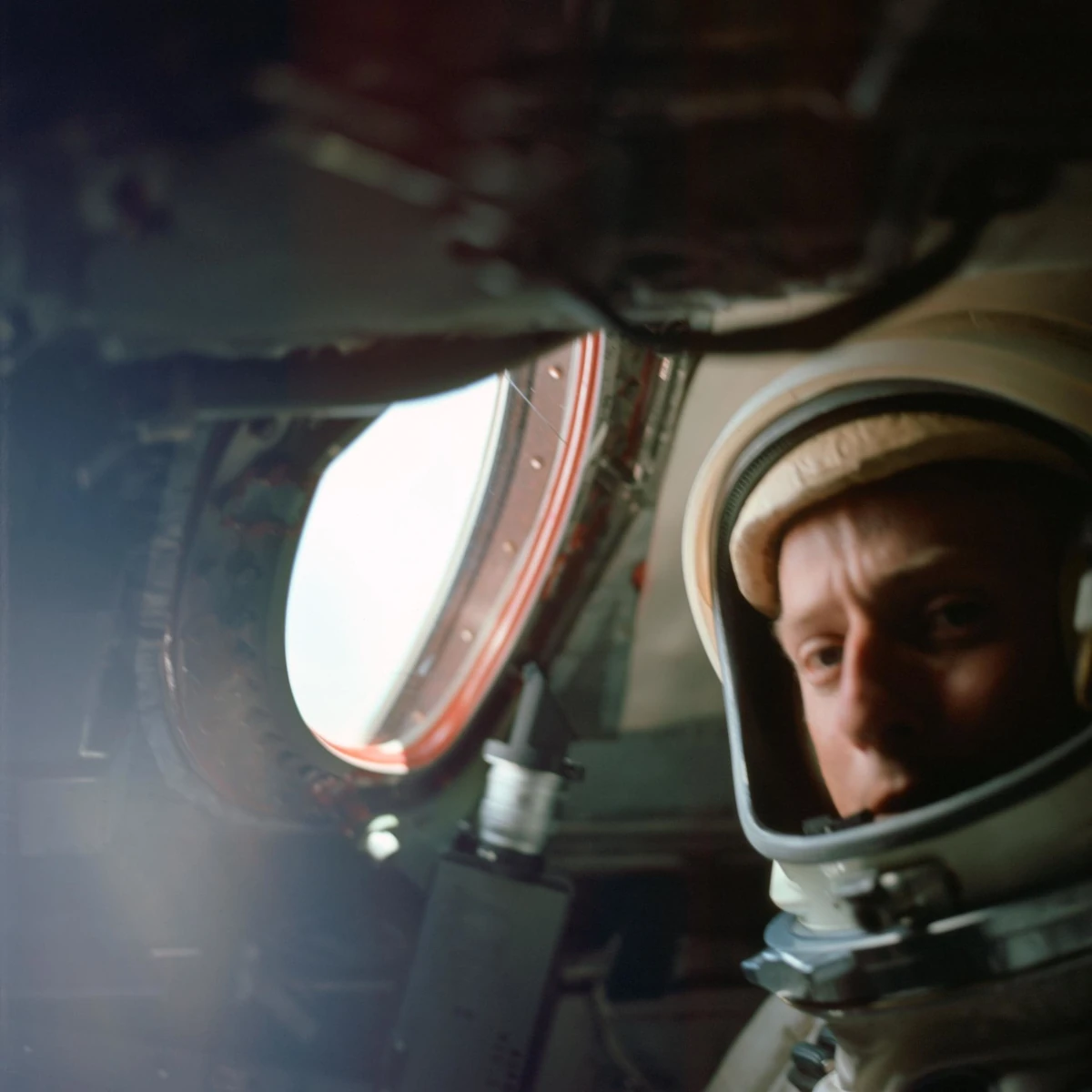
NASA astronaut L. Gordon Cooper, Jr. took 29 color photographs of the Earth with a 70mm camera as he orbited our planet during the Mercury-Atlas 9 mission in May 1963. Cooper’s view from the window of his Faith 7 spacecraft was spectacular, and he reported that he could see vehicles motoring on dirt roads, smoke-belching trains, and the tops of houses.
Researchers and members of the public had their doubts. Could Cooper actually see objects on the Earth’s surface in such fine detail while orbiting 100 miles above the planet? Some vision experts assumed that astronauts with 20/20 vision could not clearly see objects with sides less than 150 feet long at orbital altitudes. Although Cooper reportedly had exceptional 20/12 vision, certainly he could not see a white automobile kicking up a dust cloud near the U.S.-Mexico border as he claimed. Cooper, however, was not alone in his assertions. Other Mercury astronauts also reported seeing objects on the Earth in striking detail.
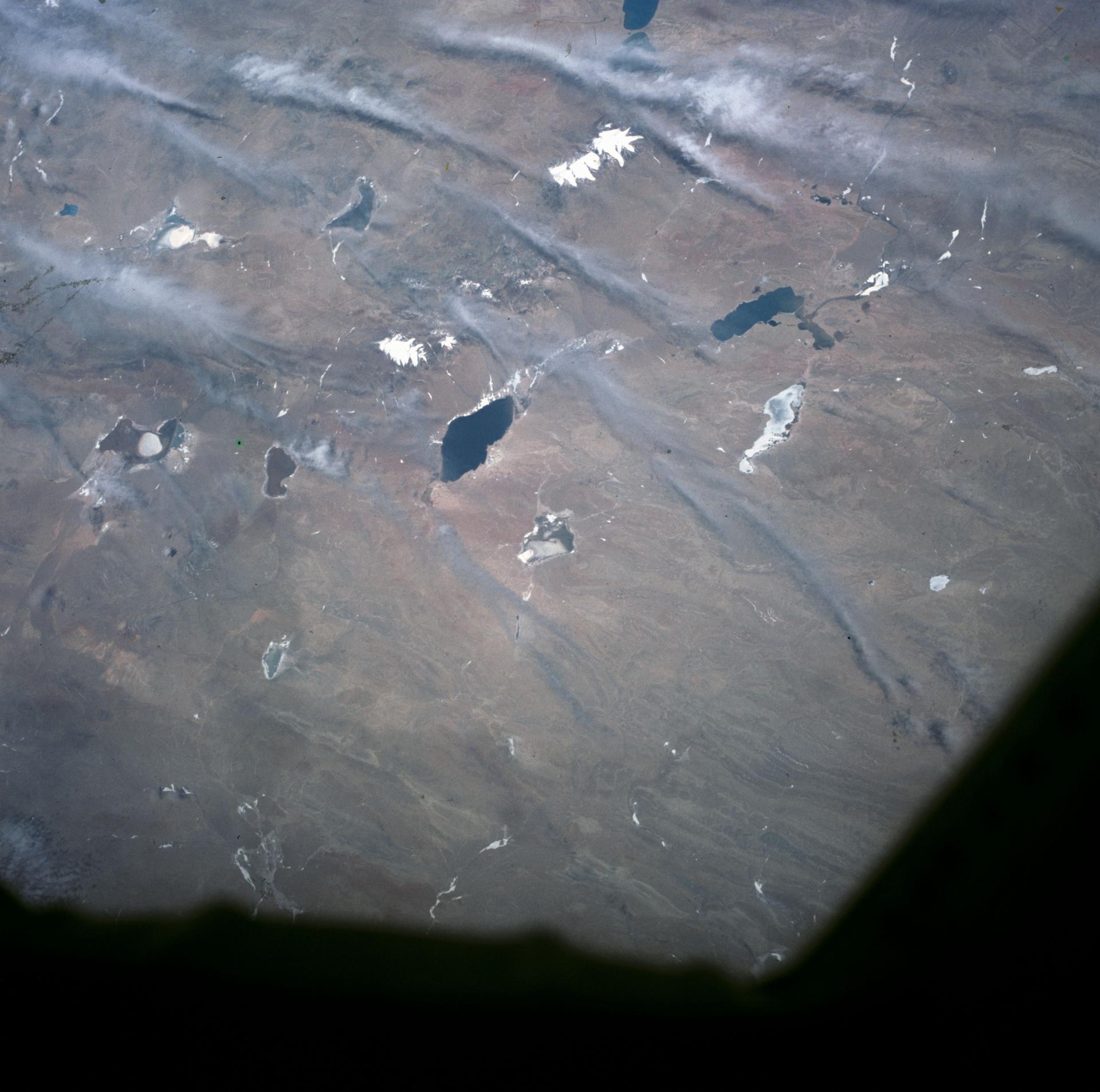
During his 22-orbit Mercury-Atlas 9 spaceflight in May 1963, L. Gordon Cooper Jr. took photos from the Faith 7 spacecraft including this one showing lakes in Western Tibet.
NASA
These claims caused mental health professionals to question the sanity of NASA’s first astronauts. A story in Air Force and Space Digest noted that some psychiatrists speculated that “weightlessness was causing the astronauts to hallucinate and that the space program was in for serious trouble.” While mental health experts considered the effects of space flight on the brain, visual acuity experts mulled over the Mercury astronauts’ assertions and developed an experiment to determine what they could see on Earth from space.
About The Author


Got a Questions?
Find us on Socials or Contact us and we’ll get back to you as soon as possible.